
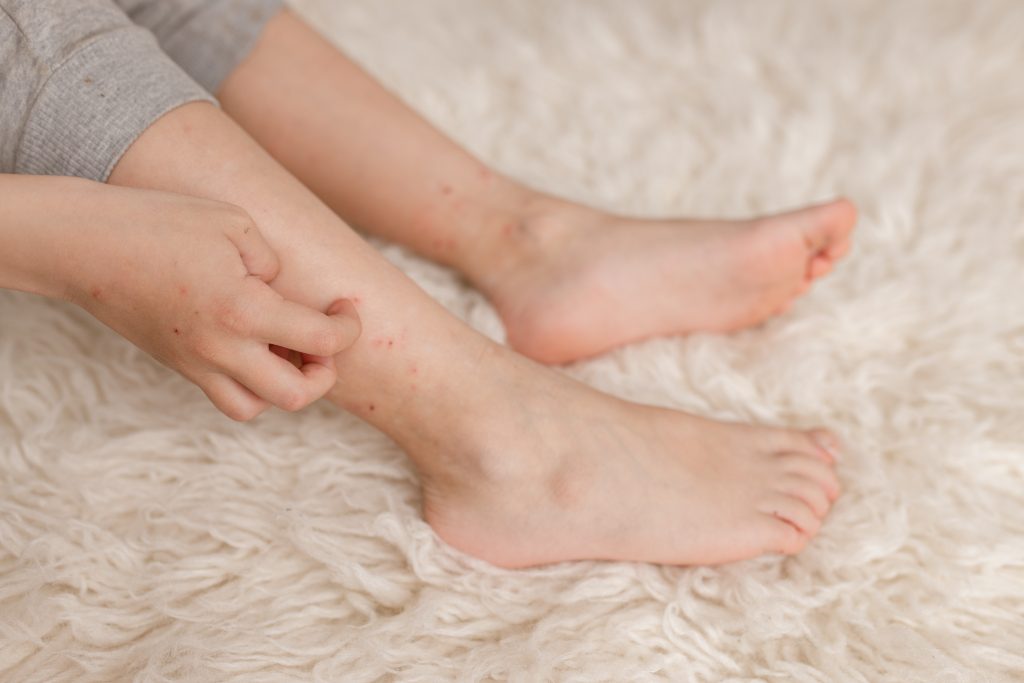
A cluster of itchy red bumps near your ankle can leave you studying your skin and wondering what found you. Mosquitoes, chiggers, fire ants, allergies, and several skin conditions can all produce marks that resemble insect bites.
Flea bites on humans often share a few traits. They tend to be small, intensely itchy, and concentrated around the feet, ankles, or lower legs. Flea bites on humans are easier to recognize when that pattern appears alongside pet scratching, dark specks in bedding, or fresh bites linked to one room.
Learning how to identify flea bites takes more than comparing your skin with an online photo. The location, timing, household conditions, and signs of fleas provide a more useful answer.
What Do Flea Bites on Humans Look Like?
Flea bites usually appear as small red bumps or raised spots that look darker than the surrounding skin. Color varies by skin tone. Some bites have a tiny mark in the center or a faint halo around the outside.
The most common flea bite symptoms are itching and skin irritation. The bumps may occur in loose clusters or short, uneven lines. Scratching can make a flea bite rash look larger, darker, or less distinct than it did at first.
Flea bites on ankles, feet, and calves are especially common because adult fleas often reach people from floor-level surfaces. Flea bites on legs may also appear after someone sits on a rug, handles pet bedding, or rests on infested furniture.
The Cleveland Clinic guide to flea bites reports that more than 2,500 flea species exist worldwide, including more than 300 in the United States. Its clinical guidance describes human bites as small, discolored bumps that often occur in clusters or lines on the feet, ankles, calves, and legs.
Common Flea Bite Clues
| Clue | Typical Finding | What It Does Not Prove |
| Appearance | Small, raised, red, pink, brown, or purple bumps | Color alone cannot identify the cause |
| Sensation | Strong itching with little initial pain | Many bug bites and rashes also itch |
| Pattern | Loose clusters or short, irregular lines | Three bites in a row do not confirm fleas |
| Location | Feet, ankles, calves, and lower legs | Fleas can bite higher after furniture contact |
| Timing | New bumps after entering the same room | A room-specific pattern still needs household evidence |
How Flea Bites on Humans Differ From Other Itchy Bumps
Several conditions can resemble flea bites on humans during the first day. The best comparison considers the size and location of the bumps, how they feel, and what happened before they appeared.
A person who develops several small red bumps after sitting on a carpet faces a different likely cause than someone who develops a broad rash after changing laundry detergent. Exposure history often provides the missing piece.
| Possible Cause | Typical Appearance | Common Pattern or Location | Useful Context |
| Flea bites | Small, intensely itchy bumps | Clusters near ankles and lower legs | Pets, carpet and rugs, furniture, or one problem room |
| Mosquito bites | Puffy, round welts | Scattered on exposed skin | Outdoor activity, open windows, or standing water |
| Chigger bites | Small bumps with severe itching | Sock lines, waistbands, or behind the knees | Tall grass, brush, or wooded areas |
| Fire ant stings | Burning bumps that may form pustules | Feet, ankles, or legs | Contact with an outdoor mound |
| Hives | Smooth welts that may change shape | Can appear anywhere and move within hours | Food, medication, illness, heat, or pressure |
| Contact dermatitis | Red patches, scaling, bumps, or blisters | Follows the area of contact | New soap, detergent, fabric, plant, or cleaner |
| Folliculitis | Pimple-like bumps around hair follicles | Shaved, sweaty, or high-friction areas | Shaving, tight clothing, sweat, or hot-tub use |
| Scabies rash | Persistent bumps or fine tracks | Fingers, wrists, waist, elbows, or skin folds | Nighttime itching or symptoms among close contacts |
Flea Bites vs. Mosquito Bites
Mosquito bites usually form larger, puffier welts across exposed areas such as the arms, shoulders, face, or legs. Flea bites are often smaller and packed closer together near the ankles. Fresh bumps that repeatedly appear after walking through the same carpeted room make an indoor flea infestation more likely.
Chigger Bites vs. Flea Bites
Chigger bites often follow time spent in tall grass, weeds, or brush. They commonly appear where clothing presses against the skin, including waistbands, sock bands, and areas behind the knees.
Chigger bites and flea bites can be difficult to judge from appearance alone. Recent yardwork points toward chiggers. Bumps that begin after sitting near pet bedding or upholstered furniture point more strongly toward fleas in the house.
Flea Bites vs. Skin Conditions
Hives August fade in one spot and appear somewhere else within hours. Contact dermatitis often follows the shape of the item or substance that touched the skin. Folliculitis tends to form around individual hair follicles.
Flea bites usually remain in the same place while healing. A healthcare professional should evaluate persistent symptoms, spreading rashes, or skin problems that do not match a clear pest exposure.
What Signs of Fleas Should You Check for at Home?
Checking the home can be more useful than repeatedly examining the bites. Start with pets. Fleas on pets may cause frequent scratching, chewing near the tail, restless behavior, hair loss, or irritated skin.
Run a flea comb around the neck, belly, hindquarters, and base of the tail. Look for live adult fleas and tiny dark specks. Flea dirt contains digested blood and August leave a reddish-brown stain when placed on a damp white paper towel.
Inspect carpets, couch cushions, baseboards, floor gaps, and the spaces beneath furniture. Pay close attention to the rooms where pets sleep. Flea eggs and flea larvae tend to collect where animal hair, lint, and flea dirt gather.
A home without a dog or cat can still develop fleas. Rodents, visiting pets, stray animals, wildlife, or a previous resident’s animal August introduce them. Warm, shaded areas beneath decks and around crawl spaces can also support flea activity.
Why Can Flea Bites Continue After Cleaning?
The flea life cycle includes four stages. Removing visible adult fleas does not remove every egg, larva, or pupa hidden around the property.
According to the Centers for Disease Control and Prevention (CDC), flea eggs August hatch in one to 10 days. After feeding, larvae can form protective cocoons within five to 20 days. Adult fleas may remain inside those cocoons until movement or body heat signals that a host is nearby.
| Flea Stage | Common Location | Why It Complicates Flea Control |
| Egg | Carpet, furniture, pet bedding, and floor gaps | Eggs fall from animal hosts and spread through rooms |
| Larva | Beneath furniture, along baseboards, and deep in carpet | Larvae avoid light and remain in protected areas |
| Pupa | Inside a cocoon in carpet fibers or cracks | The cocoon protects the developing flea |
| Adult | On pets or near available hosts | Adults feed and restart the reproductive cycle |
This protected development explains why new bites can appear after a quiet period. Vacuuming, footsteps, warmth, and the arrival of a person or pet August prompt new adults to leave their cocoons.
A few newly emerged fleas do not always mean the first cleaning accomplished nothing. Continued activity shows why successful flea control must address the full lifecycle.
How to Treat Flea Bites Safely
Basic flea bite treatment begins with gently washing the skin with soap and water. A cool, damp cloth can help ease itching and swelling. Avoid harsh scrubbing, which can make the irritation worse.
People searching for how to treat flea bites often focus on stopping the itch. A pharmacist or healthcare professional can recommend an appropriate over-the-counter option based on age, medical history, and symptoms. Follow the product label and avoid combining several medicated creams without professional guidance.
Try not to scratch the bumps. Broken skin can allow bacteria to enter. Seek medical care if redness spreads, the area becomes hot or painful, fluid drains from the skin, or fever develops.
Call emergency services for difficulty breathing, faintness, or swelling of the face, lips, mouth, or tongue. Those symptoms can indicate a serious allergic reaction.
How to Get Rid of Fleas and Prevent New Bites
To get rid of fleas, pet care and household cleaning need to happen together. Speak with a veterinarian about a veterinarian-approved flea treatment for every dog or cat in the home. A product must match the animal’s species, age, weight, and health.
Vacuum carpets, rugs, upholstered furniture, stairs, baseboards, floor gaps, and spaces beneath furniture. Empty the debris into a sealed bag and move it to an outdoor trash container. Wash pet bedding and washable blankets according to their care labels.
The EPA household flea control guidance recommends vacuuming every day during initial control to remove adult fleas, eggs, and larvae. It also recommends washing bedding used by pets in hot, soapy water every two to three weeks.
Avoid treating an established problem with vinegar, essential oils, baking soda, or another unverified mixture. These approaches August miss protected life stages and can create unnecessary risks for pets or household surfaces.
When Flea Bites on Humans Keep Appearing
Professional flea control makes sense when bites continue after veterinary pet care and repeated cleaning. Help may also be needed when fleas have spread through several rooms or when the property contains extensive carpeting, crawl spaces, upholstered furniture, or shaded animal resting areas.
ClearDefense Pest Control begins with a close inspection of floors, rugs, baseboards, furniture, pet resting spots, and outdoor areas. Treatment focuses on places where fleas and developing stages are most likely to remain.
We use environmentally responsible products and apply them with precision based on flea behavior, habitat, and lifecycle. When flea bites on humans keep showing up, contact ClearDefense Pest Control and schedule an inspection to identify the source and build a focused treatment plan.