
One or two tiny flies near the sink can be easy to ignore. A few days later, they are circling the fruit bowl, landing near the trash can, and showing up whenever you prepare food. Cleaning the counter removes what you can see, but it does not answer the bigger question: where are they coming from?
Learning how to get rid of gnats starts with identifying the small fly in your kitchen. Fruit flies, drain flies, and fungus gnats may look similar from across the room, but they develop in different places. The right fix depends on whether the source is fermenting produce, wet drain buildup, or damp plant soil. Once that source is removed, traps can help catch the remaining flies.
Identify the Gnats in Your Kitchen
Homeowners often use “gnat” for any tiny flying insect. That is understandable, but it can lead to wasted effort. An apple cider vinegar trap August catch fruit flies, yet do little for fungus gnats living in a pot of basil.
Watch the flies for a minute before you start cleaning. Notice whether they hover around food, rest near a drain, or remain close to a plant. Their location and movement often provide the fastest clue.
| Type of Small Fly | What You may Notice | Most Likely Source |
| Fruit fly | Tiny tan or brown fly hovering near produce, bottles, or trash | Fermenting fruit, drink residue, food waste, or recycling |
| Drain fly | Fuzzy, moth-like fly resting near sinks, drains, or damp walls | Organic film inside drains or wet plumbing areas |
| Fungus gnat | Slender dark fly around potted herbs, houseplants, or windows | Damp potting soil and decaying plant material |
| Phorid fly | Small dark fly that may run across counters before flying | Decaying matter, drain buildup, or a hidden plumbing leak |
A kitchen August support more than one type at once. Fruit flies could be active near the recycling bin while fungus gnats develop in a countertop herb planter. Check every likely source rather than assuming all the flies are coming from the same place.
What Causes Gnats in the House?
Most kitchen gnats are attracted to moisture, fermentation, or decaying organic material. A spotless-looking counter does not rule out a breeding area behind an appliance, beneath a trash liner, or inside a drain.
Produce that stays at room temperature is a good place to begin. Check bananas, tomatoes, peaches, onions, and potatoes for soft spots, split skins, or leaking juice. Pick up every item and inspect the bowl or shelf underneath it.
Trash, recycling, and beverage equipment deserve the same attention. A few drops of wine in a bottle, sweet coffee beneath a machine, or juice collected at the bottom of a recycling bin may be enough to support fruit flies.
Colorado State University Extension explains that small indoor flies can reproduce in overripe fruit, moist garbage, drains, and houseplant soil. Removing the material where the immature flies develop is one of the most effective parts of control.
Check the Places That Commonly Get Missed
| Area | What to Look For | What to Do |
| Fruit bowl or produce basket | Soft produce, leaking juice, or sticky residue | Discard damaged items and wash the container |
| Pantry shelves | Forgotten onions, potatoes, or food spills | Remove spoiled food and wipe the shelf |
| Trash can | Moisture beneath the liner and residue around the lid | Wash the container, lid, rim, and nearby floor |
| Recycling bin | Liquid inside bottles, cans, or jars | Rinse containers and clean the bin |
| Coffee station | Grounds, milk, syrup, or standing water | Wash removable parts and wipe underneath |
| Sink and disposal | Food scraps, slow drainage, or slippery buildup | Remove debris and scrub accessible surfaces |
| Houseplants | Wet soil, dead leaves, or water in saucers | Adjust watering and remove decaying material |
Reusable grocery bags, compost containers, mop buckets, and pet feeding areas can also hold damp residue. When homeowners ask what attracts gnats, the answer is often something small that has been sitting unnoticed.
How to Get Rid of Gnats Near Fruit and Trash
When gnats in the kitchen gather around produce, bottles, or garbage, fruit flies are the most likely culprit. Removing their food source is more effective than trying to catch every adult immediately.
Take spoiled produce directly to an outdoor trash container. Wash the fruit bowl before adding fresh items, and refrigerate ripe produce when the item can handle cold storage. This limits access while you clean and watch for continued activity.
Rinse bottles, jars, and cans before they sit in the recycling bin. Pay particular attention to containers that held beer, wine, juice, soda, or kombucha. Even a thin layer of fermented liquid can attract fruit flies.
The University of Minnesota Extension identifies fermenting fruits, vegetables, alcoholic drinks, soft-drink containers, and trash as common indoor breeding sources. Fruit flies may also remain active indoors throughout the year because kitchens provide steady warmth and food.
Use an Apple Cider Vinegar Trap Correctly
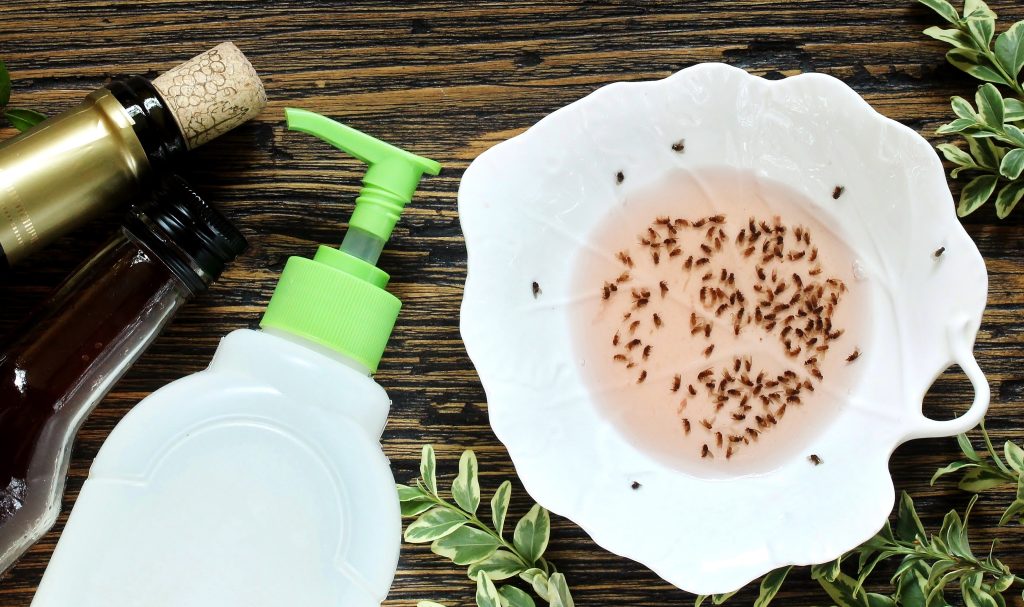
An apple cider vinegar trap can catch adult fruit flies after the breeding source has been removed. Pour a small amount of apple cider vinegar into a cup or jar, then add one drop of dish soap. Set it near the area where the flies were most active.
The vinegar gives off an odor associated with fermentation. The soap changes the liquid’s surface, making it harder for flies to remain on top.
Replace the trap when it becomes diluted or dirty. If it continues catching the same number of flies after several days, inspect the room again. A hidden source is probably still active.
How to Get Rid of Gnats Coming From a Drain
Drain flies usually stay close to the plumbing area where they developed. Their fuzzy wings and short, uneven flights make them look more like tiny moths than fruit flies.
Remove accessible strainers, stoppers, and disposal parts. Scrub the drain opening, sink overflow, and underside of the garbage-disposal splash guard. A firm drain brush can help remove organic buildup from reachable surfaces.
Simply pouring a household mixture down the center of the pipe may not clean the material attached to its sides. Never mix bleach, ammonia, vinegar, or other cleaners. Certain combinations can release harmful gases.
The Penn State Extension drain-fly guide states that drain flies lay eggs in moist, decomposing organic matter. Under favorable conditions, their larval stage August last about two weeks before they enter the pupal stage.
Watch for Signs of a Plumbing Issue
One affected drain August improve after a thorough cleaning. Flies appearing from several drains August point to buildup or moisture deeper in the plumbing system.
Pay attention to sewage odors, damp cabinet floors, warped flooring, slow drainage, or moisture that returns after being wiped away. These conditions may require plumbing repair before the fly activity stops.
How to Control Fungus Gnats Around Kitchen Plants
Fungus gnats often appear around potted herbs and decorative plants. They are drawn to consistently damp soil, where the immature stages feed on fungi and decomposing material.
Check the soil before watering. Let the upper layer dry when the plant’s care needs allow it, and empty saucers after excess water drains from the pot. Dead leaves should be removed before they break down on the soil surface.
Avoid watering plants only because a certain day has arrived. Light levels, humidity, pot size, and plant type all affect how quickly soil dries. A basil plant near a bright window may use water faster than a decorative plant in a dim corner.
Yellow sticky traps placed close to the soil can catch and monitor adult fungus gnats. Keep them away from children and pets. When the number of trapped adults declines, the moisture adjustment is likely helping.
Why Do Gnats Keep Coming Back?
A few adults may still appear after cleaning because some flies were already developing. This does not always mean the cleanup failed. The better measure is whether their numbers fall over the next several days.
If the population remains steady or increases, another breeding source is still present. A forgotten piece of produce, a second drain, or another damp plant may be keeping the gnat infestation active.
| What You Notice | What It Usually Means |
| Fewer flies each day | The main breeding source was likely removed |
| Flies remain near produce | Fermenting food or beverage residue is still present |
| Flies rest beside one drain | Organic buildup may remain in that drain |
| Flies stay close to a plant | The soil is holding too much moisture |
| Activity shifts to another room | A second source August exist |
| The number does not change | The primary breeding site has not been corrected |
Traps are useful for tracking progress. A trap that catches fewer adults each day offers evidence that the source has been addressed. Replacing traps without noting the result makes it harder to know whether control is working.
How to Prevent Gnats From Returning
Knowing how to prevent gnats comes down to controlling food residue and moisture before they collect. These tasks are simple, but they work best when they become part of the normal kitchen routine.
Inspect produce before placing it on the counter. Use bruised items first, refrigerate ripe fruit when appropriate, and wash the bowl whenever old produce is removed. This keeps juice and fermenting residue from building up beneath the next batch.
Rinse recycling before it sits indoors. Empty trash and compost containers often during warm weather, then wash the lid, rim, and bottom rather than changing only the liner. Clean kitchen drains before thick buildup forms, and repair dripping faucets or slow leaks.
Houseplants need similar attention. Check the soil before watering, remove dead leaves, and empty saucers after drainage. In humid climates, soil and kitchen surfaces August stay damp longer than expected, especially during warm and rainy periods.
When Professional Gnat Control Makes Sense
Many kitchen gnat problems improve after the breeding source is removed. Professional pest control becomes useful when the source stays hidden, the flies return after repeated cleaning, or activity suggests a plumbing or moisture problem.
A trained technician can identify the fly, inspect the areas where it is active, and look for conditions that are easy to miss. That may include organic buildup, hidden moisture, or a breeding site outside the immediate kitchen area.
Stop Kitchen Gnats at the Source
The answer to how to get rid of gnats depends on what kind of fly is present. Fruit flies usually lead back to fermenting food or drink residue. Drain flies point toward wet organic buildup. Fungus gnats are commonly tied to damp plant soil.
Remove the breeding material, then use traps to monitor the adults that remain. Keep produce, recycling, drains, and indoor plants under control so a new population does not become established.
When kitchen gnats keep returning or the source remains out of reach, contact ClearDefense Pest Control to schedule an inspection. A local technician can identify the pest, trace the activity, and recommend the right next step for your home. ClearDefense Pest Control’s service approach is based on pest behavior, habitat, and life cycle. Instead of treating every surface the same way, our technicians focus on the conditions supporting the activity and the places where treatment can have the greatest effect.