
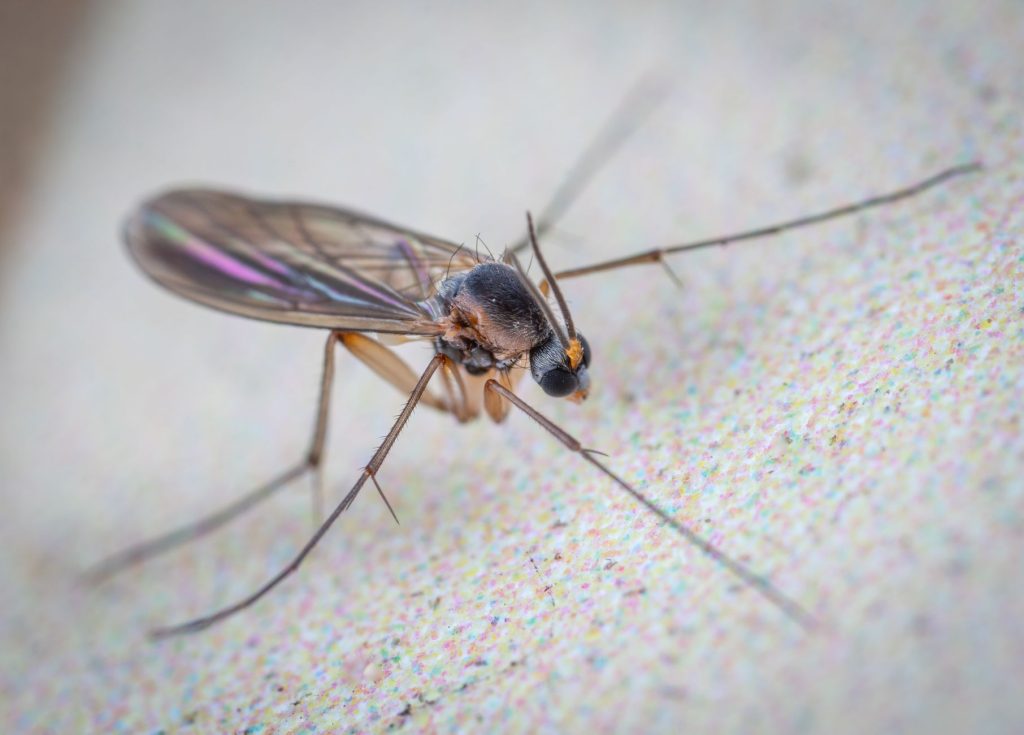
Gnats bugs can create costly problems when early signs are missed. Learn what to look for, why it matters, and when to call ClearDefense Pest Control.
Key Takeaways About Gnats Bugs
- Several species of small flies can show up inside your home, and telling them apart is the first step toward reducing their numbers.
- Most gnats bugs are a nuisance rather than a structural threat, but some types can affect potted plants or persist indoors when conditions favor them.
- Prevention starts with managing moisture and biological matter in and around your living spaces.
- A recurring pest control plan can help keep gnat activity low over time by addressing the conditions that attract these flies.
How to Identify Gnats Bugs
Several species of small, gnat-sized flies can show up in and around your home. Telling them apart matters because each species has different habits and breeding sources. Knowing what you are looking at helps you figure out where the problem started and what to do next.
How to Tell Gnats Bug Types Apart
The term “gnats bugs” covers more than one species. According to the Mississippi State University Extension, several species of small, gnat-sized flies occur in homes. Some are dark-bodied and breed outdoors in flowing water, while others are lighter and tied to indoor moisture sources. Size, wing shape, and where you find them are the quickest ways to sort one species from another.
Black flies are one common outdoor species. More than 240 species exist in North America alone. Their larvae require flowing water to develop, so nearby streams or drainage channels can be a source. Adults tend to be stout-bodied with short antennae and broad wings.
Drain flies are another species group you may encounter. They are sometimes referred to as drain flies because the larvae of some species feed on the biological scum that accumulates inside drainpipes and garbage disposals. These flies are usually fuzzy-winged and smaller than black flies.
How to Spot Gnats Bug Activity Inside Your Home
Indoors, the most telling sign is small flies gathering near sinks, bathrooms, or kitchen drains. Drain fly species tend to rest on walls and ceilings close to their breeding source. You May notice a few at first, then see numbers climb as larvae develop in the biological buildup inside pipes.
Look for tiny flies hovering under cabinet lights or near windows during the day. Because several species are involved, indoor activity does not always trace back to one source. Check any fixture where moisture and biological material collect.
Where Gnats Bug Activity Shows Up Around Homes
Outside, black fly species are often found near flowing water. According to the University of Georgia pest guide, their larvae are aquatic and need moving water to complete development. Larvae develop through 7 instars over a period ranging from about 10 days to many months, depending on the species and water temperature.
If your property borders a creek, retention pond outflow, or irrigation channel, you may see higher outdoor gnat activity. Standing puddles are less likely to support black fly larvae, but other gnat species may still use stagnant moisture sources near landscaping or gutters.
Exterior Entry Points Gnats Bugs Use
Black fly adults are strong fliers. Documented movement of 20 or more miles from their larval development site has been recorded. That means even homes well away from a water source can see these flies arrive in noticeable numbers.
Open doors, gaps around window screens, and any unsealed opening can let gnat-sized flies move indoors. Because of their small body size, species that breed outside can slip through spaces that would stop larger pests. Keeping entry points tight is one of the first steps in reducing indoor activity.
Why Gnats Bugs Problems Develop
Most gnats bugs issues trace back to moisture and biological material in or around your home. Understanding where these small flies breed, what draws them indoors, and how they travel helps you stay a step ahead.
Outdoor Nesting Areas for Gnats Bugs
Different gnat species favor different outdoor conditions. Eye gnats, for example, are found from central to south Georgia, south of the Fall Line, according to the University of Georgia pest guide. Fungus gnats tend to cluster wherever damp soil and decaying biological matter collect. Landscape beds, mulch areas, and potted plants on porches can all host larvae.
Food and Shelter That Attract Gnats Bugs
Gnat larvae primarily feed on fungi and biological matter in soil, and they may also chew roots, as UC IPM notes. That means overwatered houseplants or garden pots with rich, moist soil become reliable breeding spots. Fungus gnat adults do not bite or consume household items or food, yet they can reproduce year-round on indoor plants, making them a consistent nuisance.
Drain flies are another common indoor gnat. They breed in drain scum and can even be found in toilet tanks when toilets have gone unflushed for an extended period. Any slow drain or seldom-used fixture gives them a place to lay eggs.
How Gnats Bugs Move Around Homes
Gnats bugs often start in a single location and then spread as new breeding sites appear. Fungus gnats may move from one overwatered plant to the next. Drain flies can migrate from a basement floor drain to a bathroom sink if scum buildup is present in both places. Their small size lets them drift through rooms without much notice.
Trails and Entry Points Gnats Bugs Use
Because most gnats are tiny, they pass through gaps that larger insects cannot. Open windows, poorly sealed doors, and vents offer easy access. Once inside, they follow moisture. A damp kitchen drain, a bathroom with standing water, or a cluster of houseplants can pull them deeper into your living space.
Reducing moisture and biological buildup around entry points makes your home less inviting. Flushing unused drains regularly and letting soil dry between waterings removes two of the most common breeding conditions for gnats bugs indoors.
Risks From Gnats Bugs
Most gnats bugs you encounter indoors are nuisance pests rather than direct threats. That said, certain types carry risks worth understanding. Knowing what those risks are helps you decide how seriously to take a gnat problem in your home.
Health Risks Linked to Gnats Bugs
Fungus gnats do not bite people. Their presence is primarily considered a nuisance. They will not sting, and adult fungus gnats pose no direct physical harm to you or your family.
Eye gnats are a different story. According to the University of Georgia pest guide, eye gnats can mechanically transmit bacteria that causes acute conjunctivitis (pink eye) without biting. They carry the bacteria on their body parts, so even brief contact near your eyes can be a concern.
Because these two types of gnats bugs behave differently, identifying which kind you are dealing with matters. Fungus gnats and eye gnats require different levels of attention.
Property Damage From Gnats Bugs
Adult fungus gnats do not damage plants or bite people. However, their larvae may feed on roots and leaves resting on the soil surface in houseplant pots. The larvae remain in the top two to three inches of growing medium, where they feed on fungi, algae, and decaying plant matter.
A single female August deposit up to 200 eggs in the growing medium of houseplants during her short life span of 7 to 10 days. That egg count means larval populations can build quickly in potted plants, and root feeding from larvae August stress younger or smaller houseplants over time.
Food Areas and Gnats Bug Activity
Gnats bugs are drawn to decaying vegetation and biological material. Any area in your home where produce, compost scraps, or overwatered houseplants sit can support gnat activity. The larvae live in decaying vegetation or the growing medium of plants in homes, according to Kansas State University Extension.
Keeping these pests away from food prep spaces starts with understanding that moisture and biological decay are what attract them. Anywhere those conditions exist indoors, gnats bugs can follow.
When to Look Closer at Gnats Bug Activity
A few gnats bugs near a window may not seem like much. But when these pests become numerous, they can become a nuisance by hovering around the TV, computer monitor, or other light sources in darkened rooms. That hovering behavior is often the first sign that a population is growing inside your home.
Watch for clusters of small, brown to black flies near potted plants or light sources. Fungus gnats are small, about 1/8-inch long, with long legs and antennae. If you notice steady numbers over several days, the larvae are likely reproducing in nearby soil or biological matter, and the problem August continue without intervention.
Professional Pest Control for Gnats Bugs
Getting rid of gnats bugs starts with understanding where they breed and what draws them indoors. A recurring control plan that targets the source of an infestation, rather than just the adults you see flying around, gives you a better path to lasting relief.
How to Reduce Attractants for Gnats Bugs
Indoor fungus gnat infestations are almost always associated with houseplants, especially overwatered ones. Wet biological matter that collects in drain saucers beneath potted plants creates an ideal breeding site. Letting the soil dry between waterings removes the damp conditions larvae depend on.
Fruit flies and phorid flies are drawn to different sources. A forgotten tomato or piece of fruit that has rolled behind the refrigerator can fuel an infestation quickly. Dirty, unlined garbage cans and cans that are not emptied frequently also attract these pests. Keeping cans lined and taking trash out regularly removes two common breeding spots.
Why Gnats Bug Control Starts With Inspection
Fungus gnat larvae breed in potting media, feeding on fungi growing on plant roots and within the soil itself. Because the larvae and pupae are hidden below the surface, a visual check of adult gnats bugs alone does not reveal the full scope of the problem. Inspection means examining every houseplant, drain saucer, and area where biological matter August accumulate.
A thorough inspection also looks for overlooked food sources. Produce that has fallen behind appliances or shelving can sustain a separate population of fruit flies or phorid flies. Identifying each breeding site is the foundation of any control effort.
What to Expect During Professional Gnats Bug Treatment
According to UC IPM, most of the fungus gnat’s life is spent as a larva and pupa in biological matter or soil, so the most useful control methods target these immature stages rather than attempting to directly control the mobile, short-lived adults. A professional approach focuses on those hidden life stages where treatment can make the biggest difference.
ClearDefense Pest Control uses a prevention-first IPM methodology. That means your service professional identifies breeding sites, addresses the conditions that support larvae, and documents findings in a Defense Report. The report shows every product applied and every condition noted during the visit.
What to Expect From a Gnats Bug Control Plan
ClearDefense provides recurring service, not one-time treatments. With gnats bugs, recurring visits let your service professional monitor houseplant conditions, check for new biological matter buildup, and adjust the plan as conditions in your home change.
Each visit includes a documented Defense Report so you can see exactly what was found and what was applied. That level of accountability helps you track progress and understand what steps you can take between visits to keep attractants low.
Gnats Bugs: Bottom Line
Gnats bugs cover a range of small flies, from fungus gnats near potted plants to drain flies in bathrooms to eye gnats outdoors. Identifying which type you have is the first step toward reducing their numbers. Most are nuisance pests rather than a structural threat, but some, like eye gnats, can carry bacteria. Keeping moisture and biological matter in check goes a long way toward prevention. For recurring gnat activity that household fixes have not resolved, reach out to ClearDefense Pest Control to request a quote and set up a recurring plan.
Frequently Asked Questions
What Are the Most Common Types of Gnats in Homes?
Fungus gnats are among the most frequent indoor types. They tend to appear around houseplants because their larvae develop in moist potting media. Drain flies are another common indoor type, breeding in the scum that builds up inside drains or even in toilet tanks that go unflushed for extended periods. Outdoors, eye gnats and black flies may also be present depending on your region.
Do Gnats Bite or Spread Disease?
Fungus gnat adults do not bite, consume food, or damage household items. Eye gnats, however, can mechanically transmit bacteria that cause acute conjunctivitis (pink eye) without biting. Black flies include many species, and some can bite, though their larvae require flowing water to develop and are less often found inside homes.
How Can I Reduce Gnats Around My Home?
Start with moisture control. Avoid overwatering houseplants and allow the top layer of soil to dry between waterings. Clean drains regularly to remove biological buildup where drain flies breed. Outdoors, reducing standing biological debris helps limit breeding sites. Screening can also help. An 8-foot-tall screen fence has been reported to exclude eye gnats because they fly close to the ground.
When Should I Call a Professional?
If you have addressed moisture issues, cleaned drains, and adjusted watering habits but still see gnats bugs appearing consistently, a professional assessment may be the right next step. A recurring pest control plan can address conditions that attract these flies and help keep activity low over time. ClearDefense provides documented Defense Reports so you know exactly what was found and what was applied.