
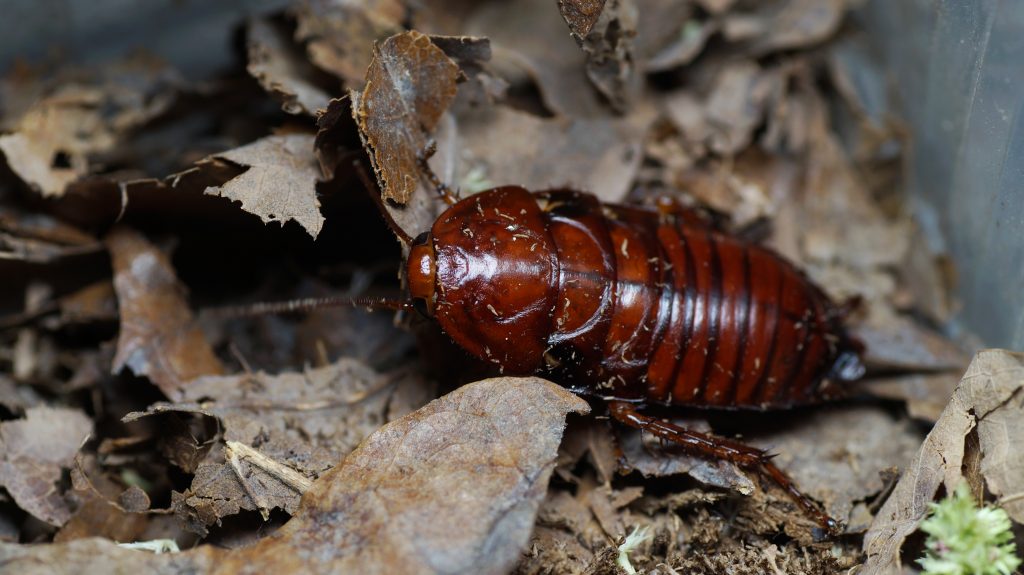
A dark cockroach crawling across your garage floor can make you wonder what else is hiding nearby. The insect may be a Florida wood cockroach that came in from damp landscaping, a woodpile, or storm debris rather than an indoor colony.
This type of cockroach is more commonly called the Florida woods cockroach. You may also hear people call it a stinkroach, skunk roach, or palmetto bug.
This large outdoor roach behaves differently from the smaller species that settle inside kitchens and bathrooms. It cannot fly, prefers decaying plant material, and rarely establishes itself in occupied rooms. Still, repeated sightings can point to moisture, heavy yard debris, or gaps that allow outdoor pests into the house.
What Does a Florida Wood Cockroach Look Like?
An adult Florida wood cockroach has a broad, oval body with a dark reddish-brown to nearly black color. Its body looks thick and heavy compared with the flatter profile of many common household roaches. Long antennae extend well beyond the head, and its legs have visible spines.
Adults measure about 30 to 40 millimeters long, which is roughly 1.2 to 1.6 inches. They can grow up to 24 millimeters wide, or close to one inch. That makes this species much larger than a German cockroach, which usually measures around half an inch.
The short wing pads offer the clearest identification clue. They barely meet along the back and do not cover the abdomen. The hind wings are absent, so neither males nor females can fly.
The University of Florida IFAS Extension reports that Florida woods cockroaches move relatively slowly, may live for more than one year as adults, and usually enter homes after being carried inside with firewood or another object.
| Identification feature | Florida woods cockroach |
| Adult length | About 1.2 to 1.6 inches |
| Maximum width | About 1 inch |
| Color | Reddish-brown to nearly black |
| Wings | Reduced wing pads with no functional hind wings |
| Flight ability | Cannot fly |
| Movement | Slower than many other large roaches |
| Adult lifespan | More than one year under suitable conditions |
Young cockroaches, called nymphs, resemble smaller wingless adults. Their bodies range from reddish-brown to black, and later stages may develop yellow edges along the thorax. Nymphs molt an average of seven times before reaching adulthood.
Why Is It Called a Stinkroach?
The Florida wood cockroach can release a strong-smelling defensive secretion when threatened. That defense explains common names such as stinkroach, skunk roach, and stinking cockroach.
The smell helps discourage predators. A roach August release it when a person moves the log or planter where it was hiding, attempts to pick it up, or traps it in a tight space. Crushing the insect can also leave a noticeable odor behind.
Avoid handling a live specimen with your bare hands. Place a container over it and slide a piece of stiff paper underneath if you plan to carry it outside. Use gloves and a disposable towel to remove a dead roach, then clean the surface with a normal household cleaner.
The odor is distinctive, but it should not be the only identification method. Body size, dark coloring, broad shape, and reduced wings provide more dependable clues.
Florida Wood Cockroach vs. Other Large Florida Roaches
Florida homeowners use the name “palmetto bug” for several large cockroach species. It May refer to a Florida woods cockroach, American cockroach, or smokybrown cockroach, depending on who is speaking.
TheUniversity of Georgia Cooperative Extension describes palmetto bug as a broad regional label rather than a precise scientific name. That loose usage can lead homeowners to choose the wrong prevention or treatment approach.
American cockroaches are reddish-brown and usually have a pale yellow marking behind the head. Their wings cover the abdomen, and adults August glide or fly when conditions are warm. They often live around drains, sewer lines, utility rooms, and other humid parts of buildings.
Smokybrown cockroaches have an even mahogany or dark brown color with full wings extending beyond the body. They commonly gather in gutters, tree holes, attics, and landscaping. Unlike the Florida woods cockroach, they are strong fliers and may be drawn toward exterior lights.
| Feature | Florida woods cockroach | American cockroach | Smokybrown cockroach |
| Typical color | Dark reddish-brown to black | Reddish-brown with a pale marking behind the head | Even dark brown or mahogany |
| Approximate adult size | 1.2 to 1.6 inches | About 1.5 inches or longer | About 1.25 to 1.5 inches |
| Wings | Short, reduced wing pads | Full wings | Full wings |
| Can it fly? | No | Sometimes | Yes |
| Common habitat | Leaves, logs, bark, woodpiles, and damp debris | Drains, sewers, utility spaces, and buildings | Trees, gutters, attics, and landscaping |
| Indoor behavior | Usually an occasional visitor | Can live around structures | August enter and remain in sheltered building areas |
Correct identification becomes more important when you see several roaches. A single Florida woods cockroach beside a garage door August have wandered inside. Repeated American or smokybrown cockroach activity could point to a drain, attic, gutter, or structural moisture problem.
Where Florida Wood Cockroaches Live
Florida woods cockroaches spend most of their time outdoors. They favor shaded places where moisture stays trapped and decomposing plant material provides food. Common habitats include tree holes, loose bark, rotting stumps, fallen logs, leaf litter, and woodpiles.
Residential yards often recreate those conditions. Deep mulch, damp landscape timbers, palm debris, stacked lumber, and planters sitting directly on the ground can all provide cover. Boards, boxes, and storage containers left beside the foundation August create dark spaces that remain damp after rain.
These roaches feed on decaying organic matter. That makes wooded lots and mature landscaping attractive, especially when leaves collect beneath shrubs or around fences. A clean kitchen will not change an outdoor population living under wet mulch beside the house.
Florida yards can support this species for much of the year. Warm temperatures, frequent rain, oak leaves, palm material, and shaded planting beds create reliable shelter. Houses near wooded edges, retention areas, and dense landscaping August experience more accidental visitors.
Why Do Florida Wood Cockroaches Come Inside?
Most Florida wood cockroaches enter by accident. They August crawl under a worn door sweep, pass through a garage seal, or squeeze through an opening around a pipe or vent. They can also arrive inside firewood, potted plants, outdoor furniture, or boxes stored in a shed.
Weather and yard work can increase sightings. Heavy rain August saturate the space under bark, mulch, or logs and push insects toward a drier shelter. Moving firewood, clearing storm debris, or replacing mulch can expose roaches that had remained hidden.
An isolated adult does not prove that the species is reproducing indoors. Remove the insect, inspect the nearby doorway, and check outdoor conditions along that side of the house. In many cases, the source is a damp hiding place within a few feet of the structure.
Several adults, nymphs, or egg cases in the same area deserve closer attention. They may be using an attic, crawl space, damp garage corner, or storage area that provides conditions similar to their outdoor habitat. The source is often shelter and moisture rather than uncovered food.
When Is Florida Wood Cockroach Season?
There is no strict start and end date for the Florida wood cockroach season. Warm conditions allow activity during much of the year, although homeowners tend to see more outdoor roaches during humid spring and summer weather.
Florida’s broader wet season runs from August through October, according to the National Weather Service. Statewide precipitation rises sharply in August and often peaks during August and September. That pattern creates more damp shelter in leaves, mulch, bark, and wood.
The wet season does not automatically cause an infestation. It changes the conditions around the property and may increase movement after thunderstorms, tropical weather, or several days of heavy rain. Saturated hiding places can drive roaches onto patios, into garages, or beneath covered entryways.
Activity can continue during Florida’s dry season. Protected woodpiles, tree cavities, crawl spaces, and dense landscaping hold moisture longer than open ground. A warm winter spell may also bring outdoor insects back into view.
| Condition | What August happen | Where to inspect |
| Heavy rain | Flooded shelter August push roaches toward structures | Garage edges, patios, door thresholds, and covered porches |
| Mulch replacement | Disturbed roaches August scatter from planting beds | Foundation lines and nearby doors |
| Storm cleanup | Wet limbs and leaf piles August create temporary shelter | Debris piles, fences, sheds, and wood stacks |
| Hot, dry weather | Roaches August seek cooler, damper spaces | Crawl spaces, bathrooms, garages, and utility areas |
| Cooler weather | Activity August shift into protected sites | Bark, lumber, attics, storage rooms, and woodpiles |
Rather than relying on the month alone, pay attention to what changed around the home. Rain, landscaping work, new firewood, and deteriorating door seals often explain a sudden sighting better than the calendar.
Are Florida Wood Cockroaches Dangerous?
Florida woods cockroaches do not sting and are not aggressive toward people. Their normal response is to hide, move away, or release their defensive odor.
Their outdoor lifestyle also separates them from German cockroaches, which readily establish indoor populations near food and water. Florida woods cockroaches are considered occasional home invaders and have not been shown to colonize occupied structures commonly.
That does not make repeated indoor activity something to ignore. Any cockroach can carry dirt or microorganisms on its body after crawling through soil and decaying material. Dead insects, droppings, and shed skins should be removed while wearing gloves, followed by normal surface cleaning.
The more useful question is why the roaches are reaching the house. Frequent sightings can point to damp landscaping, a plumbing leak, poor drainage, or an entry gap. Addressing those conditions helps reduce more than one type of pest.
How to Keep Florida Wood Cockroaches Outside
Start close to the foundation. Remove thick leaf buildup, fallen palm material, and wet debris from the edges of the house. Keep mulch several inches below siding and avoid piling it against door frames, vents, or utility openings.
Store firewood on a raised rack away from exterior walls. Bring in only what you plan to burn, and inspect each piece before it enters the house. Lumber, cardboard, and unused planters should not sit directly on damp soil.
Moisture control matters just as much as cleanup. Repair leaking faucets, hoses, irrigation lines, and plumbing connections. Keep gutters clear and direct downspouts away from the foundation so water does not collect beside the structure.
Check doors, windows, utility lines, vents, and garage seals for openings. Replace worn sweeps and weatherstripping. Secure damaged screens and close gaps around pipes with a material appropriate for the opening.
A few simple changes can reduce occasional visitors, but recurring activity may require a wider inspection. The visible roach is often only the clue. The real problem may be the shaded harborage, moisture source, or unsealed opening that allowed it to get close.
Defending Your Florida Home From Outdoor Roaches
Florida wood cockroaches belong outdoors, but Florida properties can give them an easy path toward garages, patios, and living spaces. Damp mulch, firewood, leaf litter, storm debris, and damaged seals are common starting points.
ClearDefense Pest Control begins by identifying the species and inspecting the conditions around the property. That matters because an outdoor woods cockroach should not be treated like a German cockroach living inside a kitchen. The location, habitat, and entry route shape the service plan.
ClearDefense Pest Control serves homeowners in Jacksonville, Nocatee, Orange Park, Jacksonville Beach, St. Augustine, and Fleming Island. When Florida wood cockroaches keep appearing, schedule service with ClearDefense Pest Control for a professional inspection to identify the source, address moisture and entry points, and help keep these outdoor pests away from the home.