
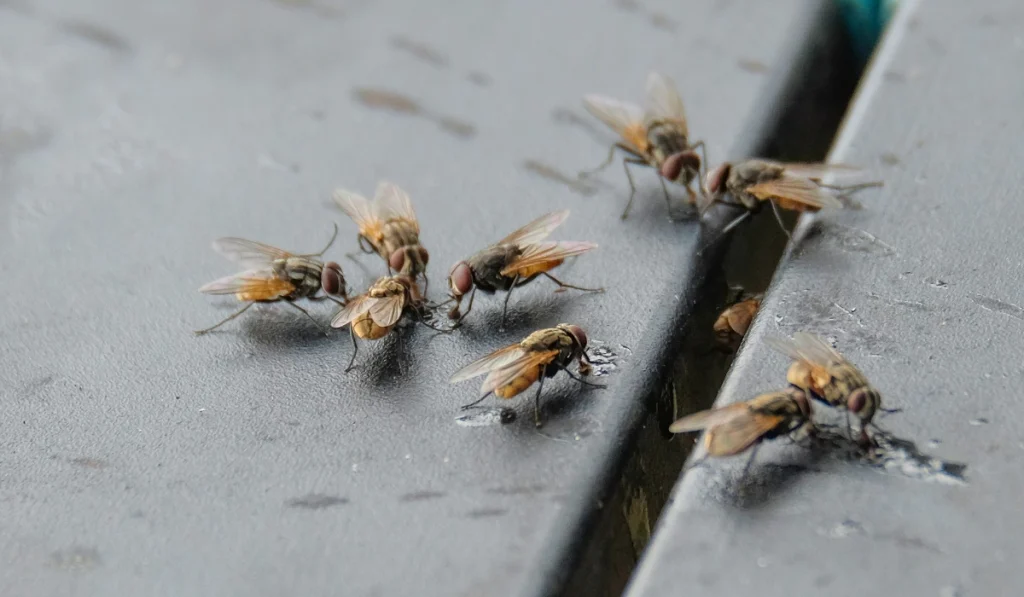
One fly getting through an open door is easy to explain. Finding flies in the same room every day is different. Repeated activity can point to garbage, fermenting food, wet organic matter, or another place nearby where flies are feeding or developing.
For homeowners dealing with flies in North Carolina, identification can quickly narrow the search. Tiny flies around a fruit bowl suggest a different problem from fuzzy flies resting beside a shower drain. Slow flies collecting at an upstairs window may not be breeding indoors at all.
Swatting gets rid of the fly in front of you. If more keep appearing, the useful question is where they are coming from and what is allowing them to stay.
Key Takeaways
- House flies, fruit flies, drain flies, cluster flies, and horse flies have different breeding sites, so correct identification helps homeowners find the real source of activity.
- Recurring indoor flies often lead back to garbage, fermenting food, drains, moisture, organic debris, or structural entry points. Removing that source matters more than killing individual adults.
- House flies and other filth-associated flies raise sanitation concerns. Persistent indoor fly activity may justify professional pest control when the breeding site can’t be located or reached.
Common Flies in North Carolina Homes and Yards
Five flies account for most recurring indoor and yard activity across North Carolina homes, and each one points to a different breeding source. Match size, color, and where it’s showing up to the profiles below, then go straight to the source instead of just swatting the adults.
House fly
High riskFruit fly
Low riskDrain fly
Low riskCluster fly
Low riskHorse fly
High riskLocation narrows the list fast: trash and pet waste point to house flies, fermenting food points to fruit flies, damp drains point to drain flies, upstairs windows point to cluster flies, and wet outdoor ground points to horse flies. If the breeding site still can’t be found or reached, that’s when a professional inspection is worth it.
The five flies below don’t all behave like the familiar house fly. Some reproduce in waste, some need fermenting food, and others develop entirely outdoors. Their appearance and where you find them offer useful clues.
| Fly | How to Identify It | What Attracts It | Where It Breeds or Develops |
| House fly | Gray, under 3/8 inch long, with four dark stripes behind the head | Garbage, animal waste, food scraps, and decaying plant material | Warm, moist organic material |
| Fruit fly | About 1/8 inch long, tan to brown, often with red eyes | Overripe produce, juice, wine, beer, vinegar, and sugary residue | Fermenting foods and liquids |
| Drain fly | Tiny, fuzzy, and moth-like | Moisture and organic buildup | Organic film inside drains, traps, and other persistently damp areas |
| Cluster fly | About 3/8 inch long, dark gray, and sluggish | Protected indoor spaces used for overwintering | Larvae develop outdoors in association with earthworms |
| Horse fly | Large, heavy-bodied fly with prominent eyes; females bite | Mammals and suitable wet outdoor habitat | Water, wet soil, marshes, stream edges, and similar sites |
House Flies Point to Waste and Decaying Material
House flies are gray and have four dark stripes behind the head. They are usually easy to separate from tiny fruit flies, although homeowners sometimes confuse them with larger, slower cluster flies.
Garbage is a common breeding source, but the search shouldn’t stop at the kitchen trash. Pet waste, manure, spoiled produce, grass clippings, compost, and other moist organic debris can support house fly development. Outdoor garbage cans deserve a close look because food residue can collect underneath the bag or around the bottom.
According to UC Integrated Pest Management, female house flies can lay several batches of roughly 100 to 150 eggs, and development from egg to adult can take as little as seven days in favorable summer conditions. The same guidance notes that house flies can pick up disease agents while feeding on feces, waste, or animal secretions.
A fast life cycle makes the breeding material more important than the adults buzzing around a room. Cleaning or removing that material interrupts the next generation.
Fruit Flies Stay Close to Fermenting Food
Fruit flies measure about 1/8 inch and are commonly tan or brown with noticeable red eyes. They tend to remain near kitchens, pantries, recycling areas, or other places where food and drinks are stored.
A ripe banana is an obvious attraction. Less obvious fly breeding sites include an unrinsed wine bottle, juice residue inside a recycling bin, a soft onion at the back of a pantry, or liquid that leaked beneath an appliance. Fermentation is the common thread.
University of Maryland Extension identifies fruit flies as primarily kitchen pests and drain flies as pests of kitchens, bathrooms, and basements near drains. Its fruit fly guidance notes that these small flies develop around fermenting foods and liquids, which explains why simply clearing the visible fruit bowl may not end an infestation.
Drain Flies Lead to Moisture and Organic Buildup
Drain flies are tiny and noticeably fuzzy. Their broad, hairy wings give them a moth-like appearance when they rest on a bathroom wall or beside a sink.
The larvae develop in moist organic buildup. Inside a drain, grease, food particles, bacteria, and other material can form a film along the sides of the pipe. Similar conditions can develop around dirty condensate pans, plumbing leaks, slow drains, or other areas that stay damp.
If you keep seeing flies around drains after wiping down the sink or shower, surface cleaning has not answered the bigger question. The organic material may be farther inside the drain, or another moisture source may be supporting the activity.
Cluster Flies Come Inside for Shelter
Cluster flies are dark gray, roughly 3/8 inch long, and slower than house flies. They are often noticed near windows and lights, sometimes well away from kitchens or garbage.
These flies don’t breed in trash or drains. Their larvae develop outdoors in association with earthworms. The adults later seek protected places where they can spend colder periods, including attics and wall voids.
For homeowners, that shifts attention from sanitation to exclusion. Gaps near siding, rooflines, vents, windows, and other exterior openings can allow adults to enter. Flies gathering at upper-story windows may have been sheltered inside the structure before becoming active.
Horse Flies Are an Outdoor Biting Pest
Horse flies are easy to distinguish by size. They are much larger and heavier-bodied than common indoor flies, and females can deliver a painful bite when taking a blood meal.
Their breeding habitat is also different. Eggs are laid near water, and the larvae develop in aquatic or semi-aquatic areas, including wet soil. Streams, ponds, marshes, floodplains, and poorly drained ground can provide suitable conditions.
NC State Extension’s horse and deer fly guide reports that more than 40 species of horse and deer flies occur in North Carolina, with about a dozen considered common. Most adults emerge from May through August, making these flies especially relevant during warmer months.
A horse fly outside doesn’t suggest a garbage or drain problem indoors. Its presence tells you more about the surrounding landscape and moisture conditions.
Why Flies in North Carolina Keep Coming Back
A recurring fly infestation is often easier to understand when you stop looking at the individual insects and start looking at where they appear. Location can reduce a long list of possibilities to just a few likely sources.
Let the Location Narrow the Search
House flies around the back door can lead to outdoor trash or pet waste. Tiny flies hovering around food, bottles, or a recycling container fit a fruit fly problem. Fuzzy insects resting beside a bathroom drain make drain flies a stronger possibility.
Cluster flies create a different pattern. Finding sluggish flies around upstairs windows suggests an entry and shelter problem rather than decaying food. Large biting flies in the yard point outdoors, especially toward wet ground or nearby water.
| What You Notice | Where to Look First |
| House flies near trash or doors | Garbage cans, pet waste, compost, and decaying organic matter |
| Tiny flies near produce or drinks | Overripe food, spills, recycling, and fermenting residue |
| Fuzzy flies around sinks or tubs | Drains, traps, leaks, and wet organic buildup |
| Sluggish flies around windows | Attics, wall voids, vents, and exterior gaps |
| Large biting flies outside | Wet soil, streams, ponds, and marshy areas |
Deal With the Breeding Source First
A fly swatter, sticky trap, or vacuum can remove adults. Those tools are useful for immediate relief, but they don’t remove eggs or larvae developing somewhere else.
That’s why persistent flies in the house call for a little detective work. Cleaning a garbage container, removing spoiled produce, clearing organic buildup from a drain, fixing a leak, or sealing a structural gap can address the condition producing the activity. The correct action depends on which fly is present.
Which Flies Raise Health Concerns?
Not every fly carries the same level or type of concern. The strongest sanitation issue comes from flies that routinely visit waste and then move onto food or food-contact surfaces.
House Flies and Other Filth Flies
House flies are considered filth flies because of the places where they feed and reproduce. Garbage, feces, manure, and decomposing organic matter can expose them to microorganisms that may later be transferred mechanically to food or surfaces.
For that reason, repeated house fly activity around a kitchen deserves more attention than a single fly wandering in from outside. Food should remain covered, waste should be removed, and the breeding material should be located.
Nuisance Flies and Biting Flies
Cluster flies are primarily nuisance pests. Their presence doesn’t indicate that garbage is hidden somewhere in the home. Fruit flies and drain flies are more useful as signs that fermenting food or wet organic material needs attention.
Horse flies create a different concern because females bite people and other mammals. Their activity is mainly outdoors, so the response centers on outdoor conditions rather than kitchen sanitation.
How to Reduce Fly Activity Around Your Home
Prevention works best when it matches the fly. Cleaning every drain won’t stop cluster flies from entering an attic, just as sealing a window gap won’t remove fruit fly larvae from forgotten produce.
Keep Food and Waste Sources Under Control
Empty household garbage regularly and keep outdoor containers closed. Rinse sticky recycling, clean residue from the bottom of trash cans, and pick up pet waste before it becomes attractive to house flies.
Store ripe produce appropriately and throw away fruit or vegetables that begin to spoil. Look beyond countertops when fruit flies persist. Beverage bottles, disposal areas, pantry corners, and spaces beneath appliances can hold enough residue to support them.
Address Drains, Moisture, and Entry Points
When flies around drains are the problem, clean the organic buildup inside the drain and pay attention to slow plumbing or leaks. A continually wet area can keep supporting larvae after the bathroom or kitchen itself has been cleaned.
For cluster flies, check the exterior instead. Repair damaged screens and close gaps around windows, vents, siding, and other openings. These steps reduce access to the protected spaces adults seek inside a home.
When Persistent Indoor Flies Need Professional Help
An occasional fly doesn’t automatically call for professional fly control. The situation changes when fresh adults keep appearing after the obvious garbage, food, and moisture sources have been addressed.
Professional fly control is useful when you can’t identify the fly, can’t locate its breeding source, or suspect activity inside plumbing, wall voids, an attic, or another inaccessible part of the home. Repeated drain fly activity can be especially frustrating when the visible drains have already been cleaned.
ClearDefense Pest Control can inspect the property, identify the fly involved, and focus treatment on the conditions supporting the problem instead of simply chasing the adults you can see. That approach is valuable because different flies require different solutions. If flies keep returning and you can’t find the reason, contact ClearDefense to schedule an inspection and get a plan built around the actual source.
Frequently Asked Questions
Why do I suddenly have so many flies in my house?
A sudden increase often means flies have found suitable food or breeding material nearby. Check garbage, spoiled produce, recycling, pet waste, drains, and wet organic debris. Cluster flies are an exception because they can appear indoors after spending time hidden in attics or wall voids.
How do I get rid of flies in my house?
Start by identifying the type of fly and removing what supports it. That might mean cleaning a trash container, discarding fermenting produce, removing drain buildup, fixing moisture problems, or sealing entry gaps. Traps can remove adults, but recurring activity usually continues until the underlying source is corrected.
When should I call pest control for flies?
Consider professional help when flies keep returning after you remove obvious breeding sources, when the source seems to be inside plumbing or the structure, or when you can’t identify the species. An accurate identification can prevent wasted effort and help direct treatment to the place actually supporting the infestation.