
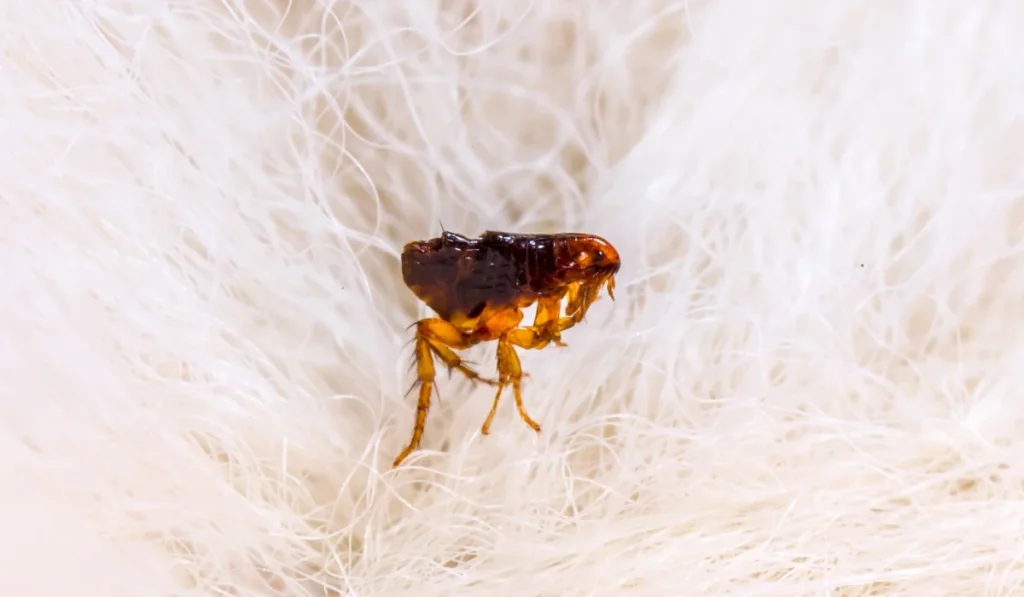
Fleas are a common concern for South Carolina homeowners because warm, humid weather gives them a long season to reproduce outside, while heated homes allow an infestation to continue indoors. They can enter on pets, but finding fleas in the house doesn’t necessarily mean you own a dog or cat.
Once fleas settle in, treating the adults you can see is rarely enough. Eggs, larvae, and pupae can remain in carpeting, pet bedding, furniture, and protected parts of the yard, so effective flea control has to address the animal and its surroundings.
Why Is Flea Season So Long in South Carolina?
South Carolina gives fleas favorable conditions through much of the warmer part of the year. The Clemson Cooperative Extension flea control guide describes fleas as thriving during the state’s warm, muggy summers and notes that both temperature and humidity affect their development.
Flea season doesn’t have a clean start and stop date, though. Outdoor activity can slow when temperatures fall, while fleas already developing inside remain protected by relatively stable indoor conditions. That’s one reason a homeowner may still find fleas after the hottest summer weather has passed.
Where Do Fleas Thrive Outside?
Fleas aren’t spread evenly across a lawn. Flea larvae are vulnerable to prolonged direct sunlight, so exposed, dry turf is less favorable than sheltered areas with shade and moisture.
Think about where a dog lies after a walk or where animals regularly pass through the yard. The ground beneath a deck, dense landscaping, a shaded dog run, or a protected spot beside the house can provide much better conditions for flea eggs and larvae.
| Outdoor Condition | Why It Matters |
| Warm temperatures | Favorable temperatures speed flea development |
| Humidity | Helps immature fleas avoid drying out |
| Shade | Protects flea larvae from direct sunlight |
| Animal resting areas | Concentrate flea eggs where hosts spend time |
| Protected soil or debris | Gives immature stages places to develop |
The practical takeaway is simple: when checking for fleas in the yard, pay more attention to animal activity and shade than to the total size of the lawn.
Can Fleas Get Into a House Without Pets?
Yes. Pet ownership increases the opportunities for fleas to enter, but a pet-free home can still develop a flea infestation.
A previous resident may have owned a dog or cat. Visiting pets can introduce adult fleas. Rodents can carry fleas near or into a structure. Animals spending time beneath porches, around garages, or near crawl spaces can also create flea activity close to the house.
Why Can Fleas Suddenly Appear in a Quiet Room?
A room may seem flea-free until someone starts using it again. The explanation lies in the flea life cycle rather than a brand-new infestation.
During the pupal stage, a developing adult is protected inside a cocoon. Movement, increased temperature, and carbon dioxide can help signal that a host is nearby. Activity in a room that has been empty or quiet can therefore encourage waiting adults to emerge.
That can happen after moving into a home that previously had pets or after returning to a room that has seen little foot traffic.
Where Should You Look for Fleas Indoors?
Start where animals spend or previously spent their time. Flea eggs fall away from the host instead of remaining attached to fur, so pet routines often reveal where immature fleas are concentrated.
Common flea hiding areas include carpet around pet beds, rugs, upholstered furniture, flooring beneath couches and beds, carpet edges, and spaces around crates. Pet bedding deserves particular attention because it combines warmth, hair, organic debris, and frequent animal contact.
How Can You Recognize Flea Bites and an Infestation?
Most homeowners don’t discover a flea infestation by finding dozens of fleas at once. The signs tend to build: a pet starts scratching, someone notices itchy bumps near the ankles, or a small dark insect jumps from the carpet.
No single sign confirms fleas. A better assessment comes from looking at bites, pet behavior, visible insects, and signs around the home together.
What Do Flea Bites Look Like?
Flea bites commonly appear as small, itchy bumps. They often affect the ankles, feet, and lower legs because fleas emerging near floor level can reach those areas easily.
Skin reactions vary, so a bite should not be used as the only identification method. If irritation is severe, unusual, or persistent, seek medical guidance instead of assuming fleas are responsible.
What Are the Signs of Fleas on Pets and in the House?
Dogs and cats may scratch, lick, or bite at their coat more often than usual. Adult fleas are small, dark insects that move quickly and jump rather than fly.
Another useful sign is flea dirt. These reddish-black specks consist of digested blood passed by adult fleas. Material collected from a pet’s coat may leave a reddish stain when placed on a damp white paper towel.
| Sign | Where to Check |
| Increased scratching | Pet’s coat and favorite resting areas |
| Jumping adult fleas | Rugs, carpet, and pet bedding |
| Flea dirt | Fur, bedding, crates, and resting spots |
| Itchy bites | Feet, ankles, and lower legs |
| Fleas appearing repeatedly | Carpet edges, furniture areas, and other protected locations |
Seeing adults repeatedly after cleaning deserves attention because flea eggs, larvae, or pupae may still be developing out of sight.
Why Are Fleas So Hard to Get Rid Of?
Adult fleas are only one stage of a four-stage life cycle. The others spend much of their development away from the animal, which is what makes a flea infestation harder to eliminate than simply removing insects from a pet.
The Companion Animal Parasite Council’s flea guidelines report that a female flea can produce about 40 to 50 eggs per day. Egg production may begin roughly 20 to 24 hours after the first blood meal, giving feeding adults a chance to seed the surrounding environment quickly.
What Happens During the Flea Life Cycle?
Adult fleas feed and reproduce on a host. Their eggs then fall into the surrounding environment. Under favorable conditions, Clemson reports that flea eggs may hatch in about 1 to 10 days.
The larvae seek sheltered areas and feed on organic material, including flea waste. A mature larva eventually forms a cocoon and enters the pupal stage. The adult develops inside that protected cocoon before emerging when conditions favor finding a host.
| Flea Stage | Typical Location | Why It Complicates Control |
| Egg | Carpet, bedding, floors, outdoor resting areas | Eggs spread wherever an animal spends time |
| Larva | Sheltered areas containing organic debris | Larvae are small and remain out of sight |
| Pupa | Inside a protective cocoon | This stage is difficult to reach while protected |
| Adult | On or near a host | Feeding starts another reproductive cycle |
This explains why flea activity can continue after the adults first noticed in the house are gone. Newly emerged fleas may come from pupae that were already present before treatment began.
Why Isn’t Treating Your Dog or Cat Enough?
Treating pets is an essential part of flea control because adult fleas feed on animal hosts. Once flea eggs have fallen into the environment, however, pet treatment alone can’t remove the developing population in carpets, bedding, furniture areas, or the yard.
Consider where a dog goes during a normal afternoon. It may nap on a rug, climb onto the sofa, lie near its bed, and then spend an hour beneath the deck. Flea eggs can fall along that route, spreading the infestation beyond the animal itself.
Does Vacuuming Help With Fleas?
Vacuuming helps remove flea eggs, some larvae, flea dirt, pet hair, and the organic debris immature fleas use. It also reaches places that pet treatment can’t.
Concentrate on carpet edges, rugs, flooring beneath movable furniture, upholstered furniture used by pets, and areas surrounding crates and beds. Wash pet bedding according to its care instructions and repeat cleaning rather than stopping as soon as adult activity drops.
A veterinarian should handle the pet-treatment side of the problem. Flea products aren’t interchangeable between animals, and the right option depends on the pet’s species, age, health, and other factors.
How Do You Break the Flea Life Cycle in Your Home and Yard?
Getting rid of fleas works best when each part of the infestation is addressed at about the same time. The Centers for Disease Control and Prevention (CDC) recommends sanitation, treatment of every pet in the household, treatment of the home, and follow-up. It also notes that moderate or severe infestations may take months to control because several flea stages can be present at once.
Indoors, focus cleaning and flea treatment on the locations where pets rest and where activity has been found. Outdoors, look first at shaded areas, spaces beneath decks, dog runs, protected landscaping, and other places animals use regularly. Treating every square foot of open lawn is less useful than identifying the locations where fleas are actually developing.
Why Can Fleas Still Appear After Treatment?
Seeing a few fleas after the first flea treatment doesn’t automatically mean the process failed. Pupae already inside their cocoons may continue developing, allowing additional adults to emerge afterward.
That makes follow-up especially important. Continued vacuuming helps deal with the environmental population while pet protection prevents newly emerged fleas from restarting the cycle on an animal host.
When Should You Consider Professional Flea Control?
Professional flea control makes sense when fleas keep appearing after pet treatment and thorough cleaning, several rooms show activity, bites continue, or the yard appears to be contributing to reinfestation.
A technician can inspect the places that matter most, including pet resting areas, carpet and flooring edges, protected indoor spaces, and likely outdoor hotspots. That focused approach is more useful than repeatedly treating visible adult fleas without addressing where the next generation is developing.
Getting Fleas Under Control in Your South Carolina Home
A persistent flea problem is rarely just an issue with the dog or the living room carpet. The infestation can span the animal, indoor resting areas, protected spaces around the property, and flea pupae that are still waiting to emerge.
ClearDefense Pest Control approaches flea control by targeting the areas connected to that cycle. Professional home and yard treatment can work alongside veterinary flea protection and consistent cleaning, giving each part of the infestation attention instead of relying on a single method. If fleas continue showing up despite treating your pets and cleaning the home, contact ClearDefense Pest Control for flea control service to have the problem inspected and treated at its source.
Fleas in South Carolina: FAQs
Can you have fleas in your house without pets?
Yes. Fleas may remain from previous pets, enter with visiting animals, or arrive with rodents and other animal hosts around the property. Pupae can also remain hidden until movement and other host-related signals encourage adults to emerge.
Do fleas go away in winter in South Carolina?
Cool weather can reduce outdoor flea activity, but it doesn’t guarantee that an existing infestation will disappear. Fleas developing inside a heated home are protected from many outdoor temperature changes, so indoor flea control may still be necessary during cooler months.
Can fleas live in carpet?
Carpet can provide sheltered locations for flea eggs, larvae, and pupae. Adult fleas spend most of their feeding time on a host, but immature stages can develop in carpet fibers, especially around pet resting areas and places where hair and organic debris collect.
How long does it take to get rid of a flea infestation?
The timeline depends on the size and age of the infestation. Because protected pupae may continue producing new adults, moderate to severe flea infestations can take weeks or even months to bring fully under control. Consistent pet treatment, cleaning, environmental treatment, and follow-up are what eventually interrupt the cycle.