

A mound of fresh soil can show up in an Austin lawn soon after rain. It may look harmless from a distance, but stepping too close can send hundreds of ants onto your shoes and legs within seconds. Fire ants grip the skin and sting repeatedly, which makes a small patch of disturbed soil a real concern around children, pets, and busy outdoor areas.
Fire ants in Austin are also difficult to control by treating only what you see. The visible mound is just one part of a larger underground nest. Workers may travel through tunnels that reach well beyond the pile of soil at the surface.
The right response starts with knowing what you are dealing with. You need to recognize the mound, understand how stings happen, and choose a treatment that reaches the colony rather than a few ants moving across the grass.
Why Fire Ants Thrive in Austin Yards
Austin’s long warm season gives fire ant colonies plenty of time to forage, reproduce, and expand. Sunny lawns, irrigated turf, landscape beds, and open ground provide the conditions they prefer. Colonies often form beside sidewalks, driveways, utility boxes, patios, and other areas where the soil stays warm.
Rain changes how visible the problem becomes. Damp soil is easier for worker ants to move, so established colonies August build or repair mounds after a storm. A mound that seems to have appeared overnight was often connected to a colony that was already active below the lawn.
Red imported fire ants are invasive pests, not native Texas ants. Their effects reach beyond residential properties. The Texas Imported Fire Ant Research and Management Project estimates their economic impact in Texas at $1.2 billion each year, including costs tied to homes, agriculture, wildlife, and public health.
Austin yards give these ants many places to settle. They can establish colonies in the middle of a lawn, but they may also choose narrow strips of soil between pavement and grass. Regular irrigation can keep those areas suitable even during stretches of hot, dry weather.
How to Identify a Fire Ant Mound
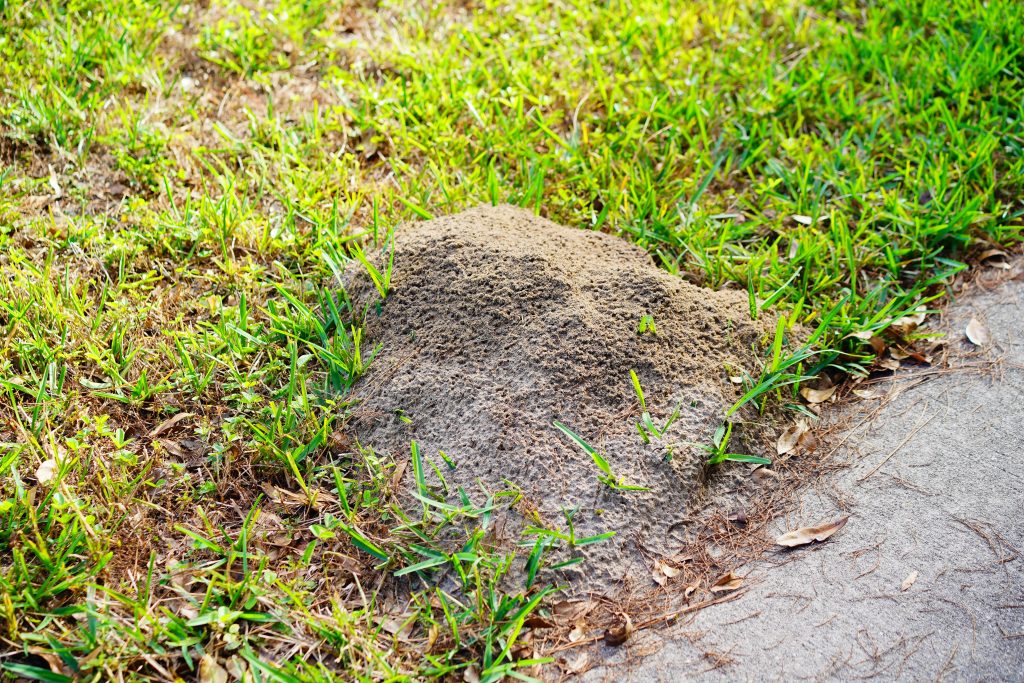
A fire ant mound usually consists of loose, recently moved soil. It may be round, flattened, or irregular, depending on moisture levels and the condition of the ground. Mature mounds can become several inches tall, while newer colonies August leave only a low patch of disturbed dirt.
Many fire ant mounds do not have a clear opening at the top. Workers enter and leave through underground passages that may reach the surface away from the main mound. This is one reason homeowners sometimes mistake the pile for leftover soil from landscaping or animal activity.
The ants themselves vary in size within the same colony. Workers generally measure between 1/8 and 1/4 inch long, with coloring that ranges from reddish brown to dark brown. Size variation among workers is a helpful clue because many other household ant species have workers that look almost identical to one another.
| Feature | Common fire ant sign | What it means for homeowners |
| Mound surface | Loose, fluffy, or freshly turned soil | The colony is actively moving soil and maintaining tunnels |
| Top opening | Often no obvious center hole | Entrances may be located away from the visible mound |
| Worker size | About 1/8 to 1/4 inch | Different-sized workers can belong to the same colony |
| Color | Reddish brown to dark brown | Color helps, but it should not be the only identification clue |
| Reaction to disturbance | Workers rush out quickly | Avoid kicking, raking, or probing the mound |
| Common locations | Sunny turf, pavement edges, utility areas, and landscape beds | Check places where people and pets regularly walk |
TheUSDA Animal and Plant Health Inspection Service confirms that imported fire ants favor sunny, open settings such as lawns, parks, meadows, and fields. It also notes that one fire ant can sting repeatedly. Watch suspected activity from a safe distance rather than disturbing the mound to confirm what lives inside.
Where Fire Ant Mounds Create the Most Risk
Location matters as much as mound size. A small colony beside a back door may create more immediate risk than a larger mound in an unused corner of the property. People and animals are most likely to be stung when normal activity shakes or presses against the nest.
Play areas should receive close attention. Children August sit in the grass, kneel beside a playset, or run across a mound without seeing it. Several ants can climb onto the skin before the first sting is felt, so the child may already have multiple ants on a foot or leg when the reaction begins.
Pet spaces are another concern. Dogs August step on a nest or investigate it with their nose. Ants can reach the paws, face, belly, and other areas with less protective fur. Check fenced runs, favorite resting spots, and the ground around outdoor water bowls.
Fire ant mounds also cause trouble beside patios, pools, garden paths, mailboxes, and air-conditioning units. Lawn equipment can strike a mound and spread defensive workers through the surrounding grass. A quick yard inspection before mowing or hosting guests can prevent an avoidable encounter.
What Happens When a Fire Ant Stings
A fire ant first grips the skin with its jaws. It then curls its abdomen forward and uses its stinger. The ant August pivot while holding on, leaving several sting marks in a small circular or clustered pattern.
The first sensation is often a sharp burn. Redness, swelling, and itching August follow. A small white or yellowish pustule commonly develops later, but breaking it open can increase the risk of infection.
Move away from the mound immediately after an attack. Brush ants off quickly, wash the skin with soap and water, and apply a cool compress. Avoid scratching the area, even when the itching becomes distracting.
| Reaction | What you may notice | Recommended response |
| Mild local reaction | Burning, redness, itching, or minor swelling | Wash the skin and use a cool compress |
| Pustule formation | Small white or yellowish bump | Leave it intact and keep the area clean |
| Large local reaction | Swelling that spreads beyond the sting area | Contact a medical professional for guidance |
| Possible infection | Increasing pain, warmth, drainage, or spreading redness | Seek medical evaluation |
| Severe allergic reaction | Trouble breathing, throat swelling, dizziness, fainting, or widespread hives | Call 911 immediately |
TheAugusto Clinic’s insect-sting first-aid guidance identifies breathing problems, facial or throat swelling, fainting, and widespread hives as warning signs of a serious allergic reaction. Someone with these symptoms needs emergency medical care, even if a prescribed epinephrine device has already been used.
How Fire Ant Control in Austin Works
Effective fire ant control targets the colony below ground. Spraying ants that are visible on the lawn August reduce activity for a short time, but it does not necessarily reach the queen, developing ants, or workers deeper inside the nest.
Residential fire ant programs commonly rely on broadcast bait, direct mound treatment, or a combination of both. The right choice depends on how many mounds are present, where they are located, and how quickly a high-risk area needs attention.
Broadcast Bait
Broadcast bait covers a wider section of the property. Foraging workers collect it and carry it into the colony, where it is shared with other ants. The material works gradually so the workers have time to move it through the nest.
Bait should be applied when ants are actively searching for food. Rain, heavy irrigation, or wet grass can reduce its attractiveness, depending on the product label. Applying extra material does not speed up the process and August interfere with proper use.
Direct Mound Treatment
Direct treatment focuses on one active mound. It may be useful when a colony sits beside a doorway, walkway, playset, patio, or pet area where faster control is needed.
The treatment has to reach the nest according to label directions. A light surface application August kill ants near the top without reaching the deeper chambers. Treating one mound also does not control colonies elsewhere in the yard.
A Combined Approach
Properties with activity in several areas often need both methods. Broadcast bait addresses colonies across the lawn, while direct treatment focuses on mounds that create an immediate risk.
| Control method | Best use | Main advantage | Limitation |
| Broadcast bait | Several colonies or widespread activity | Workers carry material into hidden nests | Results take time and depend on good application conditions |
| Direct mound treatment | One visible mound in a high-use area | Provides focused treatment at the problem site | Does not address unseen colonies across the yard |
| Combined treatment | Recurring or heavy yard activity | Offers broad coverage and targeted control | Requires correct timing and follow-through |
| Professional service | Mounds keep returning or identification is uncertain | Provides inspection, planned treatment, and monitoring | Requires scheduling service rather than a one-time DIY attempt |
No outdoor treatment makes a yard permanently fire-ant-proof. Colonies can spread from nearby properties, and newly mated queens can establish nests in open soil. The practical goal is to reduce active colonies and keep mounds away from the areas your family uses most.
Fire Ant Control Mistakes That Waste Time
Disturbing a mound before applying bait is a common mistake. Kicking, raking, mowing, or flooding the nest puts the colony on alert. Workers August stop foraging and move deeper underground, which makes it less likely that they will collect the bait.
Treating only the tallest mound can also leave much of the problem untouched. Small colonies August produce little visible soil, especially during dry periods. Workers from nearby nests August continue moving through the lawn even after one mound is treated.
Home remedies such as grits, coffee grounds, cinnamon, and club soda do not provide consistent colony control. Gasoline, fuel, and other flammable liquids should never be poured into a nest. They create fire risks, damage the lawn, and contaminate the soil.
Boiling water also has serious limits. It can kill ants it contacts, but it may not reach the queen or the deepest parts of the nest. Carrying it across a yard creates a burn hazard, and the heat can destroy nearby turf and plant roots.
Another mistake is assuming that more product means better results. Product labels specify the amount, placement, and conditions for use. Accurate application works better than repeatedly soaking or covering the same patch of ground.
How to Reduce Recurring Activity Around Your Yard
Inspect the property after warm rain, irrigation, or recent landscaping. Focus on sunny turf, sidewalk edges, utility areas, garden borders, and places where soil has been disturbed. These checks help you catch new mounds before they expand beside high-traffic areas.
Look over the yard before children play outside, pets enter fenced runs, or guests gather on the patio. Do not rely on an inspection from several weeks earlier. Colonies can relocate, and fresh activity may appear in a part of the lawn that was previously clear.
Be careful when moving sod, mulch, potted plants, or loose soil. Ants and queens can travel inside materials that contain enough soil to support them. Check containers before placing them near doors or moving them to another property.
Keep track of where mounds return. Repeated activity along the same section of the lawn may show that individual mound treatments are too limited. At that point, a broader yard treatment and monitoring plan may be more useful.
Getting Dependable Fire Ant Control in Austin
Fire ants in Austin can turn an ordinary lawn into a difficult place to walk, work, or play. Their mounds are not always easy to recognize, and disturbing one can lead to several painful stings before you have time to react.
A useful control plan starts with an inspection of the whole property. It should identify active mounds, high-risk areas, and the conditions allowing colonies to remain close to the home. Treatment should then match the size and location of the problem instead of relying on repeated surface applications.
ClearDefense Pest Control serves Austin and surrounding Travis County communities with a whole-property approach. Technicians inspect the yard, explain what they find, and document the products and materials used after service. When fire ant mounds keep returning near walkways, play areas, patios, or pet spaces, professional control provides a clear plan for reducing the activity and keeping those areas easier to use.