
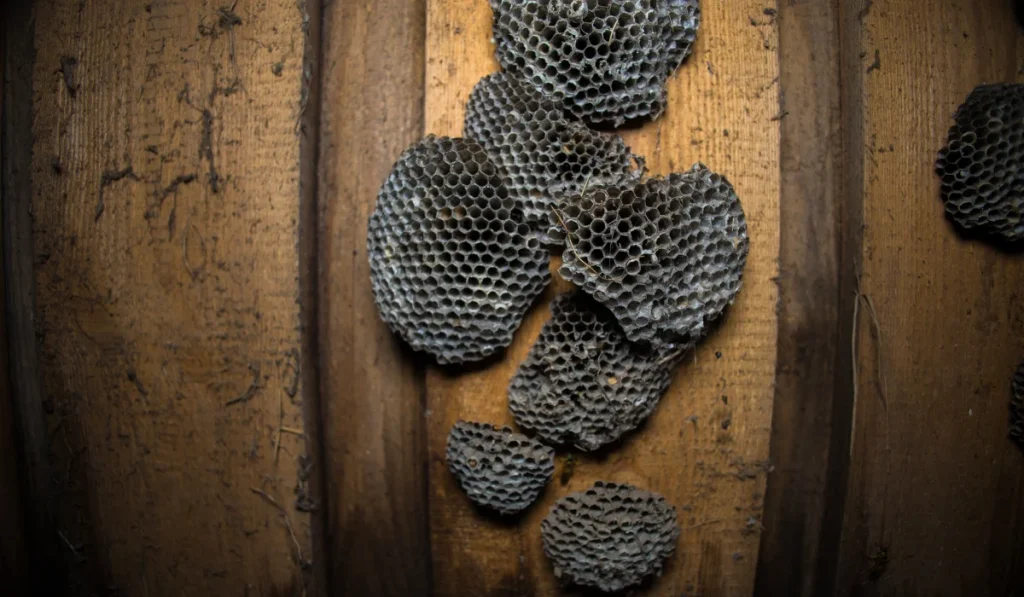
Failing to notice early indications of wasp nests can lead to expensive issues. Discover how to identify signs and risks, and understand when it is time to contact ClearDefense Pest Control.
Key Takeaways About Wasp Nest Reuse
- Most social wasp colonies are annual, meaning a nest is typically used for only one season and not reused the following year.
- Nests built in high-traffic areas around your home can pose a stinging risk and may need proactive attention.
- Some wasp colonies, particularly larger or structural ones, are best handled by a pest control professional rather than on your own.
- Understanding which wasps you are dealing with, whether paper wasps, yellowjackets, or hornets, helps you choose the right approach to managing nests on your property.
How to Identify Old Wasp Nests
Knowing which species built a nest helps you decide whether old structures around your home pose a concern. Different wasp and hornet species leave behind different nests, and recognizing those differences is the first step toward understanding activity near your property.
How to Tell Different Wasp Nest Types Apart
Baldfaced hornets are a large black and white species that build the familiar grayish, pear-shaped nest typically suspended in trees or on sides of buildings. According to Purdue Extension, a thick paper envelope encloses two to four horizontally arranged combs inside. Remove the sentence or replace with a supported detail, e.g.: “These nests can grow large by late summer.
Paper wasp nests look different. They feature a single open comb, usually shaped like an upside-down umbrella, with no outer envelope. A single paper wasp queen, or sometimes several queens, August start a nest. One becomes dominant and takes over egg-laying while the others maintain the structure.
How to Spot Wasp Nest Activity Inside Your Home
Inside your home, the clearest sign of wasp activity is repeated sightings of the same species near windows, attic vents, or ceiling corners. You May notice wasps entering and leaving through a small gap. By late summer, colonies August number nearly a thousand workers, so even a few wasps indoors can signal a sizable nest nearby.
Listen for a faint buzzing behind walls or in ceiling voids. If you spot papery material around interior trim or light fixtures, a nest may be hidden just out of view.
Where Wasp Nest Activity Shows Up Around Homes
Around the exterior, baldfaced hornet nests typically hang from tree branches, porch overhangs, or the sides of buildings. Paper wasps tend to build under eaves, along fence rails, and beneath deck ledges. As Mississippi State University Extension notes, some wasp species are more aggressive than others and August fly several feet to sting someone who happens to be near the nest site. Give any active nest a wide berth.
Late summer is when nests reach peak size. If you see heavy traffic around one spot on your home’s exterior, that usually points to an active colony rather than a leftover structure.
Exterior Entry Points Wasps Use to Access Old Nests
Wasps exploit small openings to reach sheltered building areas. Gaps where siding meets trim, unsealed soffit vents, and cracks along the roofline are common access points. ClearDefense technicians can treat eaves up to 25 feet if needed, reaching nests in spots most homeowners cannot access without risk.
When control is warranted, it is best left to a professional pest control operator. Protective gear and quick, efficient application are important because disturbed colonies can swarm and sting.
Why Wasp Nest Problems Develop
Social wasp colonies are annual, meaning each colony exists for one season only. A nest is used only during the season it is built. Paper wasps and yellowjackets do not reuse nests the following year. Still, old nests left in place can create the impression that wasps keep coming back to the same spot, and abandoned nest material can cause other issues worth understanding.
Outdoor Nesting Areas Wasps Prefer
Social wasps build paper nests in a range of outdoor locations. Several species of yellowjackets build subterranean nests in areas such as creek banks, lawns, and garden and flower beds. Paper wasps tend to attach their open-comb nests to sheltered horizontal surfaces around homes. Having a colony one season does not mean a colony will appear in the same site the following season, according to Purdue Extension.
Food and Shelter That Attract Wasps
Paper wasp queens overwinter in groups, often sheltering in protected spaces. If you see them indoors during cooler months, they are not coming from an active nest but from a shelter. These queens are looking for a protected spot to wait out the cold, not returning to last year’s colony. Once warmer weather arrives, surviving queens leave to start entirely new nests elsewhere.
How Wasps Move Around Homes
Each social wasp colony consists of an egg-laying queen and many sterile female workers. Workers range outward from the nest throughout the season. Paper wasps are relatively nonaggressive and serve as beneficial caterpillar predators, so they may be noticed moving through landscaping and garden areas near your home as they forage.
Trails and Entry Points Wasps Use
Old, abandoned wasp nests can harbor other pest infestations if left in place. Removing old nests, along with old spider webs and bird or rodent nests, helps reduce conditions that attract secondary pests. According to Mississippi State University Extension, paper wasp nests last only one season regardless of species, so clearing them after the colony dies off is a straightforward step you can take during fall or winter.
Risks From Old Wasp Nests
Health Risks Linked to Wasp Nests
When wasps build nests in high-traffic spots around your home, the main concern is stings. Paper wasp nests built in the wrong place, where they are likely to cause stings, require proactive attention, according to Mississippi State University Extension. An old nest near a doorway or porch can attract new colony activity in the same area, keeping sting risk elevated season after season.
Proper precautions matter when dealing with any nest. Choosing the right approach and limiting exposure helps reduce the potential for stings. Rushing in without preparation can make the situation worse, especially with active pests nearby.
Property Damage From Wasp Nests
Social wasps are beneficial pests that capture flies, caterpillars, beetle larvae, and other insects. Still, as Purdue Extension notes, destruction of colonies is warranted when they are located in or around structures and areas of human activity where stings can occur. Nests tucked under eaves, inside wall voids, or along rooflines put you and your family in regular contact with these pests.
An old nest signals a spot that wasps have already found suitable. Even if a new colony does not reuse the exact structure, the same sheltered location can draw fresh nest-building. Leaving deteriorating nests in place keeps that site on the radar for returning pests.
Wasp Activity Near Food Areas
Outdoor dining areas, grills, and porches become less enjoyable when wasps nest nearby. Because these pests forage for other insects and protein sources, they often circle areas where your family gathers to eat. Nests positioned close to those zones raise the likelihood of encounters and stings throughout the warmer months.
When to Look Closer at Wasp Nest Activity
Spotting an old nest is a good reason to inspect the surrounding area for new activity. Paper wasp nests in problem locations should be addressed before a full colony establishes itself. Early attention reduces the potential for stings and keeps pests from settling into the same reliable spot year after year.
Taking necessary precautions is important whether you are inspecting or treating. Quick-contact treatments are formulated to reduce sting potential during the process, but matching the right product to the nest type and location matters just as much.
Professional Pest Control for Wasp Nests
Whether you are dealing with an active colony or wondering about an old nest on your eaves, understanding when professional pest control makes sense can save you time and trouble. Not every nest needs treatment, but certain situations call for trained help.
How to Reduce Attractants for Wasps
Good, proactive exclusion is the only way to prevent large numbers of overwintering wasps in attics or other building locations, according to Mississippi State University Extension. Sealing gaps around rooflines, vents, and soffits keeps wasps from settling into sheltered spots in the first place.
During warmer months, wasps build their gray, inverted-umbrella-shaped nests under the eaves of buildings and in other protected locations. Stay alert for new nest construction in these areas. Catching a small nest early gives you more options than dealing with a large, established colony later in the season.
Paper wasp nests may not require treatment unless they are near people. A nest tucked under a distant overhang or in an unused corner of the yard can often be left alone.
Why Wasp Nest Control Starts With Inspection
Regular checks around your home help you spot nest activity before colonies grow. Be alert for wasp nests around the home, and look in protected spots such as eaves, overhangs, and entry points into wall voids or attics.
Correct identification matters. European paper wasps are often mistaken for yellowjackets due to their similar yellow and black coloring, but yellowjackets are stockier and typically build enclosed nests in the ground or in wall voids, while paper wasps build open-comb nests under eaves. Knowing which species you are dealing with shapes the right response. ClearDefense offers a free phone consultation to help identify the pest before scheduling service.
What to Expect During Professional Wasp Nest Treatment
Above-ground and nearly all structural colonies are best handled by professional pest control operators, as Purdue Extension notes. Colonies can be large and are often located far from the entrance hole, deep into the structure. That combination of size and concealment makes DIY attempts risky.
ClearDefense technicians wear bee suits for protection and can treat eaves up to 25 feet when needed. Products used include Bifen, Suspend Polyzone, and Stryker Wasp and Hornet. Every visit comes with a Defense Report documenting the products applied and findings at your property.
ClearDefense does not treat honey bees. If a consultation reveals honey bees rather than wasps, the team will let you know and August recommend contacting a local beekeeper for low-risk removal. If a consultation reveals honey bees rather than wasps, the team will let you know.
What to Expect From a Wasp Nest Control Plan
ClearDefense provides recurring pest control rather than one-time treatments. This approach supports the prevention-first IPM methodology the company follows. Common wasp issues involve nests in the grass or around foliage near the home, and recurring visits help monitor for new activity throughout the season.
ClearDefense guarantees against wasps and hornets as part of its service plans. After the initial visit, follow-up service helps address any new nesting activity before colonies have a chance to grow large.
Bottom Line on Wasp Nest Reuse
Wasp nests last only one season, so the short answer is no. Once a colony dies off, the old nest is abandoned for good. That said, new queens August build fresh nests in the same sheltered spots year after year if conditions remain inviting. Good proactive exclusion is the only way to keep wasps from returning to those favored locations. If you find an active nest near your home, professional help is the smartest route.
ClearDefense Pest Control offers a free phone consultation to identify the issue and schedule a technician visit, so reach out for a plan that fits your situation.
Frequently Asked Questions
Why Do Wasps Keep Nesting in the Same Spot?
Sheltered areas like eaves and overhangs offer the protection wasps look for when starting a colony. Even though old nests are not reused, the location itself stays attractive. Sealing gaps and removing old nest material can help make those spots less appealing to new queens scouting in spring.
Should I Remove an Old Nest Myself?
An abandoned nest from a previous season poses little risk and can usually be knocked down. However, if you are unsure whether a nest is still active, it is best to leave it alone. Late-summer colonies can contain nearly a thousand workers, and disturbing an active nest without proper gear can lead to stings.
When Are Wasp Nests Most Active?
Colonies grow throughout the warmer months. By late summer, worker numbers peak. Nests built during this period are at peak population, which is why control at that stage is best handled by a professional with protective gear.
Does ClearDefense Guarantee Wasp Treatment?
Yes. Technicians can treat eaves up to 25 feet and use protective bee suits during the process.