
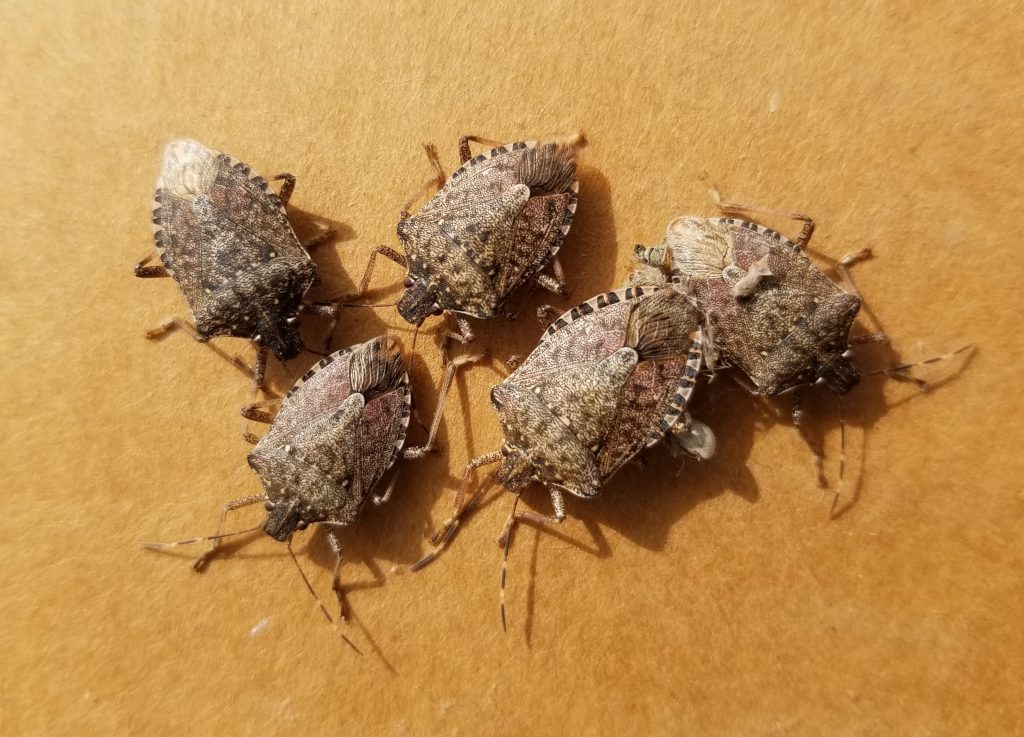
A shield-shaped bug crawls across an upstairs window. You reach for it, and a sharp, musty smell fills the room. The pointed mouthpart tucked under its body makes the insect look capable of more than creating a bad odor.
So, do stink bugs bite? No. The stink bugs that commonly enter homes do not bite or sting people. Their mouthparts draw fluids from plants, not blood or skin. The insect may look alarming at close range, but its indoor behavior is more annoying than dangerous. The bigger issue is how it entered and whether more are hiding around the house.
| Common Question | Direct Answer |
| Do stink bugs bite humans? | No. Common home-invading stink bugs feed on plants. |
| Do stink bugs sting? | No. They do not have stingers. |
| Are stink bugs dangerous? | They are nuisance pests indoors and are not known for spreading disease. |
| Why do stink bugs smell? | They release an odor when threatened, trapped, or crushed. |
| Why are stink bugs in the house? | They enter buildings in fall while searching for winter shelter. |
| Should you crush one? | No. Crushing can release more odor and leave residue on a surface. |
Do Stink Bugs Bite Humans or Pets?
A stink bug has a narrow feeding tube that rests beneath its body. Outside, it pushes that tube into fruit, leaves, stems, seeds, and other plant tissue. It then draws out plant fluids.
That sharp-looking feature explains why people ask, can stink bugs bite? It is not used to hunt people, defend a nest, or feed on blood. A bug crawling across your arm is looking for footing or an escape route.
The University of Maryland Extension’s stink bug guidance confirms that these insects do not bite, sting, suck blood, or spread disease. The same guidance states that they do not harm houses or pets.
What Happens If a Pet Finds One?
Stink bugs do not chase or attack dogs and cats. A curious pet may still sniff, paw at, or pick one up, which can trigger the insect’s odor.
Keep pets from playing with unfamiliar insects when possible. Contact a veterinarian when a pet swallows an insect and then develops continuing vomiting, swelling, breathing trouble, or unusual behavior. Those symptoms need professional attention regardless of the insect involved.
Why Do Stink Bugs Stink?
The odor is the stink bug’s main defense. When the insect feels threatened, scent glands on its body release a strong-smelling substance that can discourage predators.
People compare the stink bug smell to cilantro, strong herbs, musty plants, or overripe produce. The scent can seem stronger in a closed room, especially when several bugs are disturbed together.
A stink bug does not release odor every time it moves. One may crawl quietly across a window without producing any noticeable smell. Grabbing, squeezing, stepping on, or trapping it against fabric makes the defensive response more likely.
Does the Odor Mean It Is About to Attack?
The odor does not signal an incoming bite. It replaces the need for biting or stinging and gives the insect a chance to escape.
A disturbed stink bug may freeze, drop from the wall, or fly toward a bright window. Slow handling is less likely to create a smell than swatting at it or pressing it against a surface.
Are Stink Bugs Dangerous Inside the House?
Stink bugs look more threatening than they are. They do not eat framing, drywall, insulation, rugs, clothing, or stored pantry food. They also do not bore into wood or create nests inside the walls.
The Environmental Protection Agency (EPA) states that these pests do not bite people or animals, damage buildings, or reproduce inside homes. The EPA also notes that they are not known to transmit disease or cause physical harm.
Their feeding causes more concern outdoors. Stink bugs can pierce apples, peaches, tomatoes, peppers, corn, soybeans, and ornamental plants. Damage may appear as dimples, scars, discolored areas, or misshapen growth.
| Concern | Risk Inside a Home | What Homeowners Should Know |
| Bites and stings | Very low | Common home-invading stink bugs do not feed on people or use stingers. |
| Disease transmission | Very low | They are not considered household disease vectors. |
| Structural damage | Very low | They do not consume wood, drywall, or insulation. |
| Fabric and pantry damage | Very low | They do not eat clothing, carpet, or stored food. |
| Odor | Moderate nuisance | Handling or crushing can release a strong smell. |
| Repeat sightings | Common seasonal issue | Several adults may use the same exterior gaps. |
| Plant damage | Greater outdoor concern | Feeding can scar or deform fruits, vegetables, and ornamental plants. |
Do Stink Bugs Reproduce Indoors?
The stink bugs seen during winter are usually adults that entered months earlier. They slip into protected spaces during fall and remain mostly inactive while temperatures stay low.
A warm room, sunny wall, or heating duct can wake a hidden bug. It may then move toward a window or light while trying to get outside. Seeing one in January does not usually mean eggs are hatching behind the wall.
Why Are Stink Bugs in My House?
Stink bugs enter buildings to escape colder weather. As nights cool in fall, adults gather on sun-warmed walls and begin testing seams, vents, siding, and trim for shelter
Two-story houses provide many entry points above eye level. An upper window with failed sealant or a loose soffit panel can admit insects without creating an obvious gap from the ground.
Where Stink Bugs Hide After Entering
Once inside, stink bugs may settle in attics, wall spaces, window frames, unused rooms, or gaps behind trim. Many stay hidden for weeks before warmth brings them into a living area.
The room where you find one may be far from the opening it used. A bug beside a ceiling light may have moved down from the attic. Another near a first-floor window may have traveled through a wall cavity while following daylight.
| Likely Entry Point | What to Inspect |
| Windows | Torn screens, loose trim, cracked sealant, and frame gaps |
| Exterior doors | Worn weatherstripping, loose thresholds, and visible light around edges |
| Garage doors | Damaged bottom seals and openings near the lower corners |
| Utility lines | Gaps around pipes, cables, faucets, and cooling lines |
| Attic vents | Torn mesh, loose covers, and spaces around vent frames |
| Soffits and fascia | Warped panels, damaged joints, and open roofline areas |
| Siding | Loose seams, corner gaps, and spaces where siding meets trim |
| Exhaust vents | Missing screens and covers that do not close fully |
How to Get Rid of Stink Bugs Without Spreading the Smell
For one or two visible bugs, place a cup over the insect and slide a stiff piece of paper underneath. Carry it outdoors or drop it into a container of soapy water.
A vacuum can help when several bugs gather near a ceiling or window. Empty a bagless canister outside as soon as you finish. Remove a disposable vacuum bag promptly because the machine may hold the odor.
Avoid smashing stink bugs against walls, curtains, carpet, or furniture. The smell and residue can become more frustrating than the original insect.
Use a Light and Soapy Water Trap
A light trap can collect active stink bugs in a dark room. Place a lamp above a shallow foil pan filled with water and a small amount of dish soap. Turn off the other lights so the insects move toward the setup.
Virginia Tech researchers testing a homemade stink bug trap found that the light and soapy water setup caught 14 times more stink bugs than the commercial traps included in their comparison. The method helps remove insects that are already indoors, but it does not stop new ones from entering.
Keep water away from the electrical parts of the lamp. Place the setup where children and pets cannot reach it.
How to Keep Stink Bugs Out of the House
Stink bug prevention begins outside. Repair torn screens and replace weatherstripping that has become flat, brittle, or loose. Seal openings around window trim, siding joints, pipes, cables, and outdoor faucets with materials suited to the surface.
Inspect attic vents, exhaust covers, garage door corners, soffits, and fascia. Upper parts of a two-story house may need professional attention because roofline gaps are difficult to see and unsafe to reach from the ground.
Complete repairs before fall activity peaks. Once bugs have entered an attic or wall space, sealing an interior crack will not remove them. Hidden adults may continue appearing during warm winter days and into spring.
When Professional Pest Control Makes Sense
Catching one stink bug does not call for a full service plan. Repeated sightings in several rooms suggest that the problem reaches beyond one open door or damaged screen.
A useful inspection should look beyond the spot where the bug appeared. Roofline gaps, upper window trim, siding seams, vent screens, and utility openings often explain why stink bugs return each year.
ClearDefense Pest Control treats the bug as a symptom and the building as part of the problem. Technicians inspect the property from the foundation to the roofline, then focus treatment on the areas pests use rather than applying products without a clear reason.
Keep the Smell Outside
When the question is do stink bugs bite, the answer is no. They do not sting or feed on people, but they can still become a recurring household nuisance when exterior openings give them a place to spend the winter.
Gentle removal handles the insects you can see. Screen repair, weatherstripping, sealing, and roofline inspection address the reason new bugs keep appearing.
When stink bugs return each fall or show up in several rooms, contact ClearDefense Pest Control for an inspection. A targeted plan can address the exterior routes seasonal pests use before they settle inside again.