
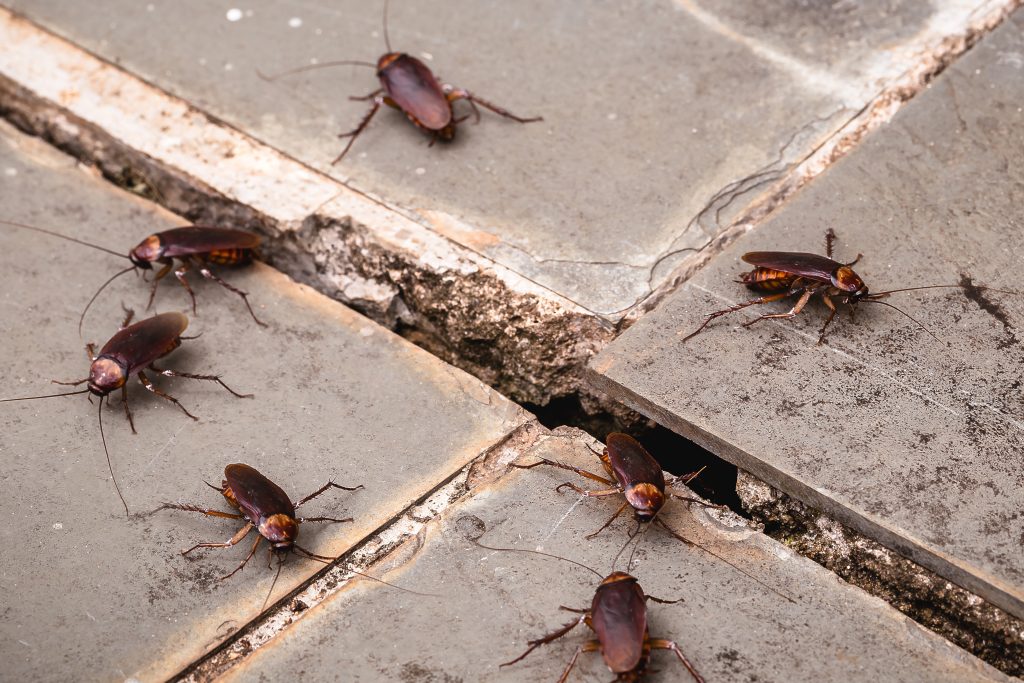
Cockroaches in Texas can show up during any month of the year. Warm temperatures give outdoor species a long active season, while heated homes allow indoor populations to keep breeding through winter. Rain, drought, landscaping, plumbing problems, and small exterior gaps can all influence when and where you see them.
Not every roach sighting means the same thing. A large reddish-brown cockroach near a garage door may have wandered inside after a storm. Several small tan roaches around a refrigerator are more likely to be living and reproducing indoors.
Knowing the common types of cockroaches in Texas helps you understand what you are seeing and what to do next. Size, markings, location, and time of year can reveal whether you have an occasional visitor or a growing infestation.
Common Types of Cockroaches in Texas
Six cockroach species account for most Texas home sightings, from large outdoor wanderers to small indoor breeders. The brief below sorts each by size, markings, hiding places, and indoor infestation risk. Match what you’ve spotted, then focus on the HIGH RISK species first.
American cockroach
Low riskGerman cockroach
High riskSmokybrown cockroach
Low riskOriental cockroach
Low riskBrown-banded cockroach
High riskAsian cockroach
Low riskCorrect identification prevents an outdoor visitor from being mistaken for a serious kitchen infestation — behavior and location matter just as much as body markings.
Texas has far more cockroach species than most homeowners ever encounter. According to Texas A&M AgriLife Extension, about 30 cockroach species occur in the state. Only a smaller number regularly live near homes or become indoor pests.
The six species below account for many residential sightings. Some spend most of their lives outdoors and enter by accident. Others can settle into kitchens, bathrooms, furniture, and wall spaces where food, moisture, and warmth stay available.
| Cockroach species | Typical size | Main identifying features | Common hiding places | Indoor infestation risk |
| American cockroach | About 1.5 inches | Reddish brown with a pale border behind the head | Drains, sewers, crawl spaces, garages | Moderate |
| German cockroach | About 0.5 inch | Tan with two dark stripes behind the head | Kitchens, bathrooms, appliances | High |
| Smokybrown cockroach | 1.25 to 1.5 inches | Glossy, evenly dark brown body | Trees, gutters, mulch, attics | Low to moderate |
| Oriental cockroach | About 1 inch | Dark brown or black with a broad body | Drains, damp crawl spaces, utility rooms | Moderate |
| Brown-banded cockroach | About 0.5 inch | Pale bands across wings or abdomen | Furniture, closets, upper cabinets | High |
| Asian cockroach | Slightly over 0.5 inch | Tan with dark stripes and long wings | Lawns, leaf litter, porches | Usually low |
American Cockroaches
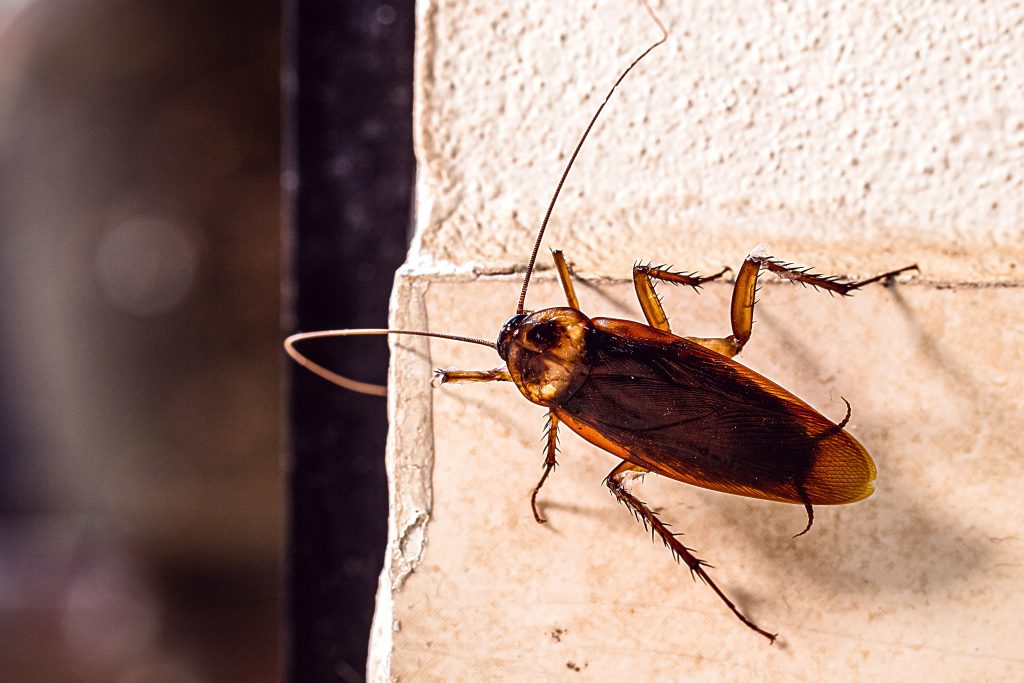
American cockroaches are among the largest roaches found around Texas homes. Adults have reddish-brown bodies with a pale yellow or cream-colored border behind the head. People often call them palmetto bugs, sewer roaches, or water bugs, though those informal names can also describe other large species.
These cockroaches prefer warm, moist places. They commonly live in sewer systems, floor drains, crawl spaces, utility rooms, hollow trees, and decaying plant material. They may enter through plumbing openings, damaged door sweeps, garage gaps, or drains.
One American cockroach near an exterior door does not prove that a colony is living inside. Repeated sightings, smaller nymphs, or egg cases around plumbing areas suggest that the problem deserves closer inspection.
German Cockroaches
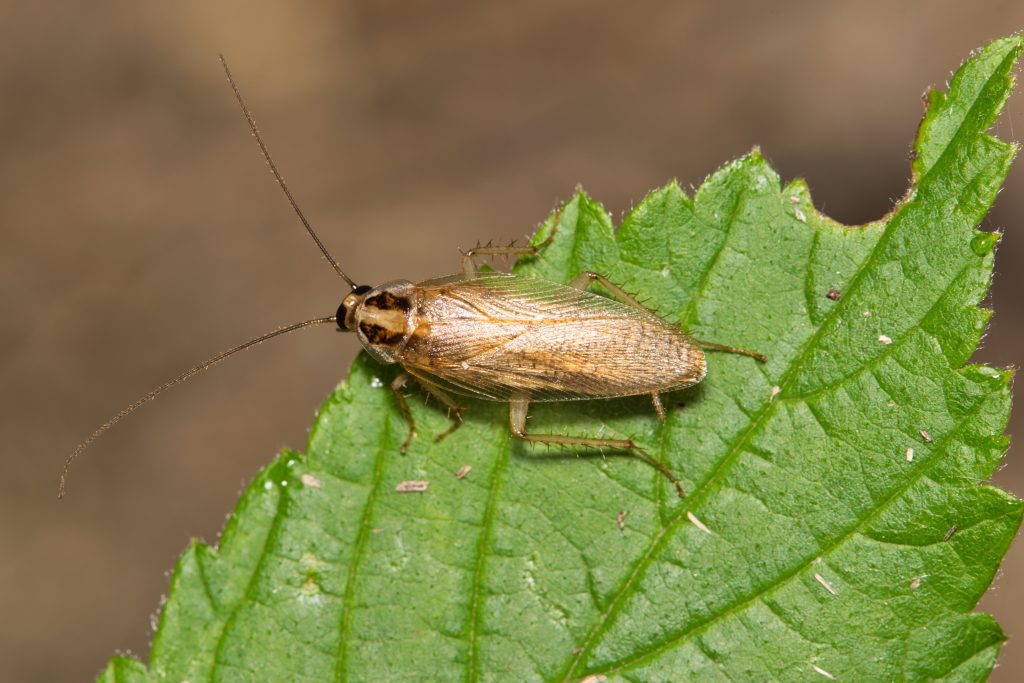
German cockroaches are small, tan insects with two dark parallel stripes behind the head. They usually hide in tight spaces near food and water, including cabinet hinges, appliance motors, wall gaps, and areas beneath sinks.
Unlike many large Texas roaches, German cockroaches usually live and reproduce indoors. They often travel inside grocery bags, cardboard boxes, deliveries, used appliances, and furniture. Once established, they can spread beyond the kitchen into bathrooms, laundry rooms, and neighboring units.
Several small roaches of different sizes are a strong sign of indoor reproduction. Finding nymphs means eggs have already hatched nearby, even when no adults are visible at the moment.
Smokybrown Cockroaches
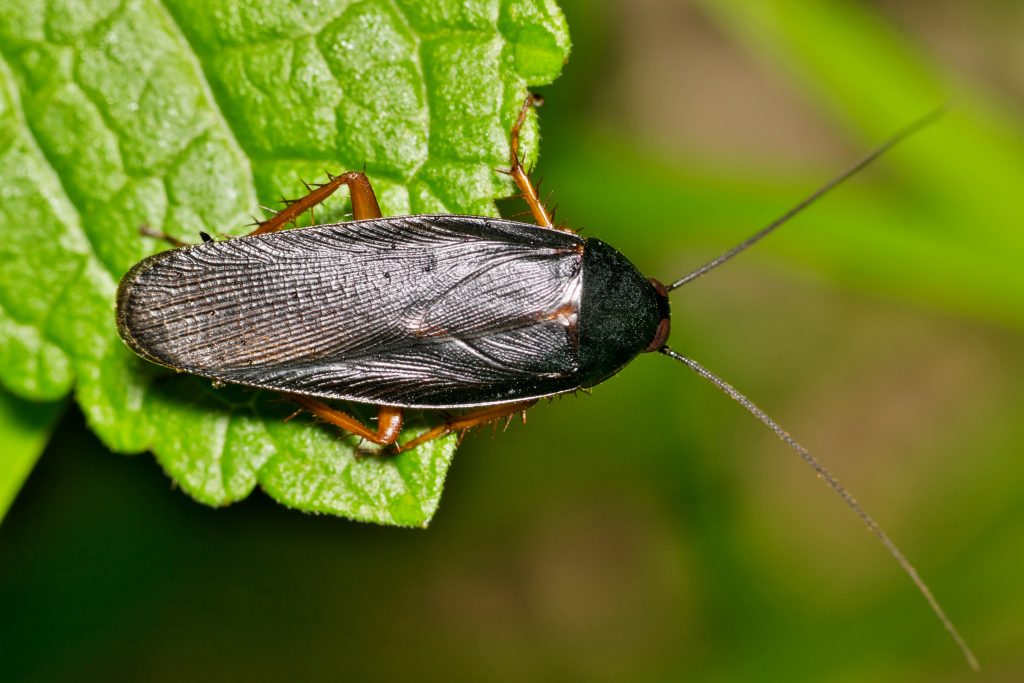
Smokybrown cockroaches have smooth, glossy bodies with a consistent dark mahogany color. They lack the pale marking behind the head that helps identify American cockroaches. Adults have full wings and can fly, particularly on warm, humid evenings.
This species usually begins outdoors. Smokybrown cockroaches hide in tree holes, gutters, roof debris, mulch, wood piles, and dense vegetation. Branches touching the roof can give them an easy route into attics and upper floors.
A roach found near a second-story window may not have traveled through the kitchen or plumbing. It may have entered from a tree, roof vent, gutter, or gap along the eaves.
Oriental Cockroaches
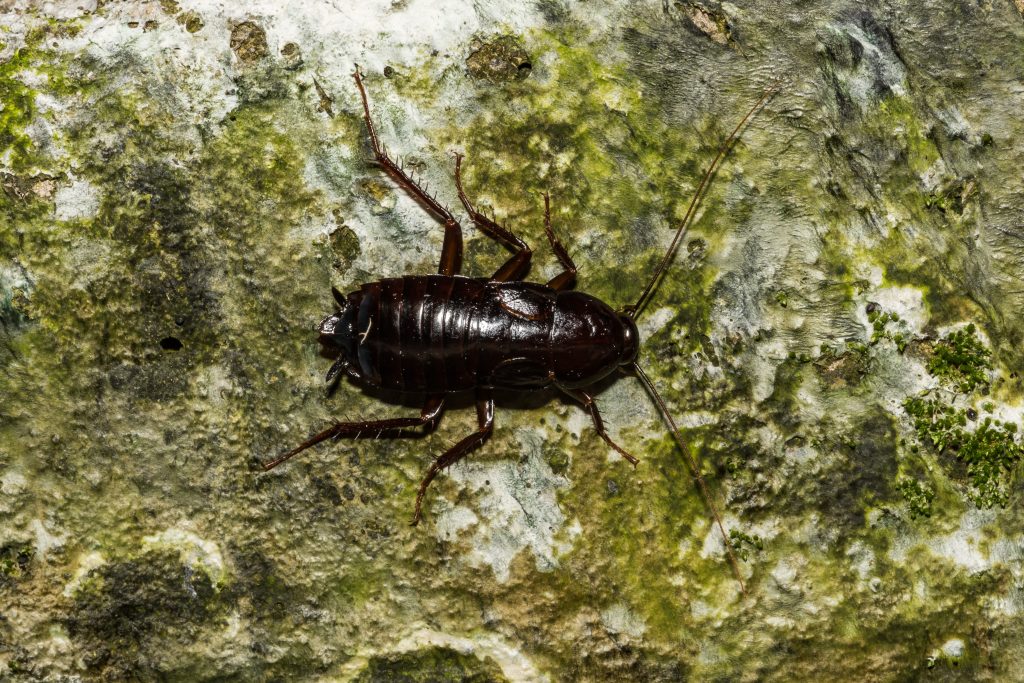
Oriental cockroaches are dark brown to black and have broad, heavy bodies. They move more slowly than American or German cockroaches and are sometimes mistaken for beetles when seen from a distance.
They favor cool, damp locations such as floor drains, wet crawl spaces, basements, utility rooms, and areas around leaking pipes. Outdoors, they hide beneath stones, thick leaf litter, and debris where the ground stays moist.
Regular Oriental cockroach activity often points to excess moisture. Repairing a leak, improving crawl-space airflow, or correcting poor drainage can remove the condition that keeps drawing them back.
Brown-banded Cockroaches

Brown-banded cockroaches are small and light brown, with pale bands across the wings or abdomen. Their markings can be hard to see without a close look, so homeowners August confuse them with German cockroaches.
Their location is often the better clue. Brown-banded cockroaches tolerate drier areas and August settle inside furniture, electronics, closets, picture frames, and upper cabinets. They are not limited to rooms with plumbing.
Egg cases may be attached to hidden surfaces throughout the home. An inspection focused only on the kitchen can miss activity in bedrooms, offices, and living areas.
Asian Cockroaches
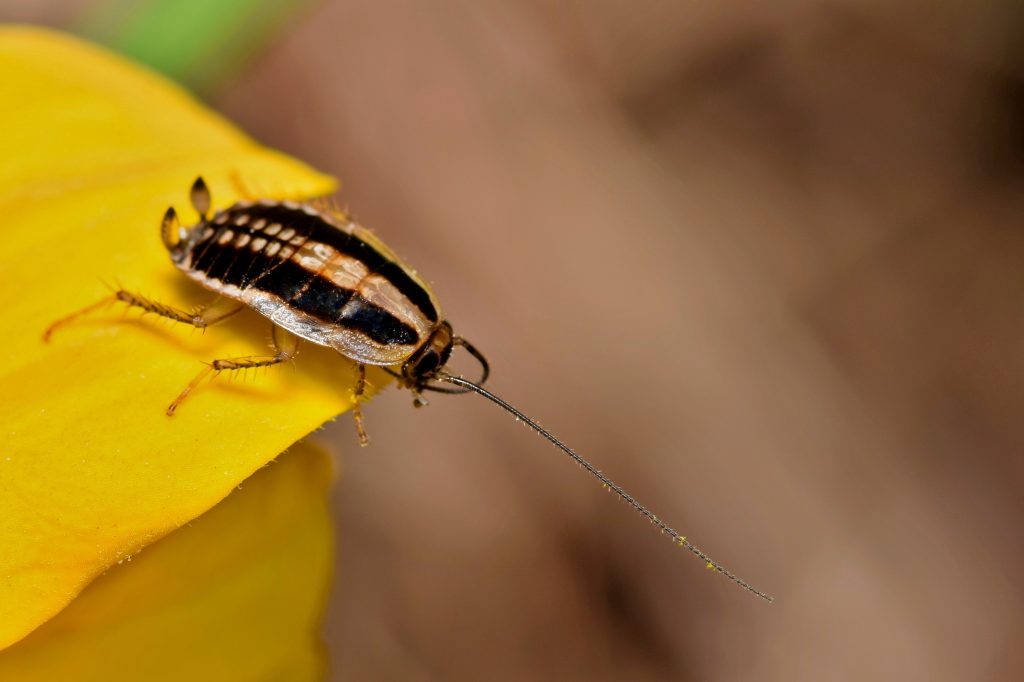
Asian cockroaches look remarkably similar to German cockroaches. Both are tan and have two dark stripes behind the head. Asian cockroaches have longer wings, fly readily, and usually live outdoors in lawns, mulch, and leaf litter.
Outdoor lights can draw them toward patios, doors, and windows after dark. They May fly indoors when an entry is left open, but they are less likely to establish the same kind of indoor population as German cockroaches.
Correct identification prevents an outdoor visitor from being mistaken for a serious kitchen infestation. Behavior and location matter just as much as body markings.
When Is Cockroach Season in Texas?
There is no fixed statewide cockroach season in Texas. Outdoor activity usually rises during spring and remains noticeable through the hot summer and early fall. Indoor species can stay active throughout the year because kitchens, bathrooms, and utility spaces provide stable temperatures.
The weather can change where roaches appear. Heavy rain floods soil, drains, sewer lines, mulch, and other low hiding places. Dry stretches reduce outdoor moisture and August push cockroaches toward irrigation systems, plumbing areas, pet bowls, and homes.
| Texas condition | How cockroaches respond | Where homeowners August notice them |
| Warm spring weather | Outdoor activity and breeding increase | Mulch, garages, porches, sheds |
| Hot, humid summer | Roaches forage longer and need steady moisture | Kitchens, bathrooms, drains, patios |
| Heavy rainfall | Saturated hiding places drive roaches toward shelter | Garages, utility rooms, lower floors |
| Drought or extreme heat | Outdoor water sources become limited | Irrigated yards, plumbing areas, pet stations |
| Cooler fall nights | Outdoor species seek protected spaces | Crawl spaces, wall gaps, attics |
| Heated winter interiors | Indoor species continue feeding and reproducing | Kitchens, appliances, cabinets, bathrooms |
Regional conditions make a difference. Gulf Coast and East Texas communities often have longer periods of heat and humidity. North Texas experiences sharper shifts between storms, drought, summer heat, and winter cold. Homes in drier regions may see increased activity around irrigated landscaping and plumbing systems.
For practical purposes, Texas homeowners should watch for roaches all year. The species and source August change with the weather, but indoor food, water, and shelter remain available in every season.
How to Tell an Outdoor Visitor From an Indoor Infestation
A single large cockroach does not always mean roaches are breeding inside your home. American, smokybrown, Oriental, and Asian cockroaches often begin outdoors. They can enter through doors, drains, vents, roof gaps, and plumbing openings.
Small indoor species create different warning signs. German and brown-banded cockroaches may remain hidden for much of the day, then emerge after dark to search for food and water. Seeing nymphs, egg cases, or several sizes of roaches usually indicates an active breeding population.
| What you notice | What it may mean | Recommended response |
| One large roach after a storm | An outdoor species may have wandered inside | Inspect doors, drains, vents, and nearby moisture |
| Large roaches appearing near one drain | Activity may be connected to plumbing or sewer access | Check the drain, pipe gaps, and water traps |
| Small roaches around appliances | An indoor population may be hiding nearby | Inspect motors, cabinets, and narrow gaps |
| Nymphs of several sizes | Reproduction is occurring inside or close to the room | Arrange a thorough inspection |
| Egg cases attached to hidden surfaces | Brown-banded or another indoor species may be established | Check furniture, cabinets, closets, and wall decor |
| Roaches seen in daylight | Crowding or disturbance may be forcing them into the open | Monitor activity and inspect surrounding rooms |
Other signs include shed skins, dark smears, pepper-like droppings, and an unusual musty odor near heavy activity. Large-species droppings may look more like short dark cylinders, while smaller species leave fine specks around cabinets and appliances.
Sticky monitoring traps can show where roaches travel when the house is quiet. UC Statewide Integrated Pest Management recommends traps for detection and identification, while noting that German and brown-banded cockroaches commonly breed indoors. Place monitors along walls, beneath sinks, beside appliances, and near suspected entry points rather than in the center of a room.
Why Cockroaches Should Not Be Ignored
Cockroaches move through drains, garbage, decaying material, and hidden spaces that are difficult to clean. Their legs and bodies can carry microorganisms onto counters, dishes, stored food, and preparation surfaces.
They also leave behind droppings, saliva, shed skins, eggs, and body fragments. These materials can collect in household dust even after the visible insects are gone.
The U.S. Environmental Protection Agency reports that cockroach droppings and body material contain allergens that can trigger asthma symptoms in sensitive people. This concern is especially relevant when activity continues in bedrooms, kitchens, or other rooms where family members spend long periods.
Cleaning visible debris helps reduce exposure, but cleaning alone will not reach a population inside wall gaps, appliances, cabinets, or furniture. The insects, their hiding places, and the conditions supporting them all need attention.
How to Prevent Cockroaches in Texas Homes
Cockroach prevention works best when you remove food, moisture, shelter, and entry points at the same time. Correcting only one issue August reduce activity without stopping it.
- Start with moisture. Repair leaking faucets, loose supply lines, appliance hoses, and irrigation connections. Dry sinks and counters before bedtime, clear clogged gutters, and direct downspouts away from the foundation.
- Pay attention to hidden food residue. Crumbs and grease collect beneath stoves, refrigerators, microwaves, and pet feeding stations. Store pantry products and pet food in sealed containers, and use trash cans with secure lids.
- Inspect the home’s exterior for access points. Replace damaged door sweeps and garage seals. Close gaps around pipes, utility lines, vents, windows, and siding without blocking necessary airflow.
- The yard can support outdoor roaches before they ever enter the house. Reduce deep mulch beside the foundation, clear leaf piles, remove decaying wood, and trim branches away from the roof. Keep firewood raised and stored at a distance from exterior walls.
- Cardboard also creates shelter and transportation. Check deliveries, grocery cartons, used furniture, and secondhand appliances before bringing them inside. Recycle unnecessary boxes rather than stacking them in garages, closets, or utility rooms.
Choosing the Right Response for Texas Cockroaches
The most effective response depends on the species and where it is living. Large outdoor cockroaches August call for moisture correction, drain inspection, landscaping changes, and exterior exclusion. Small indoor species require a more detailed search of appliances, cabinets, furniture, and narrow hiding places.
Professional help makes sense when you see nymphs, egg cases, daytime activity, or repeated sightings in several rooms. It is also useful when roaches appear to be entering through sewer lines, drains, attics, wall spaces, or shared plumbing.
Do not rely on visible roaches alone when judging whether the problem is gone. Monitoring, sanitation, moisture repair, exclusion, and targeted treatment each address a different part of the problem. That balanced approach gives Texas homeowners a better chance of stopping current activity and reducing the next wave of cockroaches.