
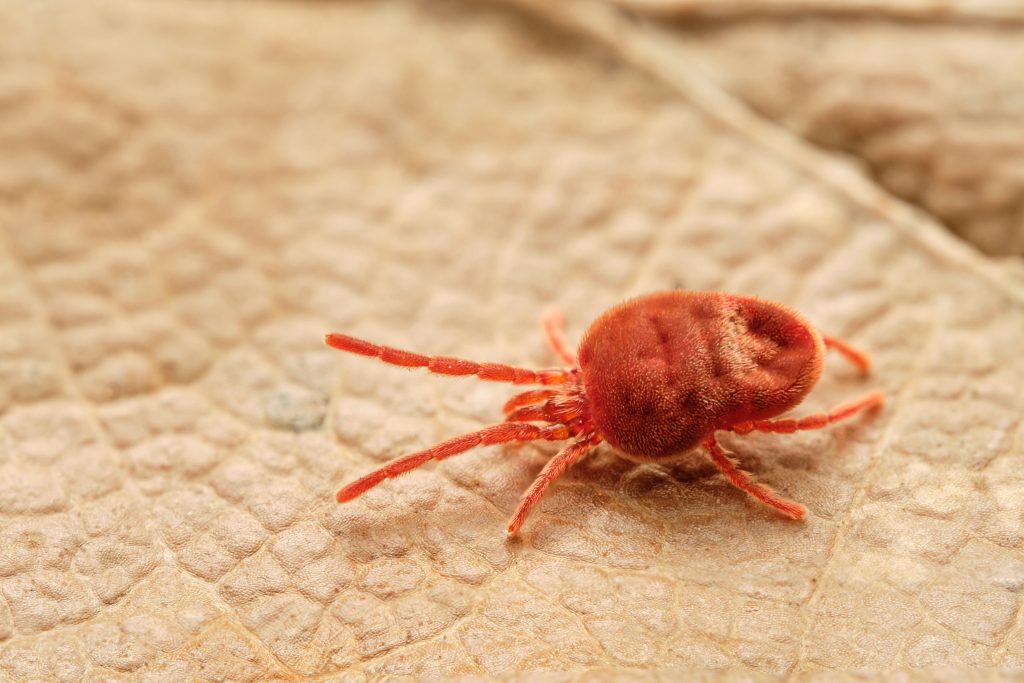
You can spend hours mowing, gardening, or walking through tall grass without feeling a thing. Later that evening, clusters of itchy red bumps may appear around your ankles, waist, or knees. The delay makes chiggers feel mysterious, and it helps explain why so many people believe they crawl under the skin.
Chiggers do not burrow into your skin. They stay on the surface, pierce the outer layer, and release digestive enzymes that break down nearby skin cells. Your body reacts by forming a tiny feeding channel. The larva uses that channel to consume the damaged tissue.
By the time chigger bites begin itching, the mite may already be gone. What remains is a skin reaction that can last for days and sometimes longer.
Do Chiggers Burrow Into Your Skin?
The direct answer is no. Chiggers do not tunnel beneath human skin, lay eggs in the body, or live on people long-term.
The biting stage is a tiny larva that reaches people from grass, weeds, brush, or low vegetation. It attaches to the surface, feeds from one spot, and then falls off or gets removed by bathing, scratching, or movement.
The burrowing myth survives because chigger bite symptoms do not always start right away. A person August leave the yard, shower, change clothes, and go to bed before the itching becomes strong. That timing can make it seem as though the mites are still inside the skin.
Chiggers are also confused with scabies. Scabies mites burrow into the upper skin and can spread through close contact. Chigger mites come from outdoor habitat and do not pass from one person to another.
Chiggers Compared With Other Common Causes of Itchy Bumps
| Feature | Chigger Bites | Scabies | Mosquito Bites |
| Typical exposure | Tall grass, weeds, brush, and wooded areas | Close skin contact or shared fabrics | Indoor and outdoor areas |
| Feeding behavior | Stay on the surface and digest skin cells | Burrow into the upper skin | Pierce skin and take blood |
| Common pattern | Clusters near tight clothing | Rash with thin, irregular burrow lines | Scattered bumps on exposed skin |
| Person-to-person spread | No | Yes | No |
| Symptom timing | Often delayed for several hours | may take days or weeks | Often begins sooner |
| Long-term infestation on people | No | Yes, without treatment | No |
This difference changes how you should respond. There is no buried chigger to suffocate, extract, or cover with nail polish. Care should focus on the skin reaction.
How Chiggers Feed on Skin
Chigger larvae are extremely small. The feeding stage measures about 0.3 millimeters and has six legs, which makes it difficult to see without magnification.
A larva transfers from vegetation onto shoes, socks, pants, or exposed skin. It then crawls until it reaches a protected spot. Waistbands, sock lines, skin folds, and other areas covered by tight clothing give it a place to remain attached.
Digestive Enzymes and the Feeding Channel
Once attached, the chigger pierces a pore or hair follicle and releases digestive enzymes. Those enzymes break down nearby skin cells into liquid tissue.
The body responds by hardening tissue around the feeding site. This forms a narrow channel called a stylostome. The chigger feeds through that channel rather than drinking blood.
The Ohio State University Extension chigger guide explains that larvae may remain attached to suitable animal hosts for two to four days. Humans are less suitable hosts, so bathing, scratching, and normal movement often remove them sooner.
What Happens Before a Chigger Rash Appears
| Stage | What Is Happening | What You may Notice |
| Contact | A larva transfers from vegetation to clothing or skin | Usually nothing |
| Movement | It looks for a protected feeding site | No immediate sensation |
| Attachment | The larva grips the skin and releases enzymes | The area is often painless |
| Skin response | A feeding channel forms as nearby cells break down | Redness August begin after several hours |
| Inflammation | The immune system reacts to damaged tissue | Itching, swelling, or raised bumps |
| Healing | The mite leaves while the skin continues repairing itself | Symptoms gradually fade |
The delayed reaction explains why people often blame their bed, carpet, or clothing. The exposure usually happened outdoors several hours earlier.
What Do Chigger Bites Look Like?
Chigger bites often appear as small red bumps, pimple-like spots, raised welts, or tiny blisters. The exact appearance depends on how strongly a person’s skin reacts.
The bumps usually appear in clusters. They May form a line along a sock edge, waistband, underwear seam, or bra strap. Chiggers often stop where clothing presses against the body, so the pattern can look unusually neat.
Ankles are one of the most common locations because the larvae climb upward from grass and low plants. Other frequent sites include behind the knees, around the waist, beneath the arms, and near the groin.
The Cleveland Clinic notes that bites often occur near tight-fitting clothing. It also reports that itching August become strongest during the first 24 to 48 hours.
A rash pattern can point toward chiggers, but it cannot provide a certain diagnosis. Flea bites, mosquito bites, heat rash, contact dermatitis, and several other skin conditions can create similar marks. Recent time spent in tall grass or wooded areas is an important clue.
Why Chigger Bites Keep Itching
A chigger does not need to remain attached for the bite to keep itching. The feeding channel and damaged tissue stay behind while the skin heals.
Separate feeding sites may also become visible at different times. One bump may appear within a few hours, while another becomes red the following morning. This can make a chigger rash look as though it is spreading.
Chigger bites do not travel across the body, and they are not contagious. New bumps usually represent separate feeding sites that began reacting at different speeds.
Scratching Can Make the Rash Worse
Scratching August briefly reduce the urge to itch, but it can break the skin. Bacteria from the hands or fingernails can then enter the irritated area and cause a secondary infection.
Increasing pain, warmth, pus, or redness that continues expanding deserves medical attention. Those changes are different from the usual discomfort caused by chigger bites.
How Long Do Chigger Bites Last?
Chigger bite symptoms often become strongest during the first one or two days. The itching then begins to ease as the skin breaks down the feeding channel and repairs the damaged area.
Many bites improve within several days, though some reactions can remain noticeable for up to two weeks. Healing time depends on skin sensitivity, the number of bites, and how much the area has been scratched.
The presence of itching after a shower does not mean the chiggers survived washing. The mites may already be gone while the inflammatory response continues.
A rash that keeps worsening, becomes painful, or fails to improve should be evaluated by a healthcare professional. Another skin condition may be responsible, or scratching may have introduced an infection.
How to Treat Chigger Bites
The first step after possible exposure is to shower with soap and water. This can remove chigger larvae that are still crawling on the skin but have not started feeding.
Change out of outdoor clothing and wash it before wearing it again. This is especially useful after walking through weeds, kneeling in grass, or working near an overgrown property edge.
Once the rash appears, chigger bite treatment should focus on reducing itching and protecting the skin. Harsh home remedies can make the irritation worse.
Practical Ways to Calm the Skin
| Step | Why It Helps |
| Apply a cool compress | Reduces heat, swelling, and the urge to scratch |
| Use an over-the-counter anti-itch product as labeled | August calm inflammation and discomfort |
| Wear loose clothing | Reduces rubbing over sensitive skin |
| Keep fingernails short | Limits damage from accidental scratching |
| Wash gently | Keeps irritated or broken skin clean |
| Monitor changes | Helps identify infection or an unusual reaction |
Nail polish, bleach, gasoline, and rubbing alcohol do not remove chiggers from beneath the skin. These products can irritate tissue that is already inflamed.
A healthcare professional or pharmacist can help you select an appropriate product. Seek urgent care for facial swelling, trouble breathing, dizziness, or a severe widespread reaction.
Where Chiggers Live Around a Yard
Chiggers prefer damp, shaded areas with thick vegetation and access to animal hosts. Tall grass, weeds, leaf litter, brush piles, wooded edges, and overgrown fence lines can all support activity.
They rarely spread evenly across an entire lawn. A sunny area with short grass may have few chiggers, while a damp strip near a drainage channel or wooded border may contain many more.
This patchy pattern is useful when deciding where to focus yard work. You may not need to change every part of the property. The highest-risk areas are often shaded edges that stay moist and receive little foot traffic.
Warm, humid weather can extend chigger activity. So, yards can also develop favorable conditions during humid summer periods.
How to Get Rid of Chiggers in Your Yard
Start with habitat. Keep grass trimmed around patios, play equipment, walkways, garden beds, pet areas, and fence lines. Remove leaf litter and cut back ground cover that holds moisture near the soil.
Thin dense vegetation where practical. More sunlight and airflow can make a shaded edge less favorable for chiggers and other moisture-loving pests.
Protective clothing matters when working in overgrown areas. Wear long pants, closed shoes, and tall socks. Tucking pants into socks closes a common route to the ankles.
Use an EPA-registered insect repellent that lists chiggers or biting mites on the label. Products containing DEET may be appropriate for exposed skin when applied according to label directions. Take extra care when using repellent on children.
The Centers for Disease Control and Prevention (CDC) states that products containing 0.5% permethrin can be used on clothing and gear as directed. Permethrin-treated clothing can reduce contact with chiggers, but permethrin should never be applied directly to skin.
When Yard Changes Are Not Enough
Mowing and cleanup can reduce chigger habitat, but they may not resolve activity around wooded borders, retaining walls, drainage areas, or thick landscaping.
A useful inspection focuses on the conditions that support the pest. Damp shade, heavy ground cover, and areas used by small animals often matter more than open sections of lawn.
ClearDefense Pest Control bases treatment decisions on pest behavior, habitat, and lifecycle. Technicians can focus on specific problem areas instead of applying products across parts of the yard that do not need attention. Chigger service availability may vary by location. Confirm local options before scheduling treatment.
Get Back to Using Your Yard
Chiggers do not burrow into your skin, but their feeding process can still cause an intense reaction. Digestive enzymes damage a small patch of tissue, and the body continues responding after the mite is gone.
Showering after outdoor activity, washing clothing, protecting your ankles, trimming dense vegetation, and using labeled insect repellent can reduce exposure. These steps also help address the conditions that allow chiggers to gather near patios, paths, and play areas.
Contact ClearDefense Pest Control to ask about service options in your area and schedule an inspection for persistent outdoor pest activity.