
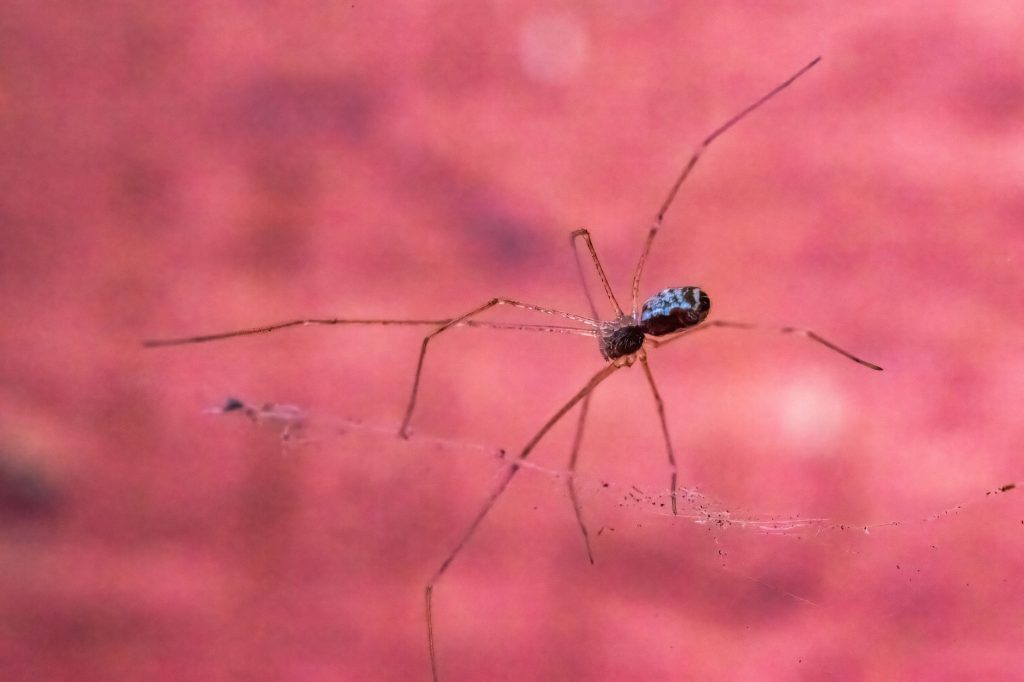
Daddy long legs infestations can cause costly problems when early signs are missed. Learn what to look for, are daddy long legs dangerous, and when to call ClearDefense Pest Control.
Key Takeaways
- The name “daddy long legs” can refer to cellar spiders or to harvestmen, which are separate arachnids and not true spiders. Knowing which one you have matters for understanding any potential risk.
- The widespread myth that daddy long legs are extremely venomous is not true. Their venom is not toxic to humans, and their bite is not reported to be painful.
- Daddy long legs are mostly a nuisance indoors. Reducing the conditions that draw them inside is the most practical way to keep activity low in your home.
- If you notice a growing number of these arachnids or their webs inside, a professional review can help identify what is attracting them and how to address it.
How to Identify Daddy Long Legs
The name “daddy long legs” gets applied to more than one creature, and the differences matter when you are deciding whether something in your home poses a real concern. Knowing which species you are looking at helps you separate a genuine nuisance from something you can ignore.
How to Tell Daddy Long Legs Types Apart
According to Mississippi State University Extension, harvestmen (order Opiliones) are not true spiders, even though most people call them “daddy long legs.” They have eight legs and two body regions, but unlike true spiders, they do not spin webs.
Cellar spiders also carry the “daddy long legs” nickname. There are several species, but the long-bodied cellar spider, Pholcus phalangioides, is the most common. Unlike harvestmen, cellar spiders are true spiders that spin webs.
Both groups share eight legs and two body regions, traits they hold in common with ticks and mites. Insects, by contrast, have six legs and three body regions. Counting legs and body sections is the quickest way to confirm you are looking at an arachnid rather than an insect.
How to Spot Daddy Long Legs Activity Inside Your Home
Cellar spiders tend to build loose, messy webs in undisturbed corners. You May notice thin strands gathering in ceiling joints, closets, or storage areas. Harvestmen do not produce webs, so spotting them usually means seeing individual creatures walking across walls or floors.
Neither species is considered dangerous to people. Most spiders can produce venom and bite, but only a handful of species, such as the black widow, brown widow, and brown recluse, are seriously venomous to humans. Daddy long legs of either type do not fall into that category.
Where Daddy Long Legs Activity Shows Up Around Homes
Harvestmen often gather near exterior lights or in shaded spots under eaves and porches. Cellar spiders prefer dark, cool spaces like basements, garages, and crawl spaces. Both species stay close to sheltered areas where they can find small prey.
If you see a large orb-shaped web outdoors, that likely belongs to a different species entirely. Joro spiders, for example, build large, sometimes gold-colored orb webs and can reach up to 1¼ inches in body size. Their appearance is distinct from the slender body shape of a cellar spider or harvestman.
Exterior Entry Points Daddy Long Legs Use
Gaps around door frames, window edges, and foundation cracks give these creatures a path inside. Homeowners should also take precautions when dealing with stored items or working in areas where spiders might hide, since other species, including black widows, can share those same entry points.
Reducing clutter near the foundation and sealing visible gaps helps limit how many of these creatures move indoors. If you start noticing a buildup of webs or repeated sightings in living spaces, a professional review can help determine whether the activity involves only nuisance species or something that warrants closer attention.
Why Daddy Long Legs Problems Develop
Many people August ask: “Are daddy long legs dangerous?” Most of these people are reacting to the sheer number of long-legged arachnids gathering in corners and crawl spaces. The real issue is rarely danger. It is the conditions around your home that invite these creatures inside and let populations grow.
Outdoor Nesting Areas for Daddy Long Legs
Harvestmen, the true daddy longlegs, are related to spiders, ticks, and mites but belong to their own taxonomic order. They gather in sheltered outdoor spots where moisture and shade overlap. Cellar spiders, often called daddy long legs as well, build large, irregular webs in protected areas. Both types favor undisturbed zones close to foundations, overhangs, and porch ceilings.
Cellar spiders can overwinter as eggs, immatures, or adults in areas that provide some shelter, according to Kansas State University Extension. That means outdoor nesting spots near your home can serve as year-round staging areas rather than just seasonal ones.
Food and Shelter That Attract Daddy Long Legs
These arachnids follow their prey. Where other small insects congregate, daddy long legs tend to appear. Cellar spiders in particular develop year-round in controlled climates, so a warm basement or garage with a steady insect supply can support an ongoing population.
Harvestmen have tan to brown to black globular bodies and eight thread-like legs. Their low profile helps them tuck into tight gaps where they find both food and cover. Reducing the conditions that draw smaller insects to your home also reduces what draws daddy long legs.
How Daddy Long Legs Move Around Homes
Cellar spiders rest upside down in their webs and shake or bounce when disturbed. This behavior can spread webbing across ceiling corners, closets, and utility areas over time. While the spiders themselves pose no real threat to people, the growing web clusters create the nuisance most homeowners notice first.
One cellar spider species has a long, thin body measuring about 1/3 inch, but with legs spread it can span more than 2 inches. That leggy appearance makes even a small population look larger than it is.
Trails and Entry Points Daddy Long Legs Use
Daddy long legs are shy and not aggressive. They will not bite unless provoked, and most bites happen when someone reaches into a shoe or clothing where a spider is tucked. The real pattern to watch is repeated sightings along the same interior paths, which usually trace back to a single gap or crack near ground level.
Addressing those entry points is the practical step. Because cellar spiders can persist through winter indoors, a recurring presence often points to an ongoing access issue rather than a one-time invasion.
Risks From Daddy Long Legs
Health Risks Linked to Daddy Long Legs
Cellar spiders, the Pholcidae family also known as daddy long-legs, carry mild venom. According to UC IPM, bites may cause symptoms similar to those of yellowjacket wasp stings: initial burning pain followed by minor localized swelling around the bite site. For most adults, that reaction stays minor and short-lived.
The bigger concern is misidentification. Brown recluse bites can cause serious effects and are especially dangerous to children, the elderly, and those in poor physical condition. Fatalities from brown recluse bites are rare. A cellar spider on your ceiling is not a medical concern, but confusing it with a more harmful species can delay the right response.
Symptoms from venomous spider bites range from mild to severe. If you are unsure which spider bit you, treat the situation with caution and consult a medical professional.
Property Damage From Daddy Long Legs
Daddy long legs do not cause structural or property damage. They do not chew wood, fabric, or wiring. Their only visible impact is the loose, messy webbing they leave on walls and ceilings. While that webbing collects dust and looks unkept, it does not harm surfaces.
These spiders are good climbers and are often found indoors on walls and ceilings throughout your home. A growing number of webs in corners or along ceiling lines usually signals a rising population rather than any structural risk.
Food Areas and Daddy Long Legs Activity
Cellar spiders eat other small arthropods, so they tend to appear wherever prey gathers. They do not sting, and they do not contaminate food the way some household pests can. Their presence near a kitchen or pantry is typically a sign that other small insects are already active in those areas.
Finding several cellar spiders near food-prep spaces is worth noting. It does not point to a daddy long legs danger, but it may indicate a broader pest population that draws them indoors.
When to Look Closer at Daddy Long Legs Activity
A few cellar spiders in a basement or garage are common. But a noticeable increase in webbing across multiple rooms, or spiders appearing on every floor, suggests conditions inside your home are supporting a larger population.
A professional review is also worthwhile when you cannot tell daddy long legs apart from spiders that pose greater risk with confidence. The female black widow’s venom is a significant health risk for the very young, elderly, or people with high blood pressure. Accurate identification keeps your household informed and your response proportional.
Professional Pest Control for Daddy Long Legs
When you keep finding webs in dark corners and wonder whether daddy long legs are dangerous, a professional review can help you understand what you are dealing with. Cellar spiders, often called daddy long legs spiders, are not venomous and rarely bite humans. Still, heavy web buildup in basements, crawl spaces, and garages can become a persistent nuisance worth addressing.
How to Reduce Attractants for Daddy Long Legs
Cellar spiders (family Pholcidae) tend to settle in cellars, basements, garages, sheds, stairwells, crawl spaces, and other dark, cool locations. Reducing the appeal of those spaces is the first step in keeping populations low.
Start by removing existing webs. Cellar spiders spend most of their time hanging upside down in large, irregular-shaped webs. Clearing those webs on a set schedule discourages the spiders from reestablishing in the same spot.
Improve lighting and airflow in areas where you see activity. Because these spiders favor dark, undisturbed spaces, small changes to your environment can make those areas less inviting over time.
Why Daddy Long Legs Control Starts With Inspection
According to Mississippi State University Extension, cellar spiders have unusually long legs and are referred to as “daddy long legs spiders” in some parts of the country, a name that usually refers to harvestmen in the South. That naming overlap matters during an inspection, because the two creatures are different.
An inspection identifies which pest is present, where activity is concentrated, and how many entry points exist. ClearDefense service professionals check basements, crawl spaces, garages, sheds, and stairwells, the areas cellar spiders prefer. Every finding goes into a documented Defense Report so you know exactly what was discovered.
An inspection also helps separate a minor nuisance from a larger pattern. If webs are showing up across multiple rooms, a recurring plan may be a better fit than spot treatment alone.
What to Expect During Professional Daddy Long Legs Treatment
Cellar spiders are not venomous and rarely bite humans, so they pose no real threat to people. That means the goal of treatment is to reduce spider activity and the web buildup that comes with it, not addressing a medical concern.
ClearDefense uses a prevention-first IPM methodology. Service professionals focus on the conditions that draw cellar spiders indoors rather than relying on a single approach. Each visit includes a Defense Report documenting every product used and every finding.
Because ClearDefense offers recurring service rather than one-time visits, your home receives consistent attention. That ongoing approach helps keep dark, cool areas less hospitable to cellar spiders over time.
What to Expect From a Daddy Long Legs Control Plan
A recurring plan with ClearDefense targets the spaces cellar spiders favor most: basements, garages, crawl spaces, sheds, and stairwells. Each service visit builds on the last, with documented findings so you can track progress.
The plan centers on removing conditions that attract these spiders and reducing web buildup in problem areas. Since cellar spiders are not a medical concern, the focus stays on comfort and cleanliness inside your home.
If you are unsure whether you are seeing cellar spiders or harvestmen, a professional inspection clears up the confusion. Knowing the difference helps you understand exactly what is living in your home and what level of attention it needs.
Daddy Long Legs Safety: Bottom Line
Daddy long legs are not a real threat to people. Whether you are looking at harvestmen or cellar spiders, these creatures pose no serious risk to your household. They can become a nuisance when they gather indoors, but the concern stops there. If cobwebs and clusters are building up in your home, ClearDefense Pest Control can help you reduce spider activity with a recurring service plan. Request a quote to get started.
Frequently Asked Questions
Should I Worry About a Bite?
The bite of a cellar spider is not considered a medical concern. Harvestmen, on the other hand, are not true spiders and are not known to bite people in any meaningful way. Neither group calls for medical attention under normal circumstances.
Why Are They in My House?
Cellar spiders tend to settle in dark, cool spots like basements, garages, crawl spaces, and stairwells. They are good climbers and can often be found on walls and ceilings throughout the home. Harvestmen August wander inside looking for shelter but typically prefer outdoor habitats.
Are They Actually Spiders?
It depends on which creature you mean. Cellar spiders are true spiders in the family Pholcidae. Harvestmen belong to a separate order, Opiliones, and are not spiders at all. The shared nickname “daddy long legs” causes most of the confusion between the two.
When Should I Call a Professional?
A few daddy long legs here and there are normal. Professional review makes sense when you notice webs spreading across multiple rooms, growing numbers in living areas, or when other spider types you cannot identify appear alongside them. A recurring pest control plan addresses the conditions that draw spiders indoors over time.