
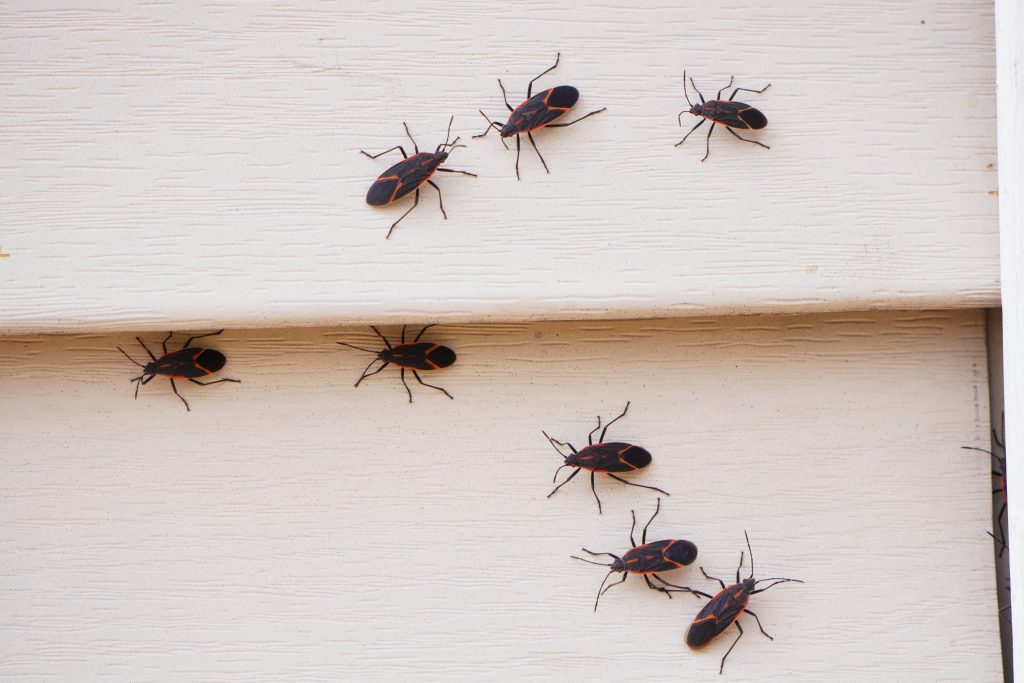
Black and red bugs covering a sunny wall can make a minor pest issue look serious. Boxelder bugs often gather by the dozens around siding, windows, porch posts, and garage doors. Once the weather cools, some slip through small gaps and appear inside.
Are boxelder bugs harmful? They create more annoyance than danger. They rarely bite, cannot sting, and are not known to spread disease. They also do not eat wood, damage foundations, or build breeding colonies inside homes.
Their numbers cause most of the trouble. A boxelder bug infestation can lead to stains on curtains, unpleasant odors when bugs are crushed, and repeated sightings near windows throughout winter. Knowing what attracts them helps you focus on useful prevention instead of reacting to every bug you see.
Are Boxelder Bugs Harmful to People and Pets?
Boxelder bugs are nuisance pests, not a recognized public health threat. Their mouthparts are designed to pierce seeds and soft plant tissue. They do not feed on blood or seek people and pets as hosts.
Some homeowners ask, “Do boxelder bugs bite?” A defensive skin puncture can occur if a bug is pressed against the body or handled roughly, but this behavior is rare. Boxelder bugs have no stinger, no venom, and no known role in spreading disease.
The National Pesticide Information Center boxelder bug guide notes that these insects are not known to cause significant health effects. Pets may still chase bugs moving across a floor, so removing visible groups keeps the area cleaner and prevents crushed insects from leaving odor or stains.
| Concern | What Homeowners Should Know |
| Bites | Rare defensive punctures August happen if a bug is mishandled |
| Stings | Boxelder bugs cannot sting |
| Disease | They are not known to transmit disease |
| Venom | They are not venomous |
| Blood feeding | They feed on plant material |
| Indoor reproduction | They do not establish breeding colonies inside homes |
How to Identify Boxelder Bugs
Adult boxelder bugs are about one-half inch long. Their flattened bodies are mostly black, with narrow red or orange lines along the wings and upper body. When the wings are folded, the markings often form an X-like shape across the back.
Young bugs, called nymphs, look brighter. They start with red bodies and black legs, then develop darker wing pads as they grow. Adults and nymphs may appear together near host trees, foundations, patios, and warm exterior walls.
Boxelder Bugs Versus Similar Fall Pests
Boxelder bugs are sometimes confused with stink bugs, milkweed bugs, or young spotted lanternflies. Their color is only one clue. Body shape, wing pattern, and where the insect appears are often more useful.
Stink bugs have broad, shield-shaped bodies. Milkweed bugs show larger orange areas and usually stay close to milkweed plants. Boxelder bugs have a narrower outline and often gather on sunny walls before entering buildings.
| Feature | Boxelder Bug | Stink Bug | Milkweed Bug |
| Typical size | About one-half inch | About one-half to three-quarters inch | About one-half inch |
| Body shape | Narrow and oval | Broad and shield-shaped | Long and oval |
| Main colors | Black with red or orange lines | Usually brown, gray, or green | Orange-red with broad black areas |
| Fall behavior | Gathers on warm walls and enters gaps | Seeks sheltered indoor spaces | Usually stays near host plants |
| Main indoor concern | Staining and repeated window activity | Strong odor | Less likely to invade in large groups |
Can Boxelder Bugs Damage Your Home?
Boxelder bugs do not eat structural lumber, drywall, insulation, clothing, carpet, or stored food. They cannot bore through siding or create holes in foundations. If you find boxelder bugs in the house, they entered through an opening that was already present.
Their flat bodies fit into narrow spaces around windows, doors, vents, utility lines, siding joints, soffits, and roof edges. Once inside, adults August settle in attics, wall voids, and gaps around window frames.
Stains and Odors Are the Main Indoor Problems
Droppings can leave reddish or dark marks on curtains, walls, lampshades, and upholstery. Crushing a bug August release body fluids that leave similar stains. It can also produce a sharp odor.
Vacuuming is cleaner than smashing or sweeping them. A hose attachment removes bugs without rubbing them into painted or fabric surfaces. Empty the vacuum outdoors after collecting a large group.
Boxelder bugs may appear indoors during winter when sunlight warms an exterior wall or heat reaches their hiding place. These bugs entered during fall. They are not hatching or multiplying inside the home.
Do Boxelder Bugs Harm Trees and Gardens?
Boxelder bugs feed mainly on seeds from female boxelder trees. Male trees do not produce the seed pods that support large populations, which explains why activity can vary sharply from one property to another.
They may also feed on maple seeds and visit other plants. Serious damage to mature landscape trees is uncommon. Even a large gathering may cause little more than minor spotting or distortion on developing leaves, seeds, or fruit.
The Colorado State University Extension boxelder bug resource reports that nuisance populations rarely become severe unless a female boxelder tree grows nearby. That connection can explain where the insects are coming from, but it does not mean tree removal is the only form of boxelder bug control.
Should You Remove a Boxelder Tree?
Removing a seed-bearing tree August reduce the food supply on one property. It will not guarantee that the bugs disappear. Adults can fly in from neighboring trees, shared green spaces, roadside plantings, or wooded land.
Tree removal is also costly. Unless the tree is unhealthy or creates another problem, exterior repairs and seasonal boxelder bug prevention usually offer a more practical response.
Why Boxelder Bugs Invade Homes in Fall
Boxelder bugs spend the warmer months outside. As nighttime temperatures fall, adults begin searching for dry, protected places where they can survive winter.
Southern and western walls receive longer periods of afternoon sun. Brick, stone, and siding hold that warmth, giving boxelder bugs a comfortable place to gather. From there, they move toward cracks around windows, doors, siding, vents, and rooflines.
This explains why boxelder bugs in fall August cover one side of a building while leaving another side almost untouched. Sun exposure and available entry points matter more than the color of the house.
How Far Can Boxelder Bugs Travel?
A host tree does not need to stand in your yard. Adult boxelder bugs can fly several blocks and may travel as far as two miles, according to the University of Minnesota Extension.
That range is one reason tree removal may not solve a boxelder bug infestation. Bugs can arrive from property well beyond the nearest fence.
Why They Reappear During Winter
Boxelder bugs usually become inactive after settling inside walls, attics, and other sheltered areas. A warm winter afternoon can wake a few adults early.
The bugs then move toward light and often collect near windows. Their appearance may feel sudden, but they entered months earlier and remained hidden until the surrounding temperature changed.
What Makes a Home Attractive to Boxelder Bugs?
No fixed number defines a boxelder bug infestation. One house may see a handful, while another building nearby becomes covered. The difference usually comes down to nearby host trees, afternoon sunlight, building height, weather, and exterior maintenance.
Past activity offers a useful clue. When bugs return to the same windows or wall each year, they have likely found a dependable gathering surface and an easy route inside.
| Property Feature | Effect on Boxelder Bug Activity |
| Female boxelder tree nearby | Supplies preferred seeds |
| Southern or western exposure | Creates a warmer resting surface |
| Tall or isolated structure | Makes the building easier for flying bugs to locate |
| Loose siding or trim | Provides sheltered cracks |
| Damaged screens | Opens a direct route indoors |
| Worn door sweep | Leaves space beneath an exterior door |
| Previous seasonal activity | Suggests entry routes remain available |
How to Get Rid of Boxelder Bugs Indoors
Use a vacuum with a hose attachment to remove bugs from walls, floors, curtains, and window areas. Work slowly around fabric and painted surfaces so the insects do not get crushed.
Seal the vacuum bag before disposal. A bagless vacuum should be emptied outside. Check the manufacturer’s instructions before cleaning filters or collection containers.
Avoid sweeping bugs aggressively or pressing them with a cloth. Crushed bodies can leave marks and release odor. Indoor sprays also have limited value when most of the insects remain hidden in wall spaces.
Getting rid of boxelder bugs indoors solves the immediate problem. It does not correct the exterior gaps that allowed them to enter.
How to Prevent Boxelder Bugs From Returning
Begin boxelder bug prevention in late summer, before adults gather in large numbers. Start with the sides of the home that receive afternoon sun. Check windows, doors, siding joints, fascia boards, vents, utility lines, outdoor faucets, and garage doors.
Repair torn screens and worn weather stripping. Add a snug door sweep where daylight is visible beneath an exterior door. Seal utility openings with a material suited to the size and location of the gap.
Pay Attention to Small Openings
University of Minnesota guidance recommends sealing accessible openings one-eighth inch or larger on brick, stone, stucco, and plaster buildings. Closing the most obvious routes can substantially reduce the number of bugs that get inside.
Do not block brick weep holes. Those openings help moisture drain and allow the wall to ventilate. Ventilated plugs designed for weep holes can limit pest entry without trapping moisture.
Check Upper-Level Entry Points
Gaps around soffits, attic vents, rooflines, and upper windows are easy to miss from the ground. These openings can lead directly into attics and wall cavities.
Do not climb beyond a safe working height. Professional boxelder bug control makes sense when clusters gather near the roof or the likely entry point cannot be reached safely.
When Professional Boxelder Bug Control Makes Sense
Vacuuming and basic repairs August handle a few indoor bugs. Professional service becomes more useful when walls are covered, insects enter upper-level spaces, or the problem returns every fall.
Timing matters. Exterior service is most effective while boxelder bugs are gathering outside and before they move deep into the structure. A technician can focus on active resting areas and inspect likely entry routes instead of relying on random indoor applications.
ClearDefense Pest Control bases each service on pest behavior, habitat, and lifecycle. Precise exterior treatment and practical prevention guidance address the seasonal pattern at its source.
Keep Boxelder Bugs From Settling In
Are boxelder bugs harmful? Their actual risk is low, but the nuisance can become difficult to ignore. They can stain surfaces, produce odor when crushed, and keep appearing near windows long after fall has ended.
Late-summer inspection gives you the best chance to stop the cycle. Repair damaged screens, close accessible exterior gaps, and vacuum bugs that still make it inside. For large clusters, repeat invasions, or activity above a safe working height, contact ClearDefense Pest Control to schedule professional boxelder bug control.