
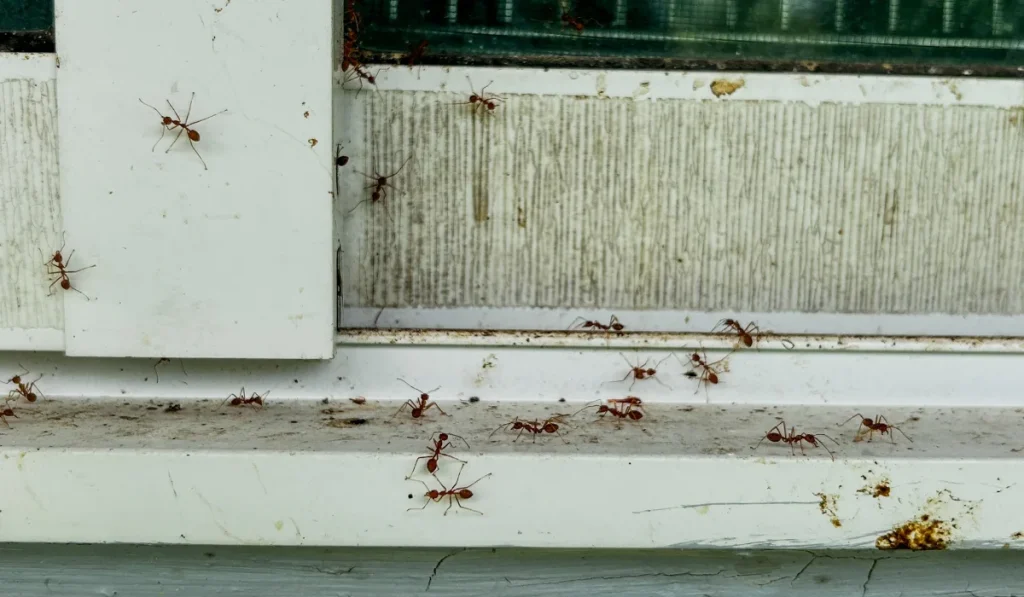
If ants keep showing up around your windows, the problem is usually not the window itself. In many Charlotte homes, window sills and window frames provide easy access, harbor hidden moisture, and create protected paths for ants moving between outdoor nesting areas and indoor spaces.
This can happen in older homes near Dilworth, newer builds around Ballantyne, and commercial spaces with landscaping close to the building. Sometimes the issue is odorous house ants following pheromone trails. Other times, carpenter ants may be using damp wood near the window.
A smart ant control plan starts with finding out why ants are there in the first place. Professional pest control assesses entry points, moisture conditions, ant species, and the ant colony behind the activity.
Key Takeaways
- Ants gather around windows because they offer warmth, access, moisture, and protected travel routes
- Carpenter ants near window frames can point to moisture problems or damaged wood
- DIY repellents August scatter ants without solving the larger infestation
- Professional ant control targets the entire colony, not just the worker ants you see
Why Ants Are Drawn to Windows
Ants do not gather around windows by accident. These areas often connect outdoor nesting sites to indoor shelter, making them among the first places pest control professionals check during an inspection.
Warmth and Natural Light
Windows collect warmth from sunlight, especially during cool mornings or after rainy weather. That warmth can make window sills more active areas for worker ants.
Light can also attract winged ants, flying ants, and swarmers during certain parts of the year. When ants collect near glass, it may mean a nearby ant colony is producing new reproductive ants.
Small Entry Points Around Frames
Tiny gaps around window frames can become entry points. Worn seals, loose trim, cracked caulk, and small crevices give ants easy access from outside to inside.
Even a clean home can have ant activity when these gaps are present. Sealing them helps, but it should come after the ant species and nesting location are identified.
Pheromone Trails Near the Window
Ants use pheromone trails to guide other ants to reliable routes. Once a few worker ants find a good path around a window, more ants can follow the same scent trail.
You may wipe away the ants and see them return later because the route is still active. Their antennae help them follow these trails and communicate with the rest of the colony.
Outdoor Nesting Sites Close By
Many ant nests start outside in mulch, soil, tree roots, or landscaping near the foundation. If those nesting sites sit close to a window, ants August naturally move toward the frame.
Carpenter ants are a special concern because a carpenter ant’s nest may be tied to damp or damaged wood. Unlike termites, they do not eat wood, but they tunnel through it to create space for the colony.
What Window Areas Offer Ants
Windows can offer ants more than a way indoors. They can provide moisture, shelter, and steady access to outdoor resources that sustain the activity.
Moisture Around Wood and Trim
Charlotte’s humidity can worsen moisture problems around windows. Condensation, leaky seals, and poor drainage can leave wood trim damp.
That matters because carpenter ants prefer softened or moisture-damaged wood. If you see carpenter ants, sawdust-like debris, or repeated activity near the same frame, it deserves a closer look from an exterminator.
Hidden Shelter in Wall Voids
Window openings connect to wall voids and framing gaps. These hidden spaces can protect ants from weather, cleaning, and foot traffic.
An ant infestation may look small from inside the room, but the activity can extend behind the wall. In some cases, ant nests may contain larvae and pupae that are not visible from the window area.
Access to Aphids and Honeydew Outside
Landscaping near windows can support aphids, which produce honeydew. This sugary material attracts ants and can keep them moving between plants and your home.
When shrubs or tree branches touch siding, ants gain a bridge to window frames. That is why pest control inspections often include the plants and soil around the exterior, not just the room where ants appear.
Protected Paths Along Sills and Frames
Window sills create steady travel paths. They are narrow, protected, and often less disturbed than counters or floors.
Once ants establish a route along a sill, it can become part of their daily foraging pattern. This is especially common when food sources, pet food, or water sources are nearby.
How To Make Windows Less Attractive to Ants
Prevention works best when it supports a larger ant control plan. The goal is not to chase ants from one window to another, but to remove the conditions that let the infestation continue.
Seal Gaps After Inspection
Caulk can help seal small gaps around window frames and trim. It is a useful prevention step once the active route is identified.
However, sealing gaps too early can push ants into wall voids or other rooms. A professional will first determine where the ants are coming from and whether a carpenter ant colony is involved.
Correct Moisture Problems
Reducing moisture makes window areas less attractive. Fix leaks, improve drainage, and keep condensation from sitting on wood trim.
This step is especially important for carpenter ants. When damp wood remains untreated, it can continue to attract ants and may also raise concerns that warrant a separate termite inspection.
Trim Plants Away From Windows
Branches, shrubs, and vines should not touch windows or siding. These act as bridges, helping ants reach frames and sills.
Trimming vegetation also helps reduce aphids near the structure. With fewer aphids and less honeydew, the area becomes less attractive to foraging ants.
Avoid Repellent-Only DIY Fixes
DIY products like borax mixtures, soapy water, ant baits, and repellents August temporarily reduce visible ants. The problem is that the wrong approach can scatter ants, miss the entire colony, or make activity harder to track.
Professional pest control uses entomology-based identification before choosing a treatment plan. That means the strategy changes depending on whether you have odorous house ants, fire ants, carpenter ants, or another ant species.
Schedule a Charlotte Ant Inspection
If ants keep gathering around your windows, the issue may be deeper than a few ants on the sill. Repeated activity can point to entry points, moisture problems, hidden ant nests, or a carpenter ant colony near the structure.
ClearDefense Pest Control provides residential pest control and commercial pest control for Charlotte properties dealing with ant problems. A technician can inspect window frames, window sills, wall voids, nearby landscaping, and other nesting sites to find what is driving the activity.
From there, ClearDefense Pest Control can build an ant control plan that targets the source instead of just the ants you see. If you want to get rid of ants around your windows, contact us to schedule your Charlotte ant inspection.
FAQs
Why are ants gathering around my windows?
Ants gather around windows because they often provide warmth, moisture, entry points, and protected travel paths. Outdoor nesting sites, aphids, honeydew, and pheromone trails can also lead ants to return to the same window area.
Do ants around windows mean carpenter ants?
Not always. Odorous house ants and other ants may also gather near windows. However, carpenter ants near damp window frames, sawdust-like debris, or damaged trim should be inspected, as they can indicate moisture problems and hidden nesting.
Can I get rid of ants around windows myself?
You may reduce visible ants with cleaning or sealing, but DIY repellents often miss the colony. For recurring pest problems, professional pest control is the better option because it identifies the ant species, nesting site, and the conditions causing the problem.