Skip to content
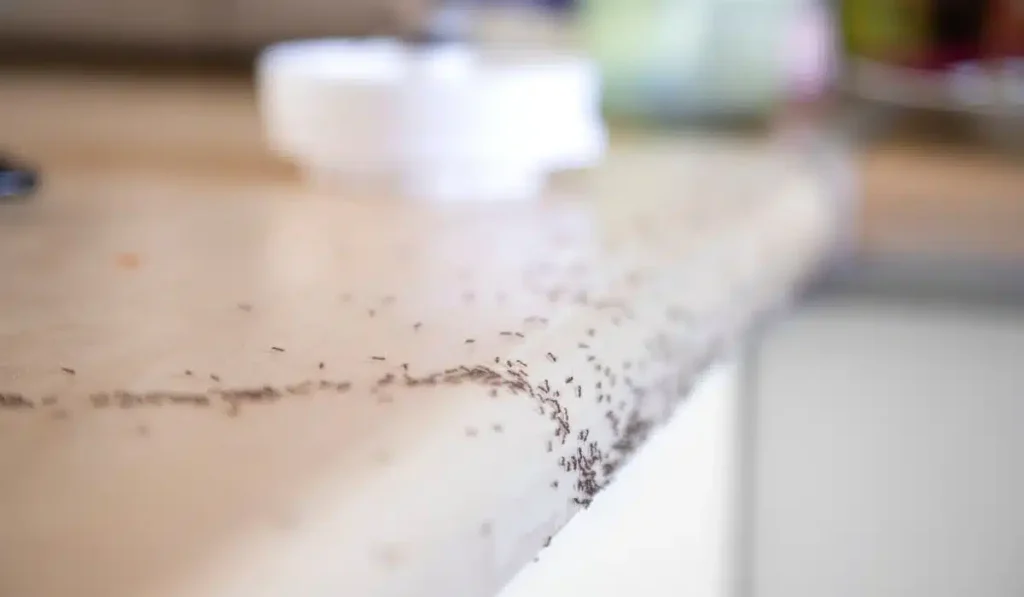
If you see kitchen ants in your Charlotte home but cannot find a clear food source, you are not alone. Many homeowners in Ballantyne and Huntersville see tiny ants on countertops, even when everything looks clean.
Knowing why ants show up helps you get rid of ants more effectively. Long-term pest control depends on finding hidden causes and targeting the ant colony, not just the visible ants.
Key Takeaways
- Ants can appear without visible food because of hidden attractants and moisture.
- Tiny ants follow pheromone trails back to your kitchen again and again.
- DIY methods may reduce visible ants, but often do not address the full colony.
- Professional pest control focuses on identifying and addressing the source of ant activity.
Why Ants Show Up With No Food
Even when your kitchen looks spotless, ants may still stay. Pest control professionals look for hidden attractants that routine cleaning may miss.
Residue on Countertops and Surfaces
Ants can detect even small traces of food. Residue from oils, spills, or sugary drinks can remain on countertops after cleaning.
Sugar ants and other tiny ants stay attracted to these surfaces, especially if cleaning does not fully remove the residue.
Unsealed Pantry Items and Packaging
Improperly stored food can still act as a food source. Cardboard boxes, loose bags, and partially sealed containers allow ants to access dry goods.
Using airtight containers helps prevent access. This step is especially important in Charlotte homes, where humidity can affect storage conditions.
Pet Food and Feeding Areas
Many homeowners overlook pet food as an attractant. Even small crumbs in bowls or feeding areas can attract ants.
Once ants find these areas, they form ant trails that bring more worker ants into your kitchen.
Hidden Spills and Hard-to-Reach Areas
Spills under appliances, inside cabinets, or along baseboards can go unnoticed and act as a hidden food supply.
Because homeowners do not clean these areas often, they allow ongoing ant activity without clear signs.
What Ants May Be Finding Instead
When there is no clear food source, ants often rely on other resources.
Water Sources and Moisture
Water is a major attractant for ants. Leaky pipes, dripping faucets, and condensation under sinks create ideal conditions for ants.
In Charlotte kitchens, moisture buildup is common. Fixing leaky pipes and drying damp areas makes your kitchen less appealing to ants.
Pheromone Trails and Scent Trails
Ants leave pheromone trails that guide other worker ants to the same spot.
Even if you remove the original attractant, the pheromone trail may remain, which is why kitchen ants often return.
Warm Indoor Conditions
Kitchens provide warmth and shelter for the ant nest and worker ants.
Warmth and shelter can make your kitchen a consistent target, especially during cooler months.
Nearby Nesting Areas
Ants may not be feeding in your kitchen at all. The ant nest could be outside or within walls, with worker ants coming indoors.
Carpenter ants may nest in wood near moisture. Pharaoh ants often nest in wall voids. Pavement ants and odorous house ants are also common in Charlotte homes.
What Keeps Kitchen Ant Problems Going
Recurring ant problems often come from conditions that do not change.
Unsealed Entry Points
Small gaps and cracks act as entry points around windows, doors, and baseboards.
Using caulk to seal cracks helps limit access but does not stop an active ant infestation on its own; you still need proper ant control.
Incomplete DIY Treatments
DIY methods like borax or dish soap may reduce visible ants, but often do not address the entire colony.
Without targeting the ant colony with the right bait, the ant problem can continue.
Overuse of Repellents
Repellent products and essential oils may temporarily disrupt ant trails, but in some cases, they can cause ants to move to new areas.
This movement can make the ant infestation harder to control.
Ongoing Access to Resources
As long as ants have access to water, food, or shelter, they are likely to return.
Consistent maintenance and targeted ant control help reduce ongoing ant activity.
Schedule an Ant Inspection for Charlotte Kitchens
If ants keep showing up in your kitchen with no clear food source, it is time to look deeper. Identifying hidden attractants and nesting areas takes more than surface cleaning.
A professional pest control service or exterminator checks your kitchen, nearby rooms, and exterior areas to identify entry points, moisture issues, and nesting sites. This inspection leads to targeted ant control that treats the colony and reduces ongoing activity.
ClearDefense Pest Control provides residential pest control and commercial pest control services tailored to Charlotte homes and businesses. Treatments are applied with precision and adjusted based on ant species and behavior.
If you are dealing with persistent kitchen ants, do not wait for the problem to grow.
Contact us today to schedule your inspection and start long-term control.
FAQs
Why do I have ants in my kitchen with no food?
Ants are attracted to moisture, hidden residue, or scent trails left by other ants. Even without visible food, these give ants enough to stay active in your kitchen.
What is the best way to get rid of ants permanently?
A common solution is professional ant control that targets the entire colony. This process involves identifying the ant species, using the right ant bait, sealing entry points, and removing attractants.
Do DIY methods like borax or essential oils work?
DIY methods may reduce visible ant activity, but usually do not eliminate the entire colony. For long-term results, a pest control service can treat the infestation more fully.