
This May, ant problems in Hamilton get louder fast.
Seeing a few on the counter can mean a nest is hidden in the walls or under the slab, and we find the entry points, treat the whole colony, and come back and re-treat if they show up again.
Technicians live and work in your area. Each one is chosen for skill and care. You talk straight to someone local. No call centers or long waits.
Our technicians get to know your home, your schedule, and how pests behave in your area — so every visit is consistent, thorough, and personal.
The team stays sharp and friendly. There is a pest-free guarantee. No hidden rules, just clear results you can count on.
In May, ant activity in Hamilton often starts with the trail. Along skirting boards. Under sinks. Around cracks, door gaps, and damp entry points. We track the line back to the source, so you know exactly where the ants are coming from.
Then we go after the colony. Not just the ants you can see. We use targeted treatments at nest sites, entry points, and feeding areas to disrupt the source of the problem and reduce the spread back into your home or business.
Then we help keep them out. You get a cleaner, ant-free result that lasts. And if ants come back within the guarantee period, we re-treat at no extra charge.
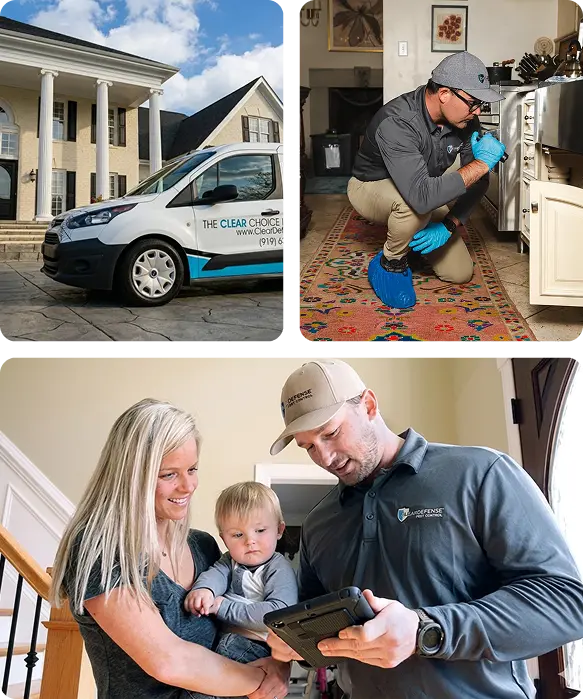
Your Hamilton Ant Control Team at Work
With years of local know-how, licensed pest specialists, and a team who treats Hamilton homes like their own, ant control here is steady, thorough, and neighborly.

Reliable Ant Control Serving Hamilton Homes
Serving Hamilton and nearby neighborhoods like Ross and New Baltimore, our ant control keeps homes comfortable through May when colonies emerge and the warm weather draws ants inside.
In the first day or two after ant control treatment in Hamilton, you may notice a brief uptick in ant activity as the product flushes them from trails and entry points. This is normal and usually settles down within 24 to 48 hours as the treatment takes effect.
Over the following week or two, you should see ant activity drop off noticeably as colonies break down. Ohio’s warming May brings the kind of warmth that makes ants particularly active, but the barrier treatment is designed to stay effective through the season and stop them before they get inside.
If you spot ants returning between your scheduled visits, just let us know and we will come back and retreat at no extra charge — that is our commitment to keeping your Hamilton home pest free.
In May, if pests come back after ant control in Hamilton, we come back too.
That can happen if new ants are still hatching, or if a trail was missed around a crack or entry point, for example along a window seal or foundation gap.
We use a 30-day return visit to break the egg cycle, then keep your home on a quarterly schedule so the problem does not keep resetting.
If the same ants keep showing up between visits, we will check the issue again and make it right under the service plan.
How fast can you come out to my home in Hamilton for ant control service? We can often get to new ant calls the same day or next day in May, based on open schedule and local crew availability.
Ants can spread fast, and that gets stressful quickly. We move fast, confirm your request right away, and send a local tech when we can.
Because we run recurring pest service, we do not offer one-time visits. We start with an initial treatment, then return in about 30 days to break the egg cycle and keep your home on a quarterly plan.
If you need help now, reach out today and we will check the soonest opening for Hamilton.
If pests return after your ant control service in May, a follow-up visit is scheduled to tackle any new eggs or survivors. This visit usually happens about 30 days after the first treatment to break the ant’s life cycle. Sometimes ants come back because of new trails or food sources outside. If that happens, extra treatments are included to keep your home clear and comfortable.
Kid and pet health matters when treating for ants. Products used break down quickly and are chosen to reduce risks in living spaces. For example, spills and pet dishes are moved during service to avoid contact with treatments. Follow-up visits are scheduled to keep the problem controlled without extra exposure.


