
Ohio hosts more than 40 spider species, with two that warrant medical attention. Here is how to identify the spiders in Ohio homes and yards.
Key Takeaways
- Ohio has over 40 spider species, but only two — the black widow and brown recluse — pose meaningful risk to humans.
- Most spiders you find indoors are hunting insects, not seeking out people; they bite defensively when crushed or cornered.
- Wolf spiders, cellar spiders, and house spiders make up the majority of spider activity inside Ohio homes.
- Reducing clutter, sealing cracks, and controlling other pests removes the conditions that draw spiders inside.
- Recurring pest control addresses spider pressure as part of a broader IPM plan, not as a standalone treatment.
Most Common Spiders Found in Ohio Homes
Ohio spiders show up in nearly every room of the house, from basements and crawl spaces to window frames and closets. Most pose no real threat to people and are simply following their food supply indoors. Knowing which species you are dealing with tells you whether to leave it alone or call someone.
House Spiders Found in Ohio Interiors
The common house spider (Parasteatoda tepidariorum) is the species most Ohio homeowners encounter. Females are brown with a mottled abdomen, males noticeably smaller. They hang tangled, irregular webs in window corners, attics, and garage rafters. House spiders bite defensively if threatened, but their venom produces little more than mild, localized irritation in most people. Their presence indoors signals an active insect population nearby.
Wolf Spiders in Ohio: Large, Fast, and Misidentified
Wolf spiders are the species that generate the most fear calls in Ohio homes, mostly because of their size. Adults can reach over an inch in body length, with stout brown-and-gray patterned legs. Unlike web-building species, wolf spiders hunt on the floor, which means you find them running across tile or carpet rather than hanging in a corner. They do not build webs. Females carry egg sacs and young on their backs, which makes a single spider look like a cluster of pests. Their bite is painful but not dangerous for most people.
Cellar Spiders in Ohio Basements and Crawl Spaces
Cellar spiders, sometimes called daddy longlegs, have small bodies and long, thin legs. They prefer dark, humid spaces: basements, crawl spaces, and the underside of porches. They build loose, sagging webs and will shake the web rapidly when disturbed, a behavior meant to make them harder to target. Despite persistent rumors, their venom poses no meaningful risk to humans. Their small bodies and weak mouthparts limit any bite to a minor, fleeting sensation.
Jumping Spiders Found in Ohio Windows and Walls
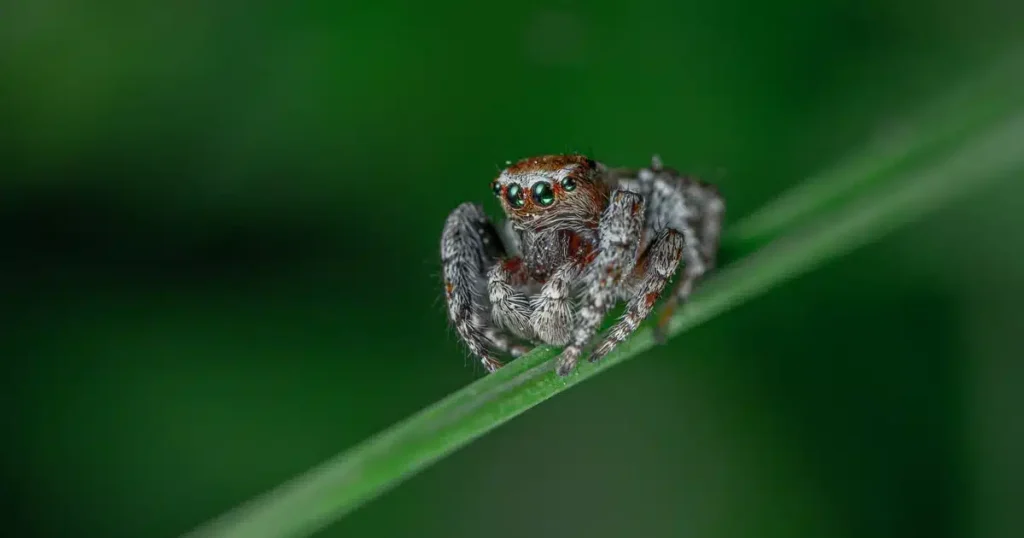
Jumping spiders are compact, hairy, and visible in daylight on exterior walls, window frames, and door trim. They are active hunters with excellent forward-facing eyesight and will turn to track movement. Ohio hosts several species, most with dark bodies and patterned legs. They bite defensively when handled but their venom is low-concern for healthy adults. Their presence near windows is common in late summer when they hunt insects attracted to interior lighting.
Orb Weaver Spiders in Ohio Yards and Entry Points
Orb weavers build the large, circular webs that appear across Ohio doorways and garden edges each late summer. Females are significantly larger than males and display brown, orange, or yellow patterning on the abdomen. They rebuild their webs nightly and rest at the center during daytime hours. Orb weavers rarely enter homes but do spin webs across entry points, which brings them into contact with people. Their bite is uncommon and produces mild, localized symptoms.
Venomous Spiders in Ohio You Should Know
Two venomous spiders in Ohio carry venom capable of causing severe symptoms in some individuals: the black widow and the brown recluse. Neither is aggressive. Both bite defensively when crushed, trapped against skin, or surprised in hiding. Knowing how to identify each one is the most useful thing you can do before a bite occurs.
Black Widow Spiders Found in Ohio Structures
Ohio hosts two black widow species: the northern black widow (Latrodectus variolus) and the southern black widow (Latrodectus mactans). Both are shiny black with red markings. The northern black widow displays a broken red hourglass and red spots on the underside and upper abdomen. The southern black widow shows a complete red hourglass on the underside. Females are the medically significant sex; males are smaller and rarely bite. Black widows prefer undisturbed structures: woodpiles, garage corners, crawl spaces, and outdoor furniture stored against the home.
A black widow bite produces immediate, sharp pain followed by systemic symptoms: muscle cramps, abdominal rigidity, sweating, and in some individuals, elevated blood pressure. Symptoms can escalate over several hours. Seek medical attention promptly after a suspected black widow bite, particularly for children, older adults, or anyone with underlying health conditions.
Brown Recluse Spiders in Ohio: What to Look For
The brown recluse spider (Loxosceles reclusa) is technically a southern species, but confirmed brown recluse sightings in Ohio occur in the southern part of the state. They arrive via shipments, storage boxes, and transported furniture. True brown recluse spiders are uniform tan to brown with a dark violin-shaped marking on the upper body and six eyes arranged in three pairs, not eight in a row. Most Ohio homeowners misidentify brown house spiders as brown recluse spiders; actual recluse spiders are rare north of the Ohio River.
Brown recluse spiders hide in undisturbed areas: inside stored clothing, behind baseboards, inside cardboard boxes, and under attic insulation. Shake out clothing and shoes if they have been stored in dark spaces for extended periods. A brown recluse bite is initially painless in many cases, which delays treatment. Symptoms range from minor irritation to significant tissue damage, depending on the person and bite location. Any suspected brown recluse bite warrants medical attention.
Why Ohio Spiders Enter Your Home in Fall
Spider activity inside Ohio homes spikes in late summer and fall, and the biology behind it is straightforward. Most species mature in late summer, and males begin searching for mates. Cooler exterior temperatures also push insects indoors, and spiders follow their food supply. Entry points include gaps around window frames, utility penetrations, door sweeps that do not seal fully, and cracks in the foundation. Once inside, spiders move toward dark, undisturbed areas: basements, attics, closets, and the spaces behind stored items.
The species you find indoors in October are not necessarily different from what lives in your yard in July. They are the same population following the same insects you have been seeing near porch lights and kitchen windows all season.
Controlling Ohio Spiders with Prevention and Treatment
The most durable spider control in Ohio targets the conditions that bring them inside, not just the spiders themselves. A spider indoors is evidence of a broader pest environment. Address the food supply, the entry points, and the harborage, and the spider population drops with them. This is the IPM logic that pest professionals apply: treat the building conditions, not just the visible pest.
Reducing Spider Pressure in Ohio Homes
Start with entry points. Seal cracks in the foundation, repair gaps around window frames and door trim, and check the seal on exterior utility penetrations. Interior steps include reducing clutter in basements and attics where spiders hide, storing rarely used items in sealed bins rather than open cardboard boxes, and moving woodpiles and debris away from the home’s exterior. Cutting back vegetation that contacts the siding removes the bridge most Ohio spiders use to reach your walls.
When to Call Pest Control for Spiders in Ohio
Recurring pest control targets spider pressure as part of a broader treatment plan, not as a one-time event. A professional technician treats the exterior perimeter and identified entry points, addresses the insect populations that sustain spiders indoors, and documents what was found and what was applied in each visit. ClearDefense’s quarterly general pest control plan covers spiders and includes a Defense Report after every service, showing every product used and every finding from that visit. One-time treatments do not provide the same level of sustained reduction that quarterly service delivers over a full season.
If you have identified a black widow or believe you have a brown recluse infestation, schedule an inspection rather than attempting to locate and remove nests on your own. Disturbing an active harborage site without protective gear increases the risk of a defensive bite.
Bottom Line on Spiders in Ohio Homes
Most ohio spiders present no meaningful risk to people. The species you encounter in a Cincinnati basement or a Columbus garage are almost certainly house spiders, wolf spiders, or cellar spiders, all of which bite defensively and pose little concern for healthy adults. The two species that do matter, the black widow and the brown recluse, are identifiable with basic knowledge and rarely encountered in most Ohio homes outside of southern counties.
Long-term spider reduction comes from treating the building, not the individual spider. Seal entry points, reduce clutter, control the insect population indoors, and schedule recurring service that documents and addresses the full pest environment. That approach works for a season and every season after it.
Frequently Asked Questions
Are brown recluse spiders common in Ohio?
True brown recluse spiders are uncommon in Ohio and most confirmed sightings occur in the southern part of the state, near the Ohio River. Many spiders homeowners identify as brown recluse are actually brown house spiders or other similar species. If you find a spider you believe is a brown recluse, photograph it and contact a pest control professional for identification before handling it.
What attracts spiders inside Ohio homes in fall?
Male spiders search for mates in late summer and fall, which increases visible activity indoors. Cooler temperatures also push insects inside, and spiders follow their food supply through the same gaps and cracks. Sealing entry points before September reduces the number that reach interior spaces.
Do wolf spiders in Ohio pose a danger to people?
Wolf spiders are large and fast, which makes them alarming, but their venom does not cause severe symptoms in most healthy adults. A wolf spider bite produces localized pain and mild swelling. They do not chase people and bite only when cornered or crushed against the skin. Children and people with venom sensitivities should seek medical attention after any spider bite as a precaution.
How does recurring pest control help with spider pressure in Ohio?
Quarterly pest control targets the insect populations that feed spiders indoors, treats exterior perimeter points where spiders enter, and provides documentation of every product applied and every finding from each visit. A recurring plan reduces spider activity across a full season rather than addressing a single visible infestation. ClearDefense’s general pest control plan covers spiders as part of its standard scope.