
Georgia hosts dozens of spider species, from the invasive Joro to the venomous black widow. Here’s how to identify the spiders in Georgia homes.
Key Takeaways
- Georgia hosts more than 50 spider species, most of which pose no meaningful danger to humans.
- Two species warrant real concern: the brown recluse and the southern black widow, both venomous and medically significant.
- The Joro spider, an invasive species from Asia, has spread across Georgia and is now one of the most visible pests in the state.
- Most spiders enter homes through gaps, cracks, and utility penetrations — sealing entry points is the most effective long-term control strategy.
- Recurring perimeter treatment under a structured pest control plan significantly reduces spider pressure inside your home.
What Spiders in Georgia Actually Look Like
Georgia’s spider population spans dozens of species with dramatically different sizes, colors, and body shapes. The easiest way to identify a spider is by its abdomen markings, leg span, and web structure — three features that vary significantly between species. A wolf spider and a brown recluse are both brown, but their behavior, leg proportions, and markings are nothing alike. Knowing what to look for keeps you from either panicking about a nuisance spider or ignoring one that deserves attention.
Venomous Spiders in Georgia Homes
The brown recluse is the spider most Georgia homeowners fear, and for good reason. It grows to about 3/4 of an inch in body length with long legs and a distinctive dark violin-shaped marking on its back, pointing toward the abdomen. Brown recluses prefer hidden, dry spaces: inside cardboard boxes, behind baseboards, and under rarely moved furniture. Their bite can cause tissue damage and requires medical attention.
The southern black widow is unmistakable. The female has a shiny black body with a red hourglass marking on her underside. She builds irregular, tangled webs low to the ground, often near wood piles, in garages, or under deck boards. Black widow venom is neurotoxic and poses real danger, particularly to children and elderly adults. The brown widow, a related invasive species now established in Georgia, carries similar venom but delivers a smaller dose due to its behavior and body size.
Common House Spiders in Georgia Yards and Indoors
The common house spider (Parasteatoda tepidariorum) is the small, light brown spider building messy webs in corners, along baseboards, and near light sources that attract flies and other insects. It is the species most people encounter indoors and is not venomous to humans. Its webs are sticky and three-dimensional, built to trap any insects that wander through. These spiders are persistent pests because they reproduce quickly and thrive in undisturbed spaces.
The wolf spider is a large, hairy, ground-dwelling spider that does not build webs. Wolf spiders hunt actively, which means you will see them moving across floors rather than sitting in a web. Their leg span can reach two to three inches, and their dark brown, patterned body makes them look threatening. They are not medically dangerous to humans, but their size tends to generate concern in homeowners who encounter them inside.
Cellar spiders, often called daddy longlegs, have extremely long legs and small bodies. They build loose, irregular webs in dark, damp corners of basements, crawl spaces, and garages. They pose no danger to humans and actually prey on other insects, but their webs accumulate quickly and create visible pest problems in neglected spaces.
The Joro Spider: An Invasive Species in Georgia
The Joro spider (Trichonephila clavata) arrived in Georgia around 2013 and has since spread to most of the state. It is one of the most visually striking invasive species Georgia residents encounter, with a large yellow and black abdomen, red spots near the underside, and orange leg joints. Females reach a body length of nearly an inch, with a leg span approaching three inches. Males are much smaller and drab by comparison.
Joro spiders build massive golden silk orb weaver webs, sometimes spanning several feet between trees or across vegetation. They are not aggressive and rarely bite humans. According to researchers at the University of Georgia, the Joro spider is likely to continue expanding its range northward, given its tolerance for cooler temperatures. Their primary impact in Georgia is visual: large webs across porches, trees, and yard structures make them one of the most reported spider pests in the state, even though they primarily feed on insects like flies, mosquitoes, and wasps.
Other Georgia Spiders Worth Identifying
Beyond the headliners, Georgia’s warm climate and diverse vegetation support a wide range of spider species that you are likely to encounter in your yard or home.
Yellow Garden Spider in Georgia Landscapes
The yellow garden spider (Argiope aurantia) builds large, flat orb webs in open vegetation and garden beds. The female has a yellow and black abdomen with a distinctive zigzag pattern of white silk through the center of the web, sometimes called a stabilimentum. These are among the largest native spiders in Georgia, with females reaching nearly an inch in body length. They are not dangerous to humans and serve as effective predators of insects in backyard environments.
Trapdoor Spider and Jumping Spider in Georgia
The trapdoor spider builds burrows in the ground with a hinged door made of soil and silk. You will rarely see them above ground. They prey on insects that pass near the burrow entrance and are not medically significant to humans. Their presence is most notable in yards with loose, well-drained soil.
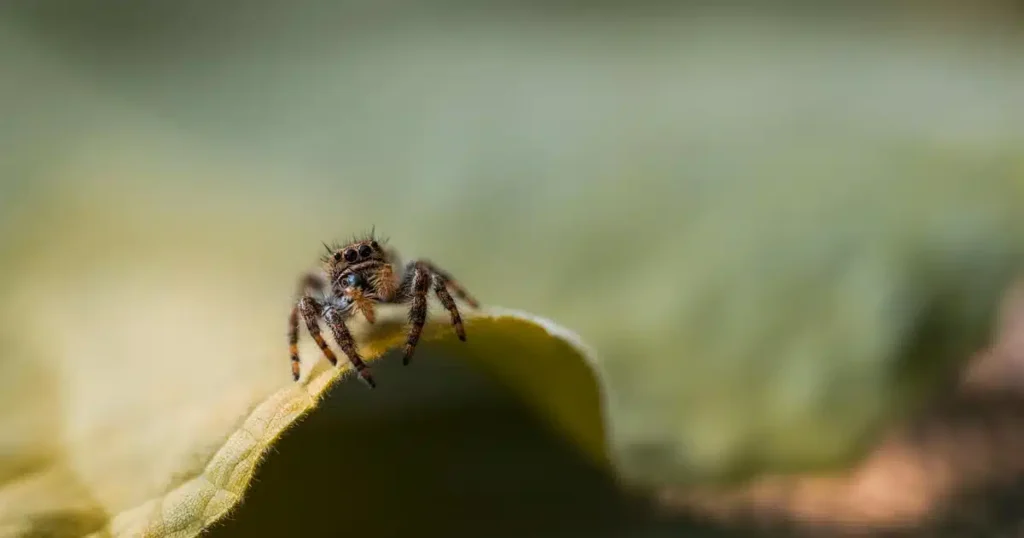
Jumping spiders are small, compact, and brightly colored, with large forward-facing eyes that give them excellent vision. They do not build webs to catch prey. Instead, they stalk insects and leap to capture them. Georgia hosts several jumping spider species, most with hairy bodies and distinctly bold markings. They pose no real threat to people and are often found on exterior walls and around windows where insects gather near light sources.
Orb Weavers in Georgia Yards and Gardens
Orb weavers as a group are among the most common spiders in Georgia. Beyond the Joro and yellow garden spider, Georgia hosts several native orb weaver species that build classic round webs in vegetation, trees, and along fence lines. The golden silk orb weavers, in particular, spin large, strong webs with a faintly golden hue. Orb weavers are nuisance pests primarily because of their web placement, which often puts them directly in foot traffic paths. They are not dangerous to humans.
When Spiders in Georgia Become a Home Problem
Most spider encounters are incidental, but a recurring indoor presence signals something larger: your home has conditions that attract insects, and spiders follow the food supply. Light sources near entry points draw flies and other insects at night. Clutter in garages, crawl spaces, and storage areas creates undisturbed habitat. Gaps around utility lines, windows, and door frames give spiders direct access from the yard.
Two situations require immediate action. If you identify a brown recluse or black widow inside your home, contact a licensed pest control professional rather than attempting to treat on your own. Venomous species that have established themselves indoors are a sign of a broader entry point problem that requires professional assessment. A single sighting near a window is different from finding multiple individuals in living spaces or seeing egg sacs in corners and wall voids.
How to Reduce Spiders in Georgia Homes
The most effective spider prevention strategies target the conditions that sustain them. Seal cracks and gaps around utility penetrations, doors, and windows to cut off the primary entry routes. Reduce outdoor lighting near entry points, or switch to yellow-spectrum bulbs that attract fewer insects. Trim vegetation away from the home’s exterior to remove bridging points from yard to structure. Use a broom to knock down webs regularly on eaves, in garages, and along the perimeter.
Inside, reduce clutter in storage spaces. Cardboard boxes in garages and basements are ideal habitat for brown recluses. Sealed plastic bins eliminate the hiding spots that allow populations to build undetected. Consistent cleaning in corners, under furniture, and along baseboards removes webs and egg sacs before they produce the next generation of spiders.
Professional Spider Control in Georgia: What Recurring Service Does
A quarterly recurring pest control plan addresses spiders at the perimeter level, which is where control is most effective. Technicians apply targeted treatments to foundation lines, eaves, entry points, and harborage zones around the exterior of the home. This creates a barrier that controls both spiders and the insects they feed on, reducing the incentive for spiders to move indoors. After each visit, a Defense Report documents every product used and every area treated, so you know exactly what was applied and where.
One-time treatments do not resolve persistent spider pressure. Spiders in Georgia are active year-round in warmer months, with population peaks in late summer and fall as females build webs and lay egg sacs. Recurring service maintains consistent perimeter pressure across the full season rather than reacting to individual sightings after populations have established indoors.
Bottom Line on Spiders in Georgia Homes
Most spiders in Georgia are nuisance pests rather than genuine dangers. The exceptions — brown recluse and black widow — are medically significant and should be treated as such. The Joro spider, now established across the state, has become the most visible invasive species Georgia homeowners report, but its risk to humans is low. What matters most is whether spiders are moving inside your home in numbers, which almost always points to unsealed entry points and an insect population sustaining them.
The most durable solution combines physical exclusion with recurring perimeter treatment. Sealing gaps removes access. Quarterly pest control targets both spiders and the insects they follow. Together, these steps give your home consistent protection rather than a temporary fix that wears off between seasons.
Frequently Asked Questions
Are there dangerous spiders in Georgia I should worry about?
Yes. The brown recluse and the southern black widow are both venomous and medically significant. The brown recluse delivers a bite that can cause tissue damage, while the black widow’s neurotoxic venom poses serious risk, particularly to children and elderly adults. Most other spiders in Georgia, including the large Joro spider, do not pose meaningful danger to humans. If you find either venomous species inside your home, contact a pest control professional for an inspection and treatment plan.
What is the Joro spider and should I be concerned?
The Joro spider is a large invasive species from Asia that arrived in Georgia around 2013 and has spread across much of the state. Females have a striking yellow and black abdomen with red spots and a leg span approaching three inches. They build large golden silk webs between trees, in gardens, and on porches. Joro spiders are not aggressive and rarely bite humans. Their main impact is their web placement, which creates a visible nuisance in yards and on exterior structures.
Why do I keep seeing spiders inside my home?
A persistent indoor spider presence usually means your home has two things: entry points spiders can use and an insect population inside that sustains them. Gaps around utility lines, windows, and door frames are common entry routes. Light sources near entry points attract flies and other insects at night, and spiders follow. Reducing clutter, sealing entry points, and maintaining a recurring perimeter pest control plan addresses both the access and the food supply that keep spiders moving indoors.
Does a one-time spider treatment work?
A one-time treatment controls the spiders present at the time of service, but it does not address the conditions that brought them in or prevent new ones from entering. Georgia spiders are active across most of the warm season, and populations rebuild quickly if entry points remain open and insect activity continues. A recurring quarterly plan maintains consistent perimeter pressure across the full season, which is the most effective way to prevent spiders from re-establishing inside your home.
When should I call a pest control professional for spiders?
Call a professional if you identify venomous species inside your home, find multiple spiders or egg sacs in living areas, or see spiders returning consistently after DIY attempts to knock down webs. A professional inspection identifies the entry points and harborage zones sustaining the population, and a recurring treatment plan targets the perimeter before spiders move indoors. For Augusta, Georgia homeowners, ClearDefense Pest Control offers quarterly general pest control plans that cover spiders as part of a full perimeter defense program.