
Florida hosts more than 59 spider species, and Jacksonville homes encounter a disproportionate share of them year-round. The humid climate, dense vegetation, and warm winters create conditions where spiders thrive in every season. Most are beneficial insects predators. A few carry venom capable of causing serious injury. Knowing which is which changes how you respond when you find one.
Key Takeaways
- Florida’s warm, humid climate supports year-round spider activity, unlike most northern states where populations drop in winter.
- Two species in Florida require immediate medical attention if they bite: the southern black widow and the brown recluse.
- Most common spiders found in Florida homes, including cellar spiders and jumping spiders, pose no meaningful risk to humans.
- Spiders enter homes through gaps around doors, windows, and utility lines, not through solid walls.
- Recurring perimeter treatment combined with targeted interior inspection is the most practical way to reduce spider populations inside your home.
Why Florida Homes See So Many Spiders Year-Round
Florida’s humid climate prevents the population crash that controls spider numbers in colder states. In most of the country, cold winters kill off large portions of the insect population that spiders depend on for prey. Florida’s mild winters keep insects active, which keeps spiders active. Wooded suburban neighborhoods in Jacksonville, with their leaf litter, mulch beds, and dense landscaping, provide ideal harborage for dozens of species. Spiders that would normally die in November in Ohio are still hunting in January in Florida.
The relationship is structural: more insects means more spiders. If your yard has standing water, dense shrubs against the foundation, or piles of stored wood, you are maintaining the conditions that attract the bugs that attract the spiders. Spiders do not typically wander indoors out of preference. They follow their prey through gaps in door sweeps, window screens, utility penetrations, and foundation cracks.
Common Spiders Found in Florida Homes and Yards
The majority of spider species you encounter around a Jacksonville home are web-building spiders that target insects, not humans. Understanding what you are looking at is the first step to deciding whether you need to act.
Golden Silk Orb Weaver Spiders in Florida
The golden silk orb weaver (Nephila clavipes), sometimes called the banana spider, builds the largest webs of any spider species in Florida. Females range from 1 to 3 inches in body length. The webs appear gold in direct sunlight and can span several feet between trees or shrubs. These spiders are common in wooded areas and along fence lines. Their venom produces mild irritation at the bite site but is not considered dangerous to healthy adults. They are rarely aggressive and bite only when directly handled or disturbed.
Wolf Spiders in Florida: Large, Fast, and Misidentified
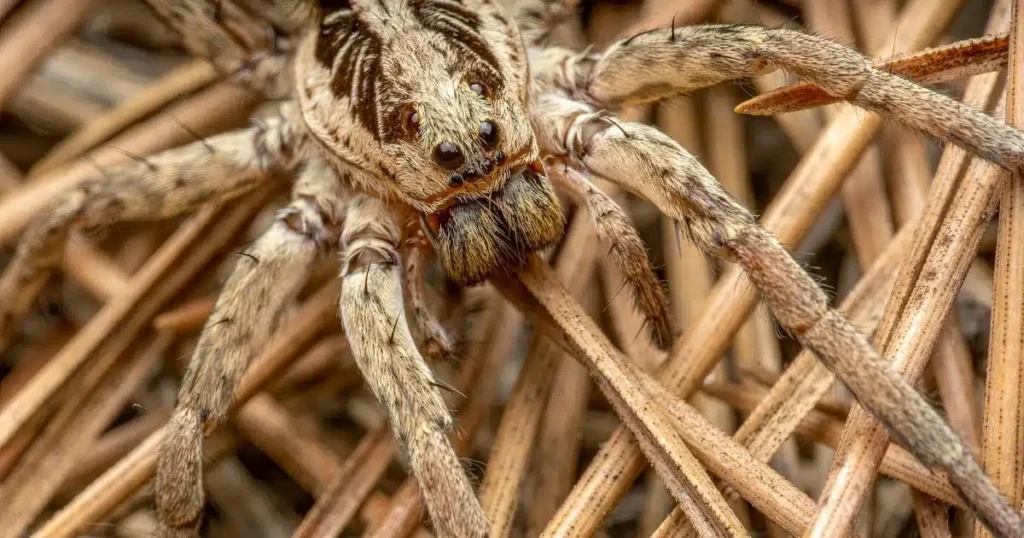
Wolf spiders are among the largest spiders you will find at ground level in a Florida yard, and they are commonly mistaken for brown recluse spiders. They do not build webs. Instead, they hunt actively at night, which is why homeowners frequently encounter them inside garages and on patios. Wolf spiders have a hairy appearance, a stout build, and eyes arranged in three rows. They are not web building spiders. A wolf spider bite produces localized pain and swelling but does not require medical attention in most cases.
Jumping Spiders in Florida: Small, Bold, and Common
Jumping spiders are among the most commonly found spiders in Florida homes, particularly near windows and well-lit areas. They are small, with compact bodies and large forward-facing eyes that give them excellent vision. Jumping spiders hunt by sight, leaping onto small insects rather than spinning webs. They enter homes through gaps around window frames and door seals. Their bite produces only mild irritation and is not a medical concern. Most homeowners encounter them on walls, windowsills, and interior light fixtures.
Cellar Spiders in Florida: The Long-Legged Web Builders
Cellar spiders, often called daddy long legs, are thin-legged web-building spiders that prefer dark corners, garages, and storage areas. They build loose, tangled webs in undisturbed areas and are particularly common in Florida homes with attached garages, crawl spaces, and interior closets. Cellar spiders pose no meaningful risk to humans. Their venom is weak and their mouthparts are too small to penetrate human skin effectively. Their primary nuisance is aesthetic: messy cobwebs accumulate quickly in corners they occupy.
House Spiders in Florida Homes: Brown and Overlooked
The common house spider and the southern house spider are the species most likely to build webs inside your living space. Both produce messy cobwebs in corners, behind furniture, and around window frames. The southern house spider is gray-brown with thin legs and a body roughly the size of a quarter including leg span. These house spiders are not dangerous. They control insect populations by capturing flies, mosquitoes, and ants that enter the home. The webs are more problematic than the spiders themselves.
Venomous Spiders in Florida You Need to Identify
Two spider species in Florida are medically significant: the southern black widow and the brown recluse. Both are present in Jacksonville and the surrounding region. Knowing their identifying features, preferred hiding spots, and bite symptoms is practical information every homeowner should have.
Black Widows in Florida: What the Markings Mean
Florida hosts both the southern black widow and the northern black widow, with the southern species being far more common. The southern black widow has a glossy black body with a distinctive red hourglass marking on the underside of the abdomen. Females are significantly larger than males and are the only ones capable of delivering a medically significant bite. Widow spiders build tangled webs close to the ground in dark, undisturbed areas: wood piles, storage boxes, garage corners, and under patio furniture. If you are bitten and suspect a black widow, seek medical attention immediately. Symptoms include intense pain, muscle cramping, and nausea.
Brown Recluse Spiders in Florida: Rare but Worth Knowing
The brown recluse spider is far less common in Florida than public perception suggests, but confirmed sightings do occur. Brown recluse spiders are tan to brown, with a distinctive violin-shaped mark on the top of the cephalothorax (the body section behind the head). The violin mark points toward the abdomen. They have six eyes arranged in three pairs rather than the eight eyes most spiders carry. Recluse spiders hide in storage areas, cardboard boxes, folded clothing, and undisturbed clutter. A bite from a brown recluse can damage human skin tissue and requires prompt medical attention. If you find a spider that matches this description, do not handle it.
Brown Widow Spiders in Florida: A Growing Presence
The brown widow has expanded steadily across Florida over the past two decades and is now more commonly encountered than the black widow in some Jacksonville neighborhoods. Brown widows are tan to brown with a distinctive orange hourglass shape on the underside, compared to the red hourglass of the southern black widow. Their venom is considered less potent than the black widow’s, but bites still cause pain and localized reactions that warrant monitoring. Brown widows favor outdoor furniture, potted plants, and structures in undisturbed areas around the home’s exterior.
How Spiders Get Inside Your Florida Home
Spiders do not pass through solid walls: they use the same gaps and penetrations that let in air, moisture, and other pests. Common entry points include gaps under exterior doors without tight-fitting door sweeps, tears in window screens, utility penetrations where pipes and wires enter the home, and unscreened vents in the foundation or attic. In Jacksonville’s older housing stock, these openings are common and often overlooked. Spiders that hunt at ground level, like wolf spiders and jumping spiders, move in along foundation gaps. Web-building spiders like cellar spiders follow insects that have already found their way inside.
Conducive conditions outside accelerate the process. Leaf litter and mulch piled against the foundation create harborage for insects and spiders alike. Dense shrubs touching exterior walls give spiders a direct bridge to the structure. Exterior lighting that attracts insects at night also attracts the spiders that prey on them. Addressing these conditions outside the home reduces pressure on the interior without any treatment at all.
Controlling Spider Populations in Your Florida Home
Reducing spiders in a Florida home requires targeting both the spiders themselves and the insect populations they feed on. A home that controls its general pest population, including flies, ants, mosquitoes, and other bugs, becomes a less productive hunting ground for spiders. Web-building spiders vacate areas where prey is scarce. Hunting spiders follow the same logic.
Physical exclusion addresses the entry points. Sealing gaps around doors and windows, repairing torn screens, and caulking utility penetrations reduces the number of spiders that can enter in the first place. Removing clutter from storage areas, attics, and garages takes away the undisturbed harborage where recluse spiders and widow spiders prefer to hide.
ClearDefense’s recurring general pest control plan covers spiders as part of a prevention-first IPM approach. Technicians treat the perimeter and inspect for conducive conditions on each visit, then document every product applied and every finding in a Defense Report you can review. Because Jacksonville’s climate keeps spiders active year-round, a one-time treatment does not produce lasting results. Recurring service maintains consistent pressure on the pest populations that sustain spider activity.
The EPA’s integrated pest management framework prioritizes prevention, monitoring, and targeted treatment over broad application. That model is exactly what makes recurring service more effective than a single visit in Florida’s conditions. According to UF/IFAS Entomology and Nematology, Florida’s year-round warmth means pest management must account for continuous breeding cycles rather than seasonal peaks.
Bottom Line on Spiders in Florida
Most spiders you encounter in and around a Jacksonville home are not dangerous, but two species require you to take them seriously. Southern black widows and brown recluse spiders are present in Florida and capable of causing injuries that need medical care. Identifying them correctly matters. For the rest, the practical concern is managing the insect populations that bring spiders inside in the first place. Seal entry points, reduce exterior harborage, and maintain consistent pest control coverage. Florida’s climate will never stop producing spiders. The goal is to keep them outside where they belong.
Frequently Asked Questions
Which spiders in Florida are actually dangerous to humans?
Two species pose genuine medical risk: the southern black widow, identified by its glossy black body and red hourglass marking, and the brown recluse, identified by the violin-shaped mark on its back. Both hide in undisturbed areas like storage boxes and woodpiles. If you suspect a bite from either species, seek medical attention promptly rather than waiting to see how symptoms develop.
How do I tell a wolf spider apart from a brown recluse in Florida?
Wolf spiders are larger, have a hairy appearance, and carry eight eyes arranged in three rows. Brown recluse spiders are smaller, smooth-bodied, and have six eyes arranged in three pairs of two. The most reliable identifying feature on a brown recluse is the violin-shaped mark on the top of the body section behind the head, with the neck of the violin pointing toward the abdomen. When in doubt, do not handle the spider.
Why Are There So Many Spiders in Florida Homes Year-Round?
Spiders follow their prey indoors. If your home has an active population of flies, ants, or other small insects, spiders will find a way in to hunt them. Florida’s humid climate sustains insect populations year-round, which means spider pressure is continuous rather than seasonal. Sealing entry points and addressing general insect activity inside the home are the two most effective steps you can take on your own.
Are Cellar Spiders in Florida (Daddy Long Legs) Dangerous?
No. Cellar spiders have venom, but it is too weak to affect humans in any meaningful way, and their mouthparts are not capable of effectively penetrating human skin. They are nuisance spiders, not dangerous ones. Their primary impact in a Florida home is the messy tangled webs they build in dark corners, garages, and storage areas.
Does a one-time spider treatment work in Florida?
In most cases, no. Florida’s warm, humid climate means spiders and the insects they feed on remain active every month of the year. A single treatment reduces activity temporarily, but without ongoing perimeter coverage and inspection, populations rebuild within weeks. Recurring service that targets both spiders and their prey produces consistent results where a one-time visit does not.