If you live in Raleigh, NC, you may have noticed ants returning often, even after you clean or treat the area. From kitchens in North Hills to basements in Cary, this pest problem is common for many homeowners.
Ants return for specific reasons. Ant colonies are very organized. Once they find reliable food or water sources, they keep coming back. Many types of ants, including odorous house ants and fire ants, leave scent trails that guide worker ants back into your home.
Knowing why ants return helps you choose the right solution. Effective pest control targets the colony and the conditions that attract ants, not just visible ants.
Key Takeaways
- Ants return because of food sources, water sources, and established scent trails.
- Small entry points and crevices allow ants to enter your home repeatedly.
- DIY treatments often fail to address the entire colony.
- Professional pest control targets ant colonies for effective, long-term control.
Why Ants Keep Coming Back
Ants return to Raleigh homes because the conditions that attracted them remain. Pest control professionals focus on identifying these recurring causes rather than just treating surface activity, including entry points, food sources, and water sources that support ant activity.
Easy Access Through Entry Points
Ants enter through small openings such as cracks around windows, gaps in siding, and unsealed crevices. Even small openings in crawl spaces or basements allow worker ants to move in and out, leading to recurring ant problems.
Sealing these areas with caulk helps block access, especially when combined with proper ant control.
Reliable Food Sources Inside the Home
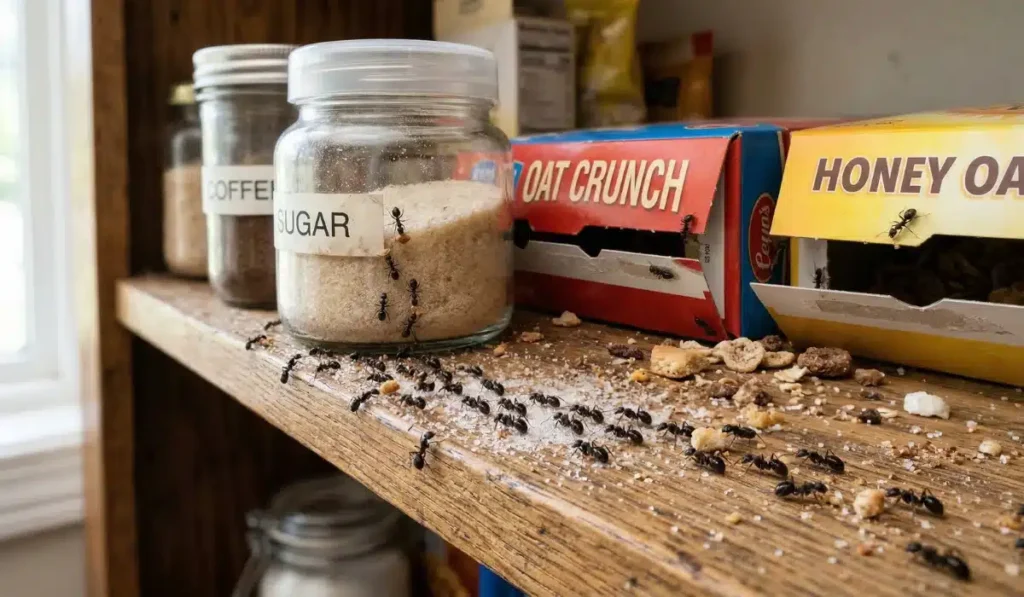
Food attracts ants and keeps them coming back. Crumbs on counters, improperly stored snacks, and pet food left out give ants easy access.
Kitchens are more at risk when homeowners do not store food in airtight containers. Sugar ants and black ants seek out even small amounts of residue, so regular cleanup helps reduce attraction.
Moisture and Water Sources
Moisture supports ant activity, especially in damp areas like basements and crawl spaces. Leaky pipes, dripping faucets, and excess moisture create good conditions for some ant species.
Odorous house ants prefer these environments.
Using dehumidifiers and fixing leaky pipes can make your home less attractive to ants.
Established Pheromone Trails
Once ants find a path, they create pheromone trails that guide worker ants back to food. These scent trails help ants return often, even after you remove visible ants.
Because trails can remain after cleanup, ants may quickly reappear if you do not address the source.
What Ant Activity Usually Means
Ant activity often signals a larger pest problem out of sight. Pest control professionals use these patterns to judge the size of the infestation and identify the types of ants involved.
Visible Ant Trails Indoors
If you see ant trails along walls or countertops, it usually means a nearby ant nest is active. Worker ants travel in lines to transport food, indicating the problem is ongoing rather than a one-time issue.
Repeated Sightings in the Same Areas
When ants keep appearing in the same location, it often indicates a steady entry point or a nearby food source. This pattern is common in kitchens, bathrooms, and near pet food areas, where conditions continue to support ant activity.
Activity in Basements and Crawl Spaces
Ant activity in basements or crawl spaces often points to moisture problems. Damp areas attract ants, harbor hidden ant colonies, and serve as entry points during pest control service inspections.
Signs of Larger Structural Issues
Some ant species, like carpenter ants, can signal deeper concerns. They do not eat wood like termites, but they tunnel through it to build nests.
If you do not treat carpenter ants, their tunneling can cause structural damage over time. For this reason, pest control professionals may also check for termite control concerns during inspections.
Why DIY Fixes Often Fall Short
Many homeowners try DIY methods to get rid of ants, but these solutions often provide only short-term relief because they do not address the root cause.
Professional pest control focuses on reducing colony activity and helping prevent ants from returning with ongoing service.
Treating Only Visible Ants
Spraying visible ants may seem effective, but it does not affect ant colonies behind walls or outside your home. Worker ants make up only a small portion of the colony, so the ant problem persists without broader treatment.
Incorrect Use of Ant Baits
Ant baits can be effective when matched to the correct ant species. Using the wrong bait or placing it incorrectly can reduce their effectiveness, which is why pest control professionals tailor ant control strategies to the situation.
Overreliance on Repellents
Repellents and products such as diatomaceous earth may temporarily disrupt ant trails, but they do not remove the source of the problem. In some cases, they can push ants to relocate and form new nesting areas.
Lack of Long-Term Prevention
DIY solutions often focus on short-term fixes instead of prevention. Without sealing entry points, managing food sources, and addressing moisture, ants return.
A pest control service includes steps to reduce ant activity year-round.
Schedule an Ant Inspection for Raleigh Homes
If ants keep coming back to your home, it is time to take a better approach. Identifying the cause of the problem is the first step toward lasting ant control.
A professional pest control company evaluates your property for entry points, food sources, water sources, and hidden ant nests. This evaluation identifies the type of ants and the best way to treat the colony.
ClearDefense Pest Control provides residential pest control and commercial pest control services designed to handle ant infestations in Raleigh. Treatments are based on ant behavior, to reduce activity and stop ants from returning.
If you are dealing with a recurring ant problem, contact us to schedule your inspection.
FAQs
Why do ants keep coming back after treatment?
Ants return when you do not eliminate the entire colony or when food and water sources remain available. Scent trails also guide ants back to the same areas, which keeps the problem going without proper treatment.
What is the best way to get rid of ants effectively?
A strong approach is to target the colony with professional pest control. This approach focuses on identifying ant species, selecting appropriate ant baits, and addressing entry points and attractants.
When should you call a pest control company for ants?
You should call a pest control service if ants keep returning, appear in large numbers, or you find them in multiple areas of your home. Persistent activity often signals a larger infestation that needs professional treatment.